
Gujarat has the longest coastline of any Indian state, yet its beaches stay refreshingly uncrowded — the clean sweep of Mandvi, the black sand of Tithal, the sunset crowds at Dumas.
Here's where to find sand, sea and a slower pace along the coast.
Choosing among Gujarat beaches on a long coast
Gujarat beaches stretch along roughly 1,600 kilometres of coastline, the longest of any Indian state, yet they stay refreshingly uncrowded compared with Goa or Kerala. The trade-off is that not every beach is built for swimming. Some are wide, scenic and best for long walks and sunsets, while only a handful are genuinely good for a dip, thanks to soft sand and gentle shallows. Knowing the difference before you go saves real disappointment, because the same coast serves up calm, wadeable bays and steep, current-prone shores within a few hours of each other, and local advice on tides is always worth asking for.
Mandvi in Kutch is the crowd-pleaser: a broad, clean sweep of sand with camel rides along the waterline, a windmill farm turning slowly offshore, and the restored Vijay Vilas Palace standing behind the dunes. The water is shallow enough for easy wading and the sunsets run long and orange across the flat sea. It works especially well as a relaxed counterpoint to the intensity of the nearby white Rann, and many travellers slot a night here at the end of a Kutch loop simply to slow down by the sea, eat fresh grilled fish and watch the fishing dhows come in.
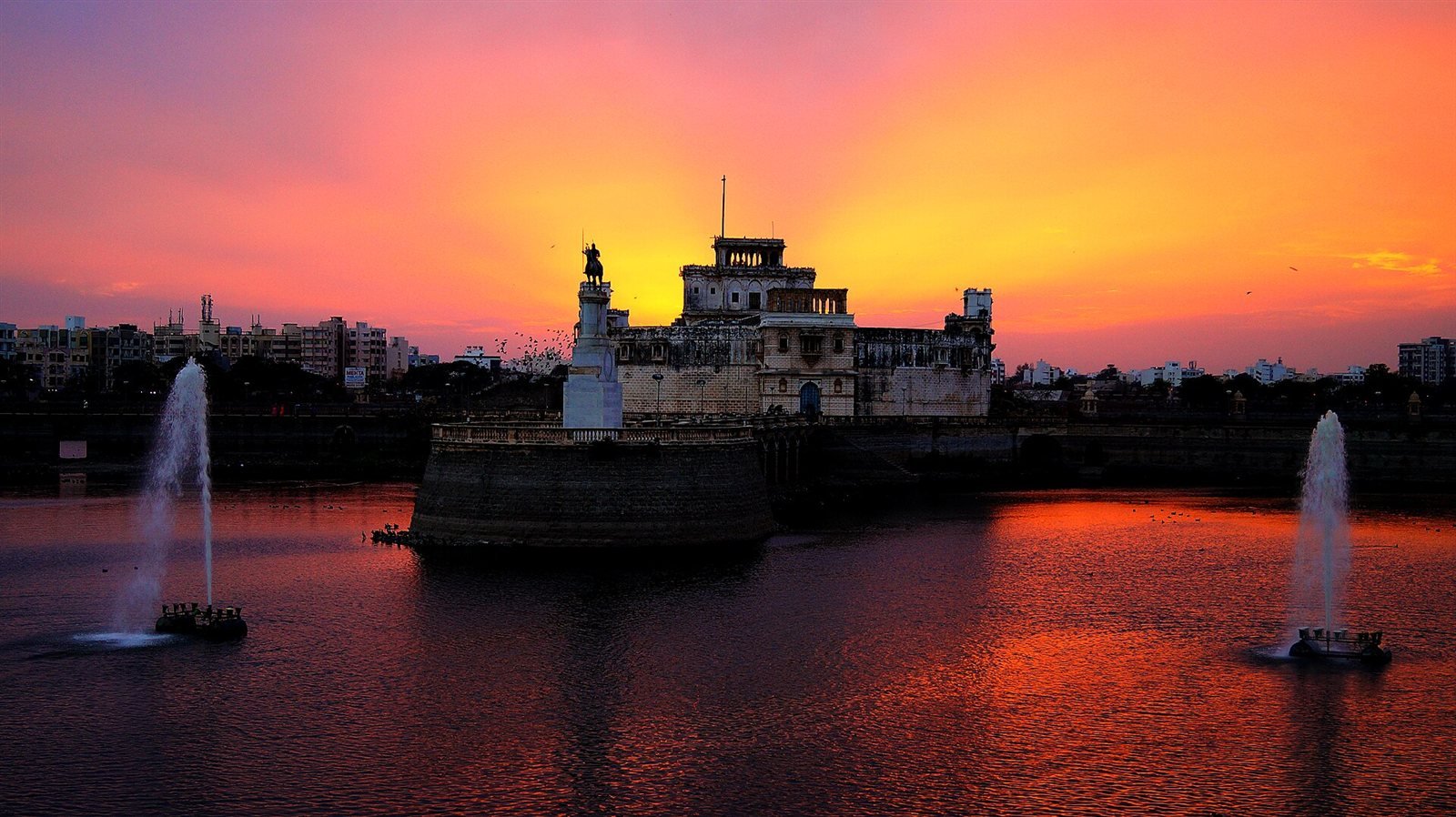
1,600 km of coastline, from black sand to quiet shipbuilding towns.
From black sand Tithal to Blue Flag Shivrajpur
Diu, the former Portuguese enclave just off the southern coast, packs several beaches into one small island: Nagoa's palm-fringed curve is the swimmable favourite, while Ghoghla and the rocky Gomtimata reward those who like to explore. Nearby Tithal, close to Valsad, surprises first-timers with its dark, almost black volcanic sand, more a place for evening strolls and temple visits than serious swimming. Dumas, on the edge of Surat, is a hugely popular local outing famous for its grey sand and long rows of street-food stalls rather than for clear water, and it comes alive on weekend evenings with families and vendors.
The headline in recent years is Shivrajpur, near Dwarka, which earned an international Blue Flag certification for its clean water, safety and facilities, one of only a small number of beaches in India to hold the tag. Its turquoise shallows and lifeguard-patrolled zone make it among the safest places to actually swim on this coast, and there is a small marine interpretation angle too. As a rule, the west-facing Saurashtra and Diu beaches deliver the best swimming water, while the Surat-side beaches are more about atmosphere, snacks and a fiery sunset than a proper dip in the sea.
Explore Beaches
The Beaches of Gujarat: A Coast-by-Coast Guide
A practical Gujarat beaches guide to Mandvi, Shivrajpur, Diu, Tithal and Dumas, covering which…
Mandvi: Kutch’s Easygoing Beach Town of Ships and Palaces
A Mandvi beach guide to Kutch's cleanest coast: the wooden shipbuilding yard, Vijay Vilas…
Tithal Beach: Black Sand and Quiet Evenings Near Valsad
A first-person Tithal Beach guide near Valsad: rare soft black sand, seaside Sai Baba…
Surat: Diamonds, Textiles and the Best Street Food in Gujarat
A Surat travel guide to the diamond-and-textile city's street food, riverfront, trading history and…
Gujarat's coast, beach by beach
Gujarat has the longest coastline of any Indian state at roughly 1,600 kilometres, and it is emphatically not a resort coast — which is precisely why it stays quiet. The beaches divide by region, and what you get differs sharply between them.
In Kutch, Mandvi is the standout: a long clean sweep of sand with the Vijay Vilas Palace behind it, a private beach section, and a working dhow-building yard on the Rukmavati creek a few minutes away. On the Saurashtra coast, Shivrajpur near Dwarka holds Blue Flag certification with genuinely clear water, Madhavpur Ghed offers an empty golden beach beside its temple, and Gopnath near Bhavnagar has dramatic low cliffs and a monastic quiet.
The south Gujarat beaches are darker-sanded and more local in character — Tithal near Valsad with its twin shrines on the promenade, Dumas outside Surat busy with evening food stalls, and Ubharat's casuarina-lined sands between them. Diu, though a separate union territory, functions as Gujarat's beach escape, with Nagoa and Ghoghla the best of its shores.
Practical notes
Two things matter more here than on most Indian coasts. The tidal range in the Gulfs of Khambhat and Kutch is among the largest in the country, so the sea can retreat and return across a great distance quickly — take local advice before walking out on any flat, and never assume an exposed sandbank will stay exposed. Second, most beaches have no lifeguard cover, and the currents off the south Gujarat shore in particular deserve respect.
October to March is the comfortable season everywhere. Gujarat is a dry state, so beaches are alcohol-free; Diu, which is not, draws weekend crowds from across the border for exactly that reason.
There is a longer write-up in our Gujarat beaches guide.