There is a two-hour window, a few days each month, when the Gulf of Kachchh pulls back far enough to let you walk on the seabed. You park at a scrubby patch of coast near Vadinar, follow a guide out past the mangroves onto a flat of wet rock and sand, and the sea is suddenly somewhere else entirely — a grey line half a kilometre off. What it leaves behind, in pools and under stones and clinging to coral heads, is one of the most surprising wildlife experiences in India.
This is Narara Bet, the accessible corner of Marine National Park in the Gulf of Kachchh — the first marine national park declared in India, gazetted in 1982, spread across some forty-two islands, mangrove creeks and coral reefs off the Jamnagar coast. Almost nobody comes. Those who do get octopus, sea anemones the size of dinner plates, brittle stars, sea slugs, puffer fish and living coral, all encountered on foot, without a mask or a boat.
Walking on the reef
The reef walk at Narara is entirely governed by the tide. The Gulf of Kachchh has a large tidal range, and on the right days the water drops far enough to expose a wide intertidal flat of rock, coral rubble and sand. A forest department guide leads you out along a route that avoids the fragile patches, and for the next hour or two you move slowly from pool to pool while the guide turns over the right stones and points at things you would walk straight past.
What turns up is genuinely startling. Octopus tucked into crevices, changing colour when disturbed. Sea anemones in green and brown, retracting as your shadow crosses them. Sea cucumbers lying like discarded rubber. Brittle stars, starfish, sea urchins, dog-faced water snakes in the shallows, tiny puffer fish stranded in pools, sponges, sea hares, and colonies of hard and soft coral — the northernmost significant reefs on India's west coast. On a good walk you will also see waders working the flats: plovers, sandpipers, herons, flamingos further out.
It is not a snorkelling trip and it is not aquarium-quality visibility. It is a low-tide ramble on a working reef, muddy and slightly awkward, in which the pleasure comes from the density of small strange life within a few metres of your boots. Children, in particular, tend to lose their minds over it.
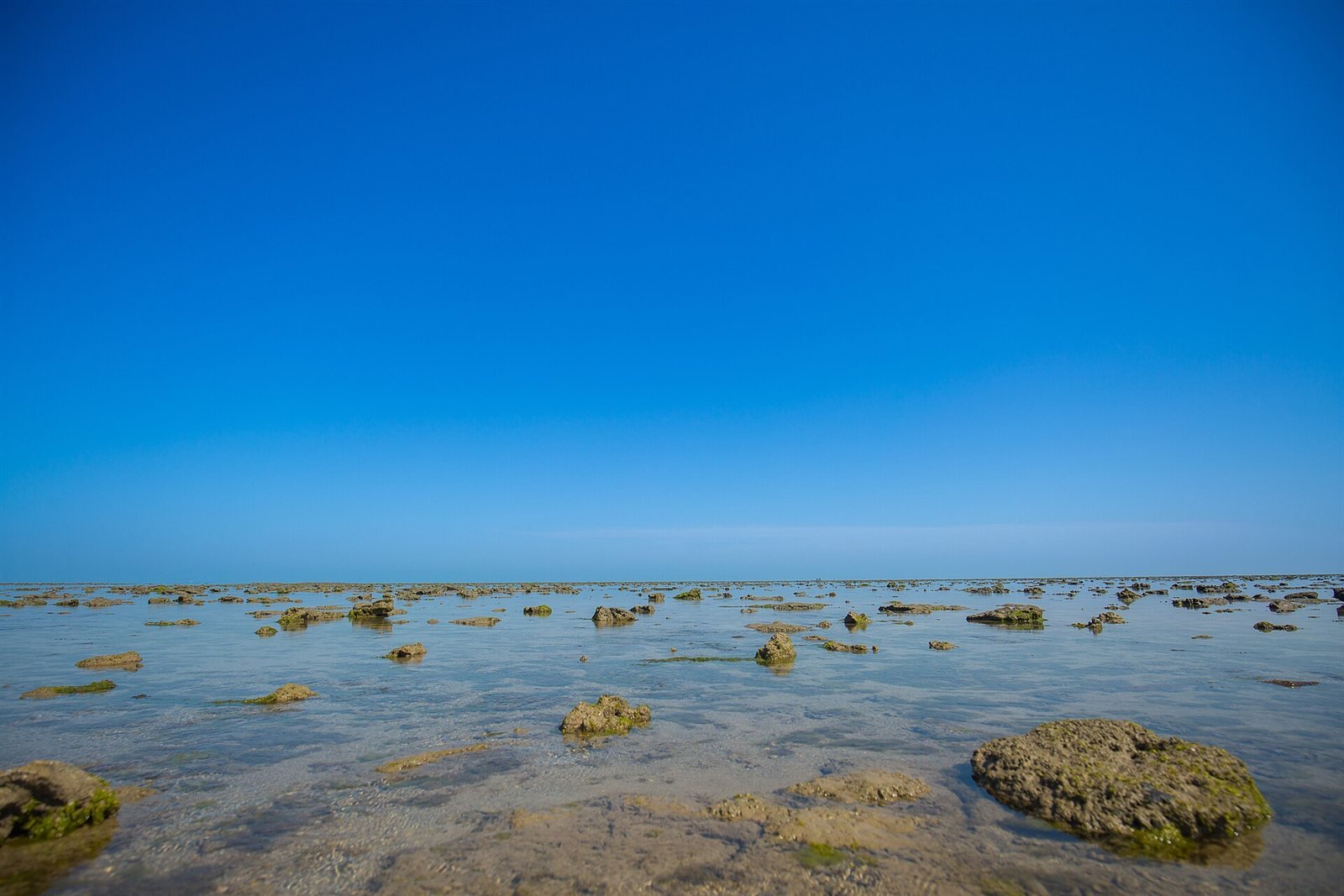
At low tide the sea withdraws and you walk out onto a living reef of anemones, octopus and coral.
Timing is everything, and permits are non-negotiable
You cannot simply turn up. The walk only works on low spring tides, which means a handful of suitable days around each new and full moon, and the window on those days is short. The forest department at Jamnagar or the Narara check post issues the permits and assigns the guide, and both are compulsory — this is a national park and the reef is protected. Serious visitors work backwards: find the tide tables first, pick the date, then book everything else around it.
Get the tide table before you book the hotel — a reef walk at the wrong hour is a walk on wet sand
Get this wrong and there is no visit. Arrive at high water and you are looking at an unremarkable stretch of muddy sea. Arrive on a neap tide and the water barely retreats. This is the single most common reason people come away from Marine National Park disappointed, and it is entirely avoidable. Ask the forest office directly which dates and times they are running walks in the month you want, and treat their answer as the fixed point of your itinerary.
The other, more restricted, way into the park is Pirotan Island, a coral island with a lighthouse and much richer reef, reached by boat from Bedi or Rozi port. Pirotan requires additional clearances — forest department plus port and, in practice, some patience — and permissions are limited and periodically suspended. If you want it, start the paperwork weeks in advance and have Narara as your fallback.
Mangroves, flamingos and why the park exists
The reef is only half the story. The Gulf of Kachchh coast holds Gujarat's best mangrove forests, and the park was created as much to protect them as the coral. Mangroves are the nursery of the whole system — they trap sediment, break storm surges, and shelter the juvenile fish that the region's fisheries depend on — and the creeks around Narara and the islands are thick with them.
That habitat makes the coast exceptional for birds. Great and lesser flamingos work the mudflats in numbers, along with pelicans, painted storks, avocets, oystercatchers, crab plovers, gulls and terns. Winter is the peak, and a reef walk in December or January is very likely to be bracketed by serious birdwatching. It is also worth being honest about the setting: this is a heavily industrialised coastline, with refineries and ports close by, and the park sits in constant tension with that. Part of what makes the reef feel precious is knowing what surrounds it.
Practicalities from Jamnagar
Narara Bet is roughly 60 km west of Jamnagar, near Vadinar on the Gulf coast, and Jamnagar is the base for a visit — it has an airport, good rail links and a full range of hotels. There is no realistic accommodation at the reef itself, so plan on a very early start from the city if your tide window is a morning one. A hired car is essential; the last stretch to the check post is not somewhere to be relying on buses.
November to February is the season, for the same reasons everywhere else on this coast: bearable temperatures, calm water, migratory birds. March onward the heat on an exposed tidal flat becomes punishing, and the monsoon closes things down. Wear old shoes you do not mind ruining — the reef is sharp and the mud is deep — bring water, sun protection and a hat, and accept that you will get wet from the knees down. Jamnagar itself deserves a day either side, with its lake, its brass bazaars and the Khijadiya bird sanctuary just outside town.
If you go
- Check the tide tables and confirm the walk dates with the Jamnagar forest office before booking anything else. Timing is the whole visit.
- Take the compulsory forest permit and guide — the reef is protected and the guide is what turns wet rock into wildlife.
- Wear sturdy old shoes you can throw away afterwards; the reef is sharp underfoot and the mud does not come out.
- Come between November and February for calm water, comfortable temperatures and peak flamingo and wader numbers.
- Treat Pirotan Island as a bonus, not a plan — permissions are limited and slow, so keep Narara as your reliable option.
Marine National Park is the least-known great wildlife site in Gujarat, and the one with the strictest terms of entry: get the tide right or get nothing. Do get it right, and you spend two hours walking on a living reef in the Gulf of Kachchh with octopus and anemones and coral under your boots, flamingos in the distance, and essentially nobody else there. Build the trip around the tide table, base yourself in Jamnagar, and come in winter.