For most of the year Shamlaji is a busy roadside temple town on the highway between Ahmedabad and Udaipur, the sort of place where buses stop and pilgrims eat and everyone moves on within the hour. Then, at the Kartik full moon in November, the surrounding fields fill with tens of thousands of people — Bhil, Garasia and Dungri Garasia families walking in from the Aravalli hills, traders, cattle, temporary shops, drummers, dancers — and Shamlaji becomes one of the great fairs of western India.
The temple at its centre is dedicated to Vishnu in the form of Gadadhar, and the image inside is a black stone figure that gives the deity his local name of Kaliyo Dev, the dark god. It is an important pilgrimage site for the settled Hindu population of north Gujarat and, unusually and more interestingly, a central sacred place for the region's Adivasi communities, whose participation in the fair is what makes it remarkable.
The temple and the dark god
The Shamlaji temple stands on the bank of the Meshwo river, a substantial structure of pale sandstone with a shikhara, a pillared mandapa and dense carving across its exterior — bands of figures, deities, elephants and geometric ornament in the north Gujarat idiom. Its dating is debated in the usual way: an older shrine on the site is generally placed around the eleventh century, with substantial rebuilding and expansion in later periods, and what stands now reflects several campaigns of work rather than one.
Inside is the reason people come: a black stone image of Vishnu holding the gada, or mace, from which the temple's formal dedication to Gadadhar derives. The colour of the stone has given rise to the affectionate local name Kaliyo Dev, and among the Adivasi communities of the surrounding hills the deity is often addressed as Kalio Bavji. That doubling of names is a clue to what Shamlaji actually is — a site where mainstream Vaishnavism and Adivasi religious practice have overlapped for a very long time without either quite absorbing the other.
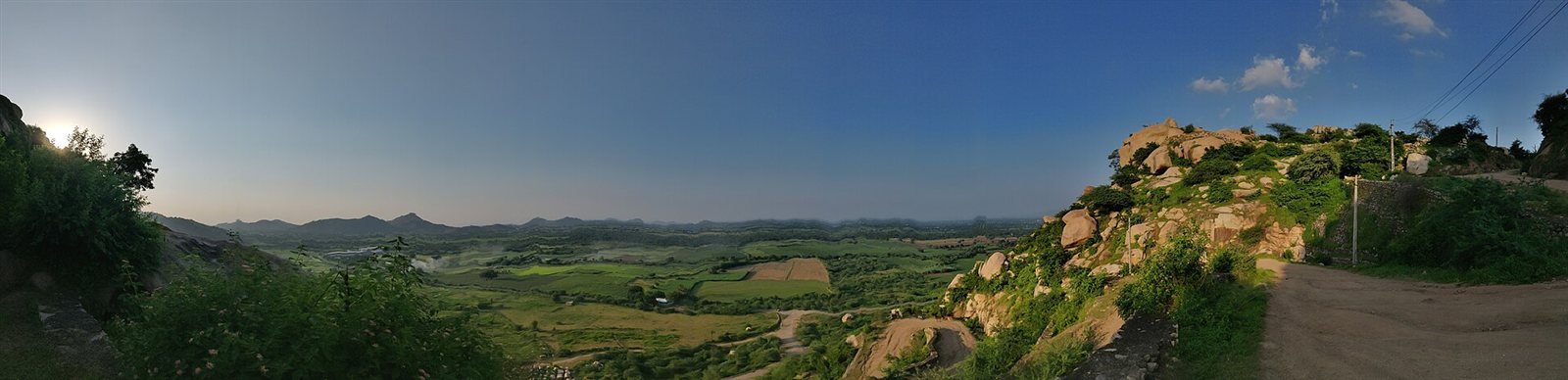
The riverside setting adds a good deal. There are ghats, a bridge, and the low Aravalli foothills going back behind, and the temple looks its best in the early morning when the light comes across the water and the crowds have not yet arrived off the highway. Ordinary weekdays outside the fair season are genuinely quiet.
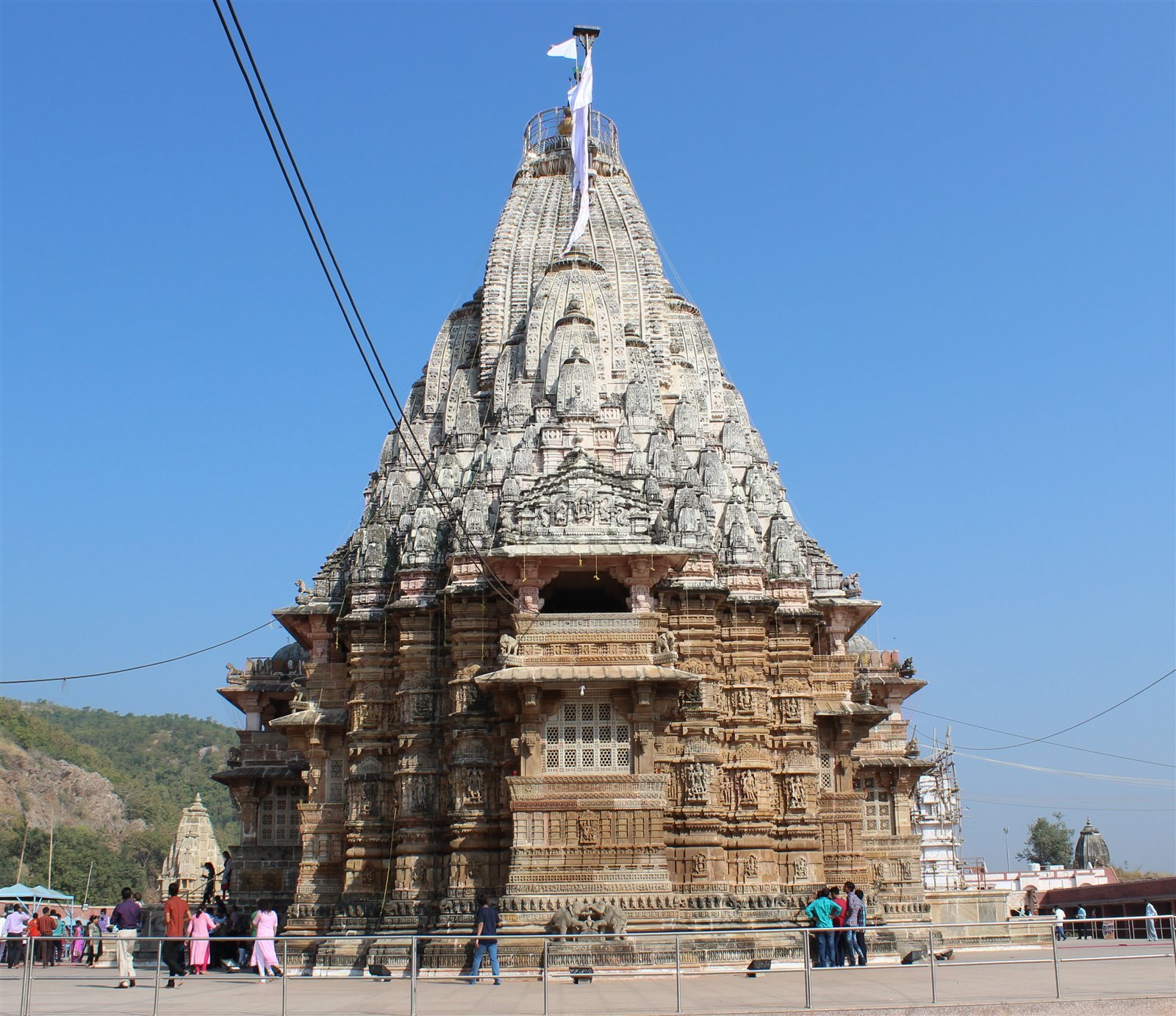
A Vishnu temple on the highway to Udaipur that becomes, once a year, one of Gujarat's great tribal fairs.
Kartik Purnima, and a fair that belongs to the hills
The Shamlaji mela runs for around a fortnight around Kartik Purnima, the full moon of the Kartik month, which falls in November. Attendance figures reported for it run into the hundreds of thousands across the period. What distinguishes it from Gujarat's other big melas is the composition of the crowd: a very large proportion of those who come are Adivasi, walking in from the hill villages of Aravalli, Sabarkantha and across the border in Rajasthan, and for many the journey is an annual obligation rather than an outing.
Two names for one deity — Gadadhar to the priests, Kalio Bavji to the hills — and a fair where both traditions arrive at once
The fair therefore functions on several levels at once. It is a pilgrimage, with darshan and offerings and ritual bathing in the Meshwo. It is a cattle and goods market, with livestock traded and temporary shops selling everything from agricultural tools to silver ornaments to clothes. It is a social occasion, and specifically a marriage market — like Tarnetar in Saurashtra, Shamlaji is a place where families meet and matches are made. And it is a performance, with drumming, dancing and singing going on more or less continuously.
For a visitor it is one of the best opportunities in Gujarat to see Adivasi dress, ornament and music without any of it being staged. It is also, inevitably, crowded, loud, dusty and hard on the feet, with strained facilities and no comfortable way to see it. Come with realistic expectations, dress and behave modestly, ask before photographing anyone, and do not treat other people's religious obligation as a photo opportunity. A local guide helps enormously and is easy to arrange in Himmatnagar or through hotels in the region.
The rest of the year
Outside the mela, Shamlaji is a half-hour stop, and the honest advice is to treat it as one element of a wider trip rather than a destination. The temple is handsome and the setting is pleasant, morning aarti is worth timing, and the riverside walk takes twenty minutes. Facilities along the highway are geared to bus traffic, which means plenty of dhabas and adequate tea and not much else.
What makes the area worth a day or two is what surrounds it. Dev ni Mori, the drowned Buddhist stupa site, is a few kilometres away under the Meshwo reservoir. Idar's granite boulder hill is around 45 km west. The Polo Forest and its ruined tenth-to-fifteenth-century temples are roughly 60 km north-west, and are the single best reason to be in this part of Gujarat. Continue north-east on the highway and you are in Rajasthan and heading for Udaipur within three hours.
Getting there
Shamlaji is in the Aravalli district, about 130 km from Ahmedabad on the highway towards Udaipur, and roughly 60 km from Himmatnagar. Because it sits directly on a major national highway it is one of the easiest places in north Gujarat to reach: buses run constantly in both directions, and any Ahmedabad–Udaipur service will stop nearby. Trains are less useful; Himmatnagar has the nearest station of any consequence.
October to March is the comfortable season, and November brings the mela. Accommodation at Shamlaji is limited to dharamshalas, trust guesthouses and basic hotels, which fill completely during the fair — anyone planning to attend should book far ahead or stay in Himmatnagar, Modasa or at the Polo Forest resorts and drive in. During the mela the highway around Shamlaji becomes very congested, so build extra hours into any travel plan that passes through.
If you go
- Time a visit for the Kartik Purnima mela in November if you want the Adivasi fair, and book accommodation far ahead or stay in Himmatnagar.
- Outside the fair, come early in the morning for aarti, the river light and a genuinely quiet temple.
- At the mela, dress modestly, ask before photographing people, and remember that for most of the crowd this is an obligation, not an outing.
- Hire a local guide for the fair — it transforms what you understand and how you are received.
- Never make Shamlaji the whole trip: combine it with Dev ni Mori, Idar and the Polo Forest over two days.
Shamlaji is two places. For most of the year it is a handsome eleventh-century-rooted Vishnu temple on a river beside a highway, worth half an hour and best at dawn. For a fortnight around the Kartik full moon in November it is one of the great fairs of western India, filled with Adivasi families who have walked in from the Aravalli hills to see a god they call Kalio Bavji. Pick which one you want, book accordingly, and build the Polo Forest and Idar into the same trip.