There is a railway line in south Gujarat that takes about three and a half hours to cover sixty-three kilometres. It runs on two-foot-six-inch track from Bilimora, on the main Mumbai–Delhi line near Navsari, inland and upward to Waghai at the edge of the Dang forests, and it stops at every village on the way. Nobody uses it to get anywhere quickly. That is entirely the point.
The Bilimora–Waghai line was built in 1913 by the Gaekwad rulers of Baroda, part of a substantial network of narrow-gauge lines the princely state laid across its territory, and it survives as one of the last working fragments of that system. It passes through teak and bamboo forest, over small bridges, past halts where a handful of people get on and off, and in the monsoon it is genuinely lovely. It is also fragile — services on lines like this are suspended, resumed and reviewed, so anyone planning around it should check its current status first.
A princely railway
The Gaekwads of Baroda were among the more energetic princely modernisers, and railways were part of that programme. From the 1860s onwards the state built an extensive narrow-gauge network — the Gaekwar's Baroda State Railway — connecting its scattered territories and the agricultural districts to the main lines and the ports. Narrow gauge was chosen for the obvious reason that it was far cheaper to build through difficult country, and it opened up areas that broad gauge would never have reached.
The Bilimora–Waghai section, opened in 1913, ran into the forested hill country of the Dangs, and its purpose was straightforwardly economic: timber out, goods and people in. Teak from the Dang forests was a significant resource, and a railway to the edge of it made commercial sense. After independence the line passed to Indian Railways along with the rest of the network, and it has run as a rural passenger service ever since, largely unmodernised.
Most of India's narrow gauge has now gone, converted to broad gauge under the unigauge programme or simply closed. A handful survive, mostly the famous mountain railways — Darjeeling, Nilgiri, Kalka–Shimla, Matheran — which have UNESCO recognition or heritage protection. Bilimora–Waghai has neither. It is an ordinary working branch line that happens to be a hundred and ten years old, and that is precisely what makes riding it interesting.
Sixty-three kilometres of 762 mm gauge, laid in 1913, running into the forest.
What the journey is actually like
Slow. The train covers around sixty-three kilometres in something over three hours, which averages out at under twenty kilometres an hour, and it stops constantly — at Chikhli, Unai, Kalamkhet and a series of smaller halts. The carriages are basic, unreserved, with wooden or hard seats and windows that are open to the air. There is no catering, no announcements and no comfort of any kind, and the fare is trivially cheap.
Sixty-three kilometres in over three hours, at under twenty kilometres an hour — which is exactly the right speed for this landscape
What you get in exchange is the landscape at walking pace. The line climbs gently from the coastal plain into the hills, through sugarcane and paddy, then into teak and bamboo forest, over small girder bridges, past hamlets where children wave and vendors board for a station or two. In the monsoon, from about July to October, the whole route is green and dripping and the streams are running, and it is at its best. In the dry season it is browner and dustier but still pleasant.
It is also a genuine local service, which means the carriages fill with people going about their business — to market, to school, to a hospital appointment — rather than with tourists. That is much of the pleasure and it comes with the corresponding obligation: this is somebody's commute, not an attraction laid on for you. Behave accordingly, do not spread out across seats, and ask before photographing people.
Checking it is running, and how to use it
This is the essential caveat. Services on India's remaining rural narrow-gauge lines are precarious. They are periodically suspended for track work, for want of rolling stock, for conversion proposals or on economic grounds, and then sometimes resumed. The Bilimora–Waghai line has been through such episodes. Anyone building a trip around it should verify the current timetable and operating status close to their travel date rather than relying on any published description, including this one.
If it is running, the practical approach is to travel one way and arrange a road transfer for the other, because the timings rarely suit a same-day return that leaves you any time at the far end. Bilimora is the coastal end, on the main line with easy access from Surat, Navsari and Mumbai. Waghai is the forest end, close to Gira falls and about 30 km from Saputara, which makes it a natural way to arrive in the Dangs — take the train up, have a car meet you, and continue into the hills.
Building it into a Dangs trip
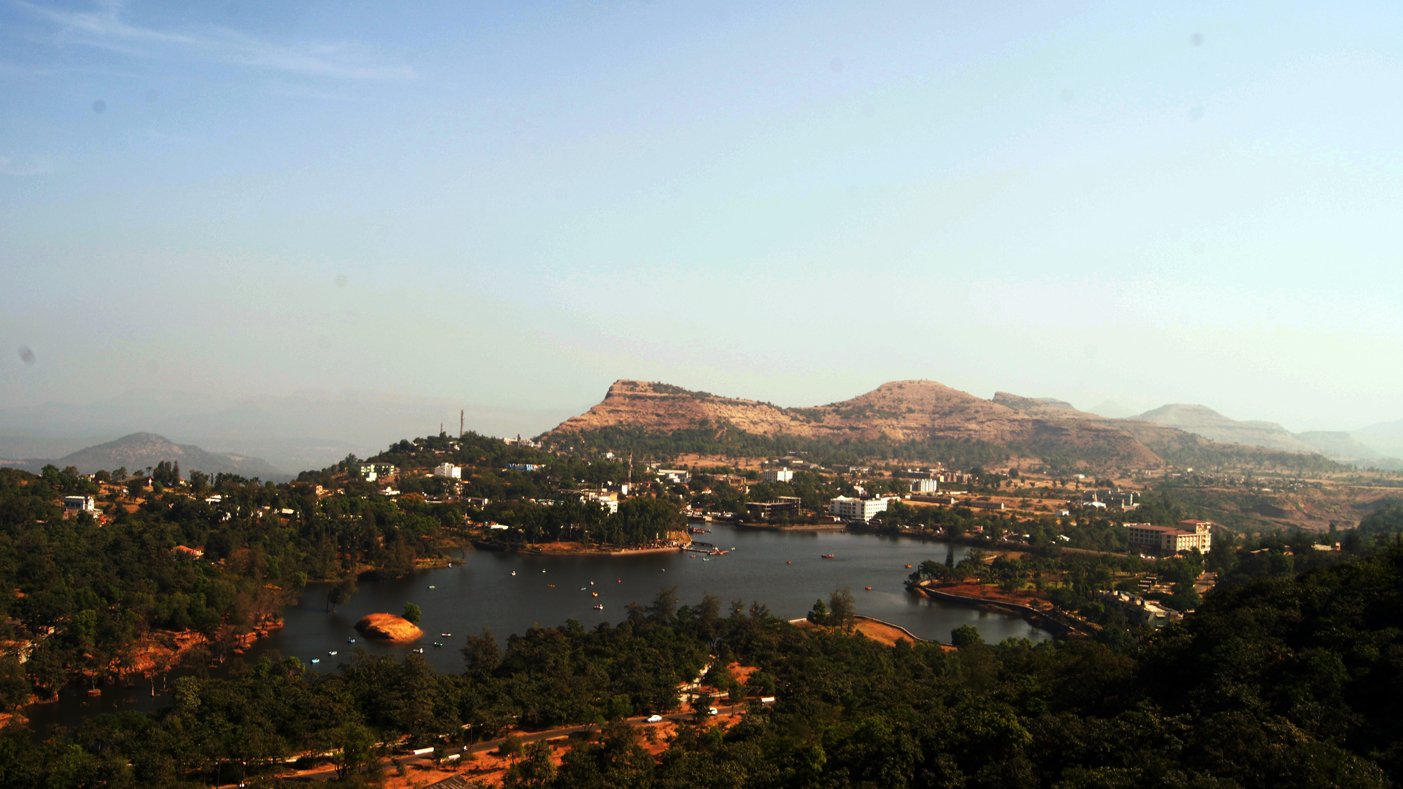
That is the best use of the line: as the approach to south-east Gujarat's hill country rather than as an end in itself. Waghai sits at the edge of the Dangs, the wettest district in the state, and from there you are within reach of Gira falls just outside town, Girmal — the tallest waterfall in Gujarat — deeper in the hills, Saputara with its lake and hotels, and Don Hill, higher and almost undeveloped, with Adivasi homestays.
Timing therefore points to the monsoon and immediately after: August to October, when the waterfalls run, the forest is green and the train ride is at its most beautiful. November to February is comfortable and clear and better for Saputara's viewpoints, but the falls are much reduced. March to June is hot and dry and the least rewarding. Bilimora, Navsari and Valsad are all on the main Mumbai–Delhi line; Surat, with the airport, is about 60 km from Bilimora.
If you go
- Verify the current timetable and operating status close to your travel date — services on lines like this are periodically suspended.
- Travel one way by train and arrange a car for the other; the timings rarely allow a useful same-day return.
- Go in the monsoon or just after, from August to October, when the forest is green and the streams are running.
- Remember it is a working local service, not a heritage attraction: don't spread out, and ask before photographing people.
- Use Waghai as your arrival point for the Dangs — Gira falls, Girmal, Saputara and Don Hill are all within reach.
The Bilimora–Waghai line is a hundred-and-ten-year-old princely railway that still does its original job badly and slowly, and is all the better for it. Sixty-three kilometres of two-foot-six-inch track through teak forest at under twenty kilometres an hour, full of people going to market. Check it is actually running, ride it one way in September with the windows open, and step off at Waghai with the Dang waterfalls ahead of you.