Dahod is not on anybody's Gujarat itinerary, and that is the point of going. It is a district in the far east of the state, wedged against Madhya Pradesh and Rajasthan, predominantly Adivasi — Bhil, Bhilala, Rathwa, Naik and others — hilly, agricultural, poor, and almost entirely untouched by the tourist economy. There is no monument here that will make a list of things to see in India. What there is instead is one of the most vivid weekly market cultures in western India, a sloth bear sanctuary almost nobody visits, and the unlikely distinction of being the birthplace of a Mughal emperor.
For travellers who have done the temples and the Rann and want to see a part of Gujarat that is simply itself, Dahod is the answer. It requires a car, a tolerance for basic accommodation and a genuine interest in ordinary life rather than sights. Given those, a couple of days here will stay with you longer than a lot of famous places.
Market day in the hills
The weekly haat is the institution that organises rural life across this whole belt, and in Dahod district it is at its best. On the appointed day, families walk or ride in from surrounding villages and a field or roadside stretch fills with an entirely functional market: grain, pulses, chillies and vegetables laid out on cloth; live goats and chickens; agricultural iron and wooden tools; cheap plastic and enamelware; cloth and readymade clothes; medicinal roots and barks; and stalls doing tea and fried snacks all day.
What makes it visually extraordinary is the dress. Adivasi women here wear heavy silver — anklets, armlets, neck ornaments, earrings that stretch the lobe, sometimes a great deal of it at once — and bright printed cloth, and this is everyday clothing rather than anything performed for an audience. Men wear turbans in the older generation, often with silver too. Nobody is dressed up. It is simply what people wear to market, and the contrast with a Gujarati city is total.
The markets are also where you see the economy work. Silversmiths and repairers set up at the edges. Moneylenders and traders do business. Young people meet. Announcements get made. Anthropologists have written a good deal about these markets as the connective tissue of Adivasi society in eastern Gujarat, and spending a morning at one is a better introduction to the region than anything a museum could offer. Market days differ from village to village, so the essential first question in Dahod is which day falls where.
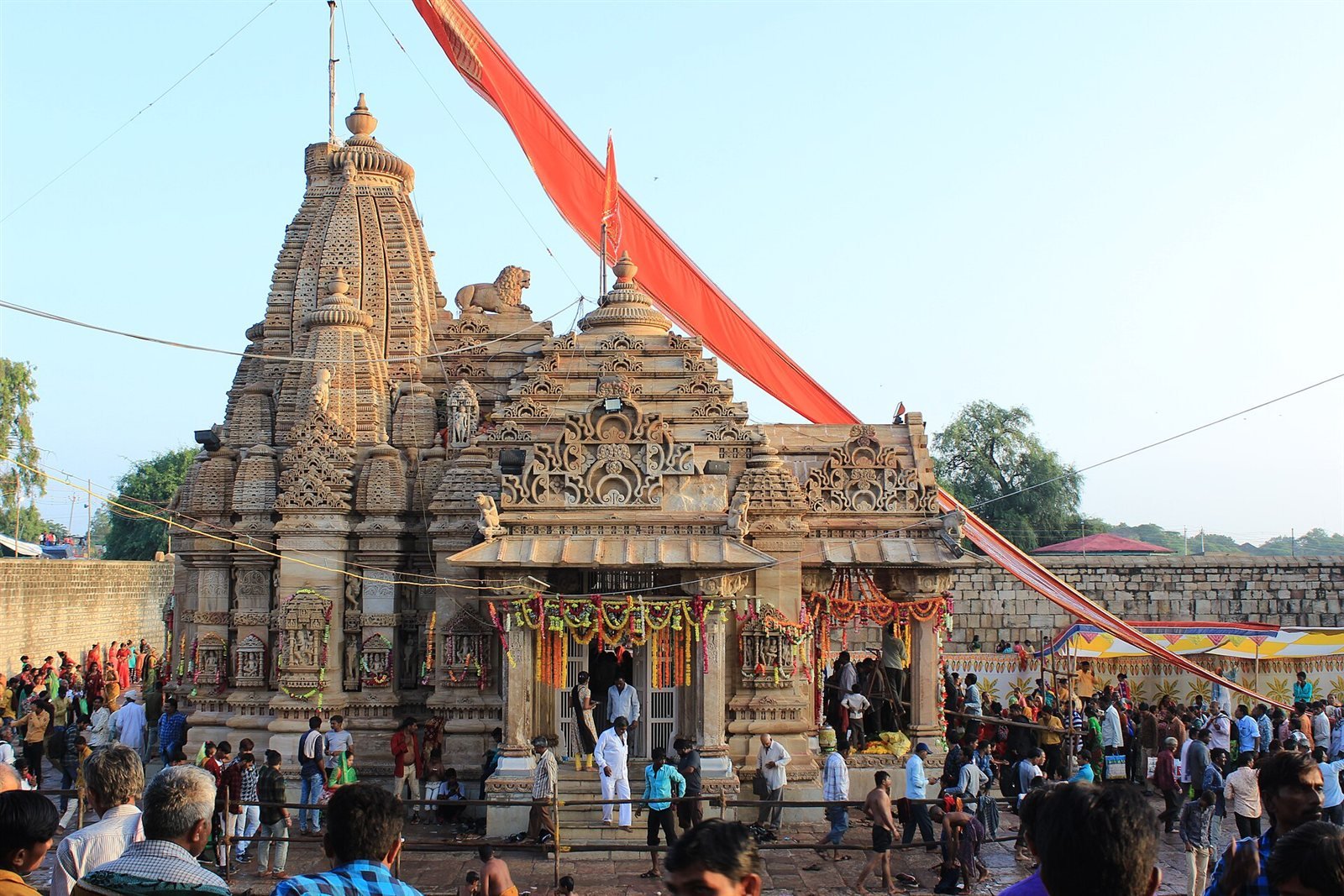
Market day in the hills: silver ornaments worn as ordinary clothing, not costume.
How to be there decently
This is the part that matters. A haat in a poor Adivasi district is not a tourist attraction and the people at it are not exhibits. Visitors turning up with long lenses to photograph women in silver, without a word exchanged, are a known and resented phenomenon across tribal India, and it has made some communities understandably hostile to outsiders with cameras. It costs nothing to do better.
Nobody at the haat is dressed up. It is what people wear to market — which is exactly why you ask before you photograph anyone
The rules are simple. Ask before photographing any person, accept a refusal without argument, and do not photograph children without a parent present and agreeing. Buy something — from several stalls, at the asking price, without bargaining people down over a few rupees. Learn and use a greeting. Eat at the market. Go with a local guide if you can, which changes how you are read from the moment you arrive. Dress conservatively. Do not hand out sweets or money to children.
Do that and the experience is completely different. People will talk to you, explain what things are, laugh at your Gujarati, show you what they are selling. The photographs you come away with — few, and taken with consent — will be better than the ones you would have stolen. And you will have behaved like a guest in a district that gets very few of them.
Ratanmahal, and an emperor born in Dahod
Dahod's wild card is the Ratanmahal Sloth Bear Sanctuary, in the hills towards the Madhya Pradesh border. It protects dry deciduous and bamboo forest and is one of the better sloth bear areas in Gujarat, along with leopard, hyena, jackal, four-horned antelope and a good forest bird list. It has essentially no tourist infrastructure — no jeep fleet, no lodges, no reliable sighting economy — so a visit means the forest department, a guide, an early start and low expectations about mammals. What you reliably get is quiet hill forest and birds. Arrange access in advance rather than turning up.
The historical footnote is genuinely odd. Aurangzeb, the sixth Mughal emperor, was born at Dahod in 1618, while his father Shah Jahan was serving in the Deccan campaigns, and there is a site in the town associated with his birth. It is a modest thing to look at and it takes ten minutes, but it is a real reminder of how thoroughly the routes of empire ran through places now considered remote. The town also has an old stepwell, a fort area and Chhab Talav, a tank with a temple and a pleasant walk, and it is a functional district headquarters with a busy bazaar.
Practicalities
Dahod town is on the main Mumbai–Delhi railway line, which is its great advantage — it has a proper railway station with good long-distance connections, roughly 210 km from Ahmedabad and about 160 km from Vadodara. Buses run from Vadodara, Godhra and Ahmedabad. Once you are there, a hired car or motorcycle is essential; the villages and the sanctuary are not reachable any other way.
October to March is the season, with pleasant days and cold nights in the hills. The monsoon makes the district green and is agriculturally the most interesting time, but interior roads become difficult. April to June is very hot. Accommodation is limited to basic hotels in Dahod town and Devgadh Baria; there is nothing comfortable, and travellers wanting a good bed should base in Vadodara and accept long drives. The natural route combines Dahod with Chhota Udaipur to the south for Pithora painting and more markets, and with Champaner-Pavagadh and Jambughoda to the west.
If you go
- Ask locally which day the haat falls in which village — that single question shapes the whole trip.
- Always ask before photographing people, accept refusals, and buy from several stalls without haggling hard.
- Hire a local guide. In a district with almost no visitors it changes how you are received, immediately.
- Arrange Ratanmahal sanctuary access with the forest department in advance, and treat sloth bear sightings as luck.
- Expect basic accommodation; combine Dahod with Chhota Udaipur, Champaner and Jambughoda over three or four days.
Dahod offers no monuments and no comfort, and it is one of the most worthwhile places in Gujarat for exactly that reason. Find out which day the market falls in which village, go early, buy things, ask before you photograph anybody, and spend a morning in the middle of a functioning Adivasi economy where the silver is everyday clothing. Add a dawn in Ratanmahal's bear forest and ten minutes at the birthplace of a Mughal emperor, and the far east of the state starts to make sense.