Best time
November to February
Ideal duration
3-4 days
Good for
Crafts, desert, culture
Nearest airport
Bhuj (BHJ)
Kutch is the part of Gujarat that feels least like anywhere else in India. It is a huge, thinly populated district in the far west, wrapped by a seasonal salt marsh that floods in the monsoon and dries into a blinding white crust by winter. Bhuj, the old princely capital, sits at its centre and works as your base. A devastating earthquake flattened much of the city in 2001, so what you see today is a mix of patched-up heritage and confident new building, with the desert and the craft villages all within an easy drive.
What pulls most people here is the combination of landscape and handwork. Within a couple of hours of Bhuj you can stand on the edge of the Great Rann at sunset, watch a weaver throw a shuttle across a pit loom, and buy a block-printed scarf straight from the family that dyed it. Distances are real and the sun is fierce, so plan around mornings and late afternoons and keep the flat white hours of midday for lunch, shade and the museums in town.
Why go to Bhuj and Kutch
Come for texture, in every sense. Kutch holds one of the densest concentrations of living craft in the country, with villages that each specialise in something different: Ajrakh block printing, bell-metal work, mud-and-mirror embroidery, Rogan painting done by a single family. The Great Rann adds a landscape you will not forget, a horizon-to-horizon salt flat that turns silver under a full moon. Add the rebuilt old city, the hilltop views from Kalo Dungar, and the beach town of Mandvi, and you have a region that rewards slow, curious travel far more than a rushed checklist.
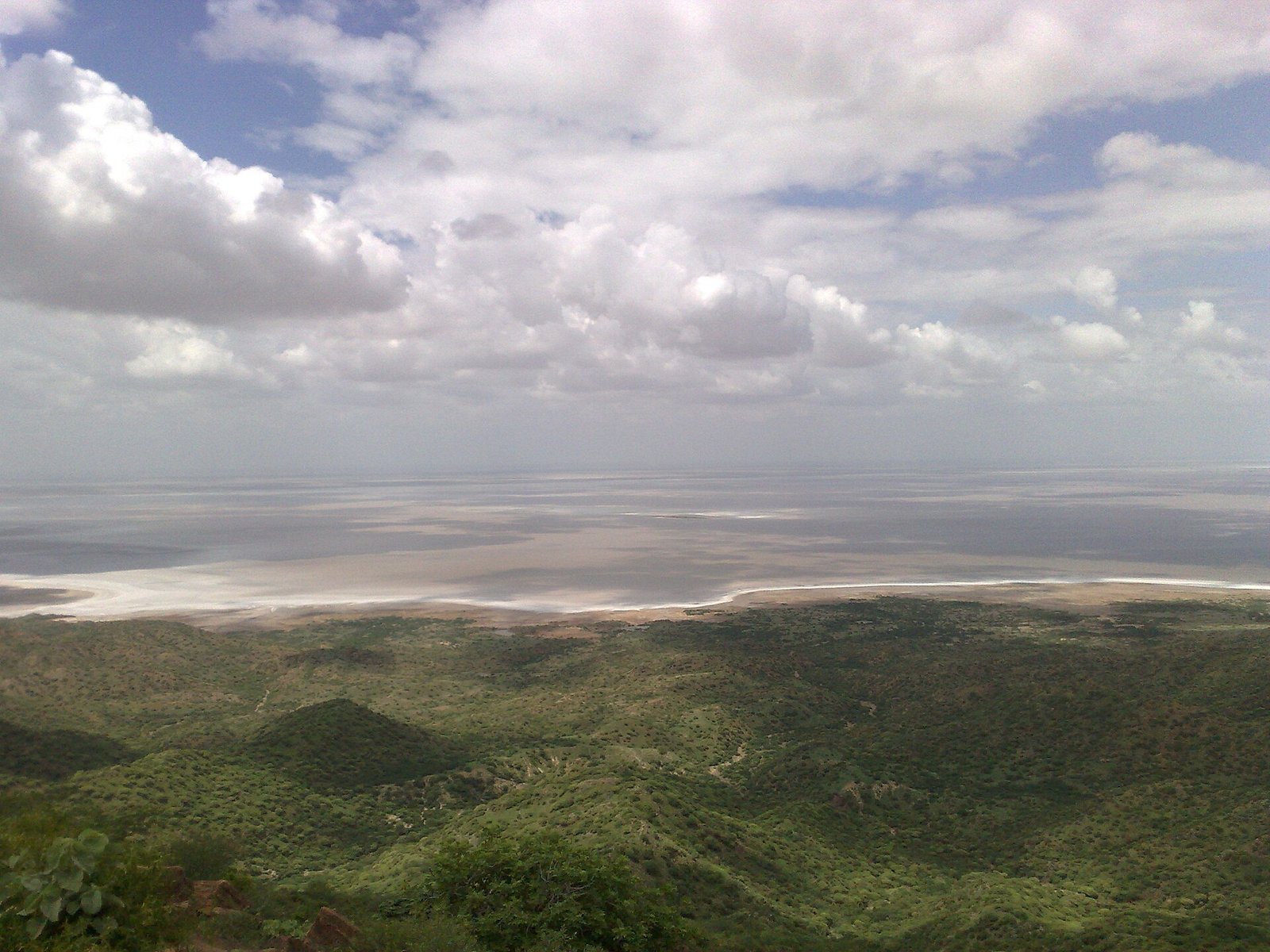
The Great Rann stretches to the horizon as a flat sheet of cracked white salt.
Top things to do
- Walk out onto the Great RannDrive to the Dhordo edge of the white desert for sunset, when the salt glows pink then silver. Full-moon nights are the classic time to go.
- Tour the craft villagesAjrakhpur for block printing, Nirona for Rogan art and bell-making, and Hodka for embroidery. Buy directly from the artisans who make the pieces.
- Explore Bhuj old citySee the Aina Mahal palace of mirrors and its neighbour Prag Mahal, then wander the bazaars and the Swaminarayan temple nearby.
- Climb Kalo DungarKutch's highest point gives a sweeping view over the white Rann, especially good in the last hour before sunset.
- Day-trip to MandviA relaxed beach town with a long sandy shore, the ornate Vijay Vilas Palace and a centuries-old shipbuilding yard on the creek.
How to get there
Bhuj has its own small airport (BHJ) with daily flights from Mumbai and Ahmedabad, which is by far the quickest way in. There is also a railway station with overnight trains from Ahmedabad and Mumbai. By road, Bhuj is roughly 330 km from Ahmedabad, about a six to seven hour drive on good highway, and around 400 km from Rajkot. Within Kutch you really need a car, since the craft villages and the Rann edge are spread out and public transport is thin. Hiring a driver in Bhuj for the day is the standard, hassle-free option.
Where to stay
Most travellers base themselves in Bhuj, where you will find simple business hotels and a few mid-range heritage-style properties within reach of the old city. For a night or two near the desert, the tented resorts and village homestays around Dhordo and Hodka put you close to the white Rann and to the artisan communities; these fill up fast in peak season and during the winter desert festival, so book ahead. Budget guesthouses are easy in town, while the premium end is mostly the seasonal luxury tents out on the Rann. Mandvi has a handful of beachside options if you want a slower coastal night.
Best time to visit
Winter, from November to February, is the only comfortable window and the only time the salt flat is fully dry and walkable. Days are warm and clear, nights can turn genuinely cold in the desert, so pack a layer. This is also when the long Rann Utsav festival runs, filling Dhordo with craft stalls, music and the tented camps. October and March are bearable but hot by afternoon. Avoid the summer, when temperatures push well past 40 C, and the monsoon months, when the Rann floods and much of the white landscape simply disappears under water.
Practical tips
- You need a permit to visit the Great Rann near the border; it is issued at the checkpost on the way, so carry photo ID and passport-size photos.
- Carry cash for the villages; many artisans do not take cards and mobile signal can be patchy out of town.
- Sun protection is not optional. Sunglasses, a hat and sunscreen matter a lot on the reflective salt.
- Bargain gently and fairly in the craft villages, and remember you are buying weeks of skilled work, not factory goods.
- Start early. The best light and the coolest hours are before 10 am, and midday is for resting indoors.
Frequently asked questions
How many days do you need for Bhuj and Kutch?
Three to four days is comfortable: one for Bhuj town, one or two for the craft villages, and at least one for the Rann and Kalo Dungar. Add a day if you want Mandvi.
Is the white Rann always white?
No. It is a dry salt crust in winter but floods during the monsoon and takes weeks to dry out. December to February is the most reliable time to see it white.
Do I need a permit for the Rann?
Yes, a simple border-area permit is required for the desert near Dhordo. It is issued quickly at the roadside checkpost if you carry ID and photos.
Is Kutch safe for solo and women travellers?
Generally yes. It is a calm, hospitable region, though distances are long and services thin, so plan transport in advance and avoid arriving in remote spots after dark.
Kutch works best when you stop counting sights and start noticing detail: the geometry of a block-printed cloth, the way the salt crunches underfoot, the quiet pride of a craftsperson at their loom. Give it a few unhurried days, base yourself in Bhuj, and let a good local driver connect the dots between desert, village and old city. You will leave with a bag full of things nobody else has, and a strong urge to come back.