Best time
October to March, mornings
Entry
Free; open daily
Good for
History, quiet, an hour or two
Location
Ahmedabad, on the Sabarmati riverfront
Sabarmati Ashram is where Gandhi lived from 1917 to roughly 1930, where he developed the practical shape of the Indian independence movement, and from where he set out on the Dandi Salt March in March 1930 — vowing not to return until India was free, which he never did. It sits on the west bank of the Sabarmati in Ahmedabad, it is open every day, entry is free, and it takes between one and two hours.
It is also, deliberately, one of the least impressive-looking major historical sites in India. The centrepiece, Hriday Kunj, is a simple tiled cottage with bare floors, a low writing desk, a spinning wheel and almost nothing else. That plainness is the exhibit. This guide covers timings, what to look at, how to get there, and what to do with the rest of the day.
Why the ashram is worth your time
Because of what happened here. In the thirteen years Gandhi was based at Sabarmati, the ashram functioned as the operational centre of a mass political movement and as an experiment in living — spinning and weaving, sanitation work, communal meals, education, and the deliberate abolition of caste distinction among residents, which caused real local hostility at the time. The non-cooperation movement, the salt satyagraha and much else were planned in these buildings.
And because of Hriday Kunj itself. Gandhi's and Kasturba's quarters are preserved almost bare: a mat, a low desk, a charkha, a few possessions in a glass case. Nothing has been dressed up. Standing in a room that plain, having read what was organised from it, is the entire point of the visit, and it lands harder than any amount of interpretation. The adjoining museum, designed by Charles Correa in the 1960s and a significant piece of modern Indian architecture in its own right, holds letters, photographs and a substantial archive.
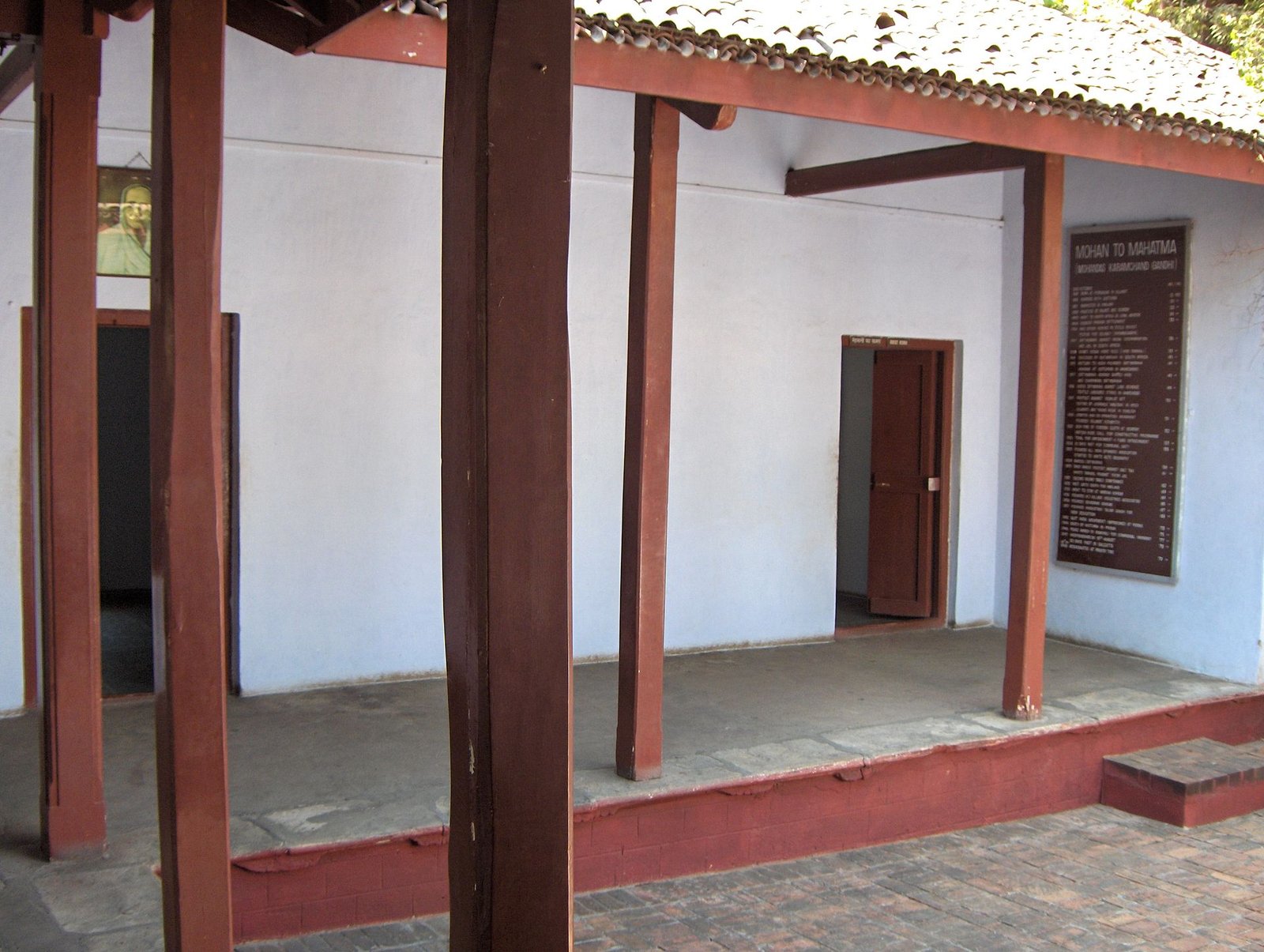
A bare floor, a low writing desk and a spinning wheel — the whole of it.
How to visit
- Come in the morningIt opens early, it is cooler, and it is quieter before the school groups and tour buses arrive. Mornings on the riverfront are also the pleasantest time to be here.
- Start at Hriday KunjGandhi's and Kasturba's residence, preserved as it was. Take your time; there is very little to look at, and that is what you are there for.
- Go through the Gandhi SangrahalayaCharles Correa's museum building holds photographs, letters and archival material, and is worth attention as architecture as well as content.
- Find the Dandi March connectionThis is where the march began in March 1930. Understanding that the walk to the sea started from this compound gives the place its charge.
- Walk the grounds and the riverfrontThe compound is calm and green, with other residence buildings and quiet corners. The Sabarmati Riverfront promenade runs alongside.
- Allow one to two hoursAn hour is enough for the essentials; two lets you read properly in the museum. It is not a half-day site.
How to get there
The ashram is in Ahmedabad on the west bank of the Sabarmati, a short taxi or auto-rickshaw ride from almost anywhere in the city and easily reached by app-based cab. Ahmedabad has an international airport and a major railway station, both within a comfortable drive, and the city's BRTS and metro network serve the general area.
Because it is inside the city, there is no travel planning to do beyond choosing a time of day. Note that a large redevelopment and expansion of the ashram precinct has been under way, which has affected parts of the site and its surroundings at various points — worth a quick check before you go if you have specific expectations about what is open.
Where to stay
Anywhere in Ahmedabad. The city has the widest range of accommodation in Gujarat: hostels and budget hotels, restored havelis in the walled city on the east bank, mid-range business hotels, and international-standard properties along the western corridor. The ashram is a short ride from all of them.
If Gandhi and the independence movement are your main interest, staying in the old city has an advantage — it puts you close to the heritage walk, the pols, Sidi Saiyyed's jali and the textile museums, and gives you a fuller sense of the Ahmedabad that Gandhi operated in. The western side is more convenient for the airport and for driving out to Adalaj, Gandhinagar and Thol.
Best time to visit
October to March, and mornings within that. Ahmedabad's winter is genuinely pleasant, the ashram grounds and the adjacent riverfront are at their best in the cool hours, and early visits avoid the school parties that arrive through the day. Entry is free and it is open daily, which gives you complete flexibility.
April to June is very hot in Ahmedabad and the middle of the day is best avoided anywhere in the city; an early-morning ashram visit still works well. The monsoon is humid but the grounds are green and quiet. Around Gandhi Jayanti on 2 October and the Dandi March anniversary in March, expect commemorative events and considerably larger crowds — interesting if that is what you want, less so if you came for the quiet.
Practical tips
- Go early. It is free, open daily, and much better before the tour groups arrive.
- Spend real time in Hriday Kunj rather than treating it as a photo stop; the bareness is the exhibit.
- Give the Charles Correa museum building attention as architecture as well as for its archive.
- Check whether ongoing precinct redevelopment affects any part of the site before you travel.
- Combine with the Ahmedabad heritage walk, the Calico Museum of Textiles or the riverfront promenade.
Frequently asked questions
What are the Sabarmati Ashram timings?
It is open daily and entry is free. Mornings are the best time to visit; confirm current hours locally, particularly while precinct redevelopment is ongoing.
What is Hriday Kunj?
The simple cottage where Gandhi and Kasturba lived, preserved almost bare — a mat, a low writing desk, a spinning wheel and a few possessions.
How long did Gandhi live at Sabarmati Ashram?
From 1917 until around 1930. He left on the Dandi Salt March in March 1930, having vowed not to return until India was independent, and never did.
Is there an entry fee at Sabarmati Ashram?
No, entry is free.
How long do you need at Sabarmati Ashram?
One to two hours — an hour for the essentials, two if you want to read properly in the museum.
Sabarmati Ashram is an hour that changes how the rest of Ahmedabad reads. Come in the morning, stand for a while in a bare tiled room containing a mat, a desk and a spinning wheel, and think about the fact that a mass movement against an empire was organised from it and that the walk to the sea started in this compound. Then give the Correa museum a proper look and walk out along the river.