There is nowhere else in India quite like Kutch for craft. Wrapped around the frontier town of Bhuj, in Gujarat's vast north-western desert, is a scatter of villages where families have embroidered, block-printed, woven and hammered by hand for generations, keeping alive a density of living tradition that has all but vanished elsewhere. To tour the Kutch craft villages is to watch a needle draw a mirror into a bodice, to smell the indigo of an ajrakh vat, and to buy a textile directly from the person whose hands made it.
This is slow travel in the best sense. The villages lie a short drive apart across the flat, thorn-scrub plain, and the pleasure is as much in the driving between them — past salt pans, herds of camels and low mud-and-mirror bhunga huts — as in the workshops themselves. This guide maps out the best of the Kutch craft villages around Bhuj, what each is known for, and how to visit them with the respect and curiosity they deserve.
Bhuj: the gateway to Kutchi craft
Almost every craft journey into Kutch begins in Bhuj, the old walled capital of the former princely state and still the natural base for exploring the region. Battered but not broken by the great earthquake of 2001, the town has rebuilt itself around its royal heart: the ornate Aina Mahal, or "Palace of Mirrors", and the taller Prag Mahal beside it, whose clock tower you can climb for a rooftop view over the tangled bazaars below. Spend your first afternoon here getting your bearings before you head out to the villages.
Bhuj is also where you should do your homework. The town's craft museums and the collections at institutions like the Living and Learning Design Centre in nearby Ajrakhpur lay out the whole vocabulary of Kutchi work — the dozen distinct embroidery styles, the difference between bandhani and ajrakh, the story of the weavers and the leatherworkers — so that when you reach a village workshop you know what you are looking at. An hour spent here turns a shopping trip into an education.
From Bhuj the villages fan out in every direction, most within an hour's drive, and a good local guide or driver who knows the artisan families makes an enormous difference. Many workshops welcome visitors but are homes first and shops second, so arriving with someone who knows the household, and going at an unhurried pace, is the difference between a genuine encounter and an awkward transaction.

The mirror-work of the Kutch craft villages can take weeks of hand-stitching, each tiny mirror catching the desert light.
Threads and mirrors: the embroidery villages
Kutch is above all a land of embroidery, and no two communities stitch alike. In villages such as Nirona, Sumrasar and the hamlets of the Banni grasslands to the north, women of the Rabari, Ahir, Jat and Mutwa communities work distinct styles — some dense with tiny mirrors, some geometric, some so fine the stitches all but disappear. A single ceremonial blouse or wall-hanging can represent weeks or months of work, and to watch it being made is to understand why a good piece is never cheap.
Every stitch here carries a community's signature; learn to read them and a shawl becomes a map of who made it
The village of Nirona, an easy trip from Bhuj, is a particular treasure because it gathers three rare crafts in one place. Here you can watch the last practising families of Rogan art paint fabric with fine threads of boiled castor oil pigment — a craft so rare it made headlines when a Rogan piece was gifted to a foreign head of state — alongside copper-bell makers who tune each bell by hand and lacquer-workers who colour wood with natural dyes. It is one of the most rewarding single stops in all of Kutch.
Buying here matters. When you purchase directly from the artisan, or through a village cooperative rather than a city middleman, far more of the money stays with the maker and the craft has a better chance of surviving into the next generation. Take your time, ask about the technique and the community behind a piece, and don't haggle a genuine heirloom down to a trinket price.
Block-prints, tie-dye and weave
Beyond embroidery, Kutch is one of India's great textile-printing regions. At Ajrakhpur, a village founded by master printers who relocated after the earthquake, you can follow the astonishing sixteen-or-more stages of ajrakh block-printing, in which cloth is resist-printed and dyed over days in indigo and madder red until it carries deep, geometric, double-sided patterns. Watching the printers slap carved wooden blocks across a length of cotton in perfect register is mesmerising, and the finished ajrakh is among the most beautiful cloth in India.
Nearby you can find the bandhani tie-dye artisans who tie thousands of tiny knots into fabric before dyeing it to create rippling fields of dots, and, in weaving villages such as Bhujodi just outside town, wool and cotton shawls thrown on pit looms by families who have woven for the herding communities for centuries. Bhujodi in particular is an easy, welcoming introduction to the region's weave, its main lane lined with weavers' homes and cooperatives where the loom is often clattering in the front room.
Beyond the workshops: making a trip of it
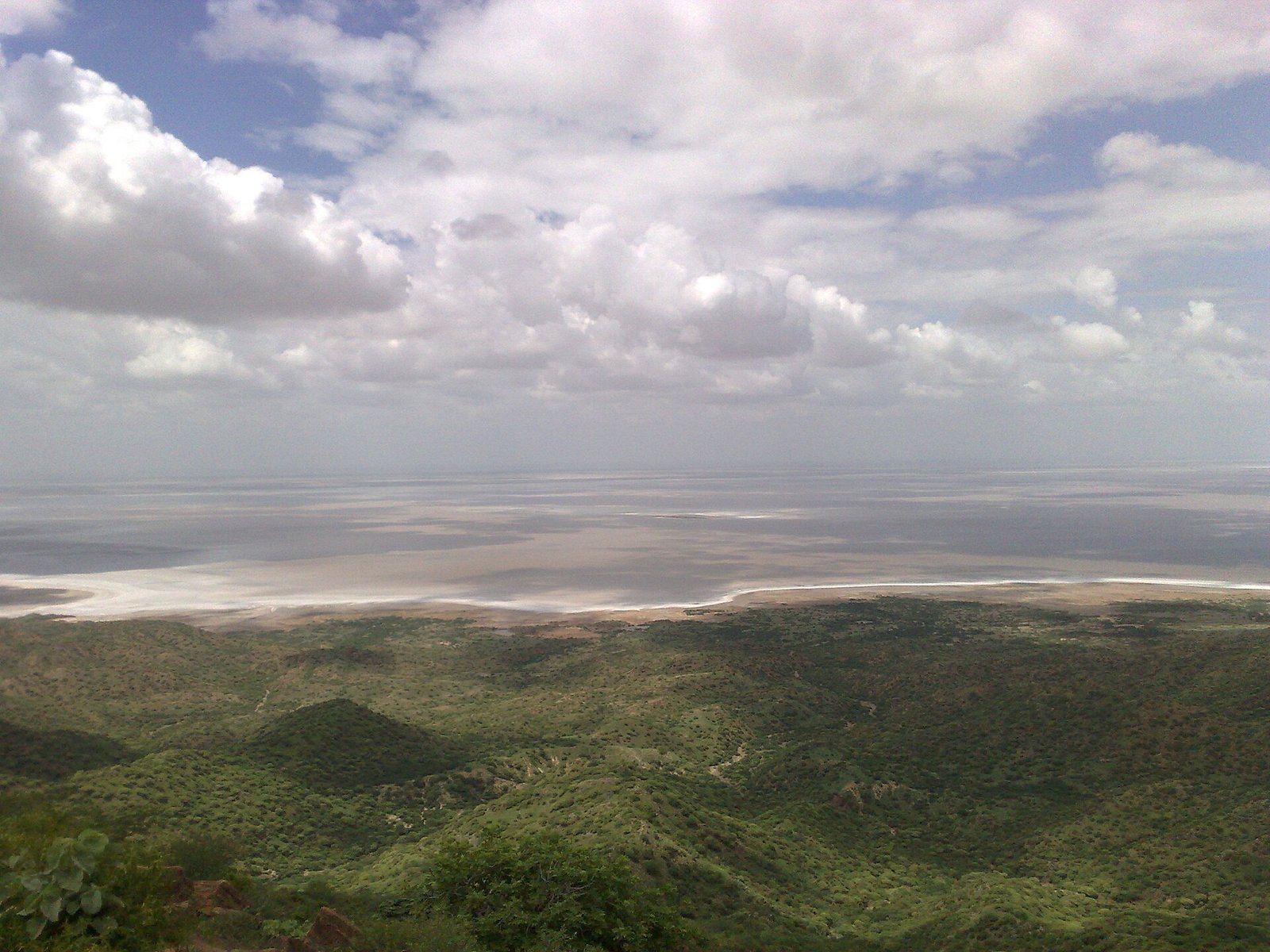
A craft tour of Kutch pairs naturally with the region's other wonders. Most visitors time their trip for the cool months so they can also drive out to the Great Rann, the blinding white salt desert on Kutch's northern edge, and catch the Rann Utsav tent city with its folk music and camel rides. The white desert at sunset, an hour or so from the embroidery villages, is the natural grand finale to a day spent among threads and dyes.
To the south, the coast offers a change of pace: the long clean sweep of Mandvi beach, the ornate seaside Vijay Vilas Palace, and a centuries-old shipyard where wooden dhows are still built by hand on the shore. A classic Kutch itinerary spends three or four days looping out from Bhuj — craft villages one day, the Rann the next, the coast the third — with plenty of tea and Kutchi thali in between.
A little sensitivity goes a long way here. These are working homes in a conservative, semi-arid region, so dress modestly, ask before photographing people or their work, and remember that a visit is a privilege rather than a right. Buy something, however small, from the households that welcome you; the craft survives only because there is still a market for it, and every honest purchase is a small vote for its future.
If you go
- The best season is October to March, when the weather is cool and the Rann is dry and white; combine your craft tour with the Rann Utsav festival if the dates line up.
- Base yourself in Bhuj and hire a car with a driver or a craft-focused guide who knows the artisan families — it transforms the experience and helps you find the genuine workshops.
- Buy directly from artisans or village cooperatives so the money reaches the makers; ask about the community and technique behind each piece rather than haggling hard.
- Dress modestly and always ask before photographing people, their homes or unfinished work; these are family houses, not shops.
- Give yourself at least two or three days — Nirona, Ajrakhpur and Bhujodi alone can fill a day each, and the villages are spread out across the plain.
The craft villages of Kutch are one of the most quietly extraordinary experiences in India: a whole living landscape of embroidery, block-print, tie-dye, weave and metal, still practised by hand in the homes where it has always been made. Base yourself in Bhuj, drive out slowly, buy from the makers themselves, and you come away not just with a suitcase of beautiful things but with a real sense of a desert culture that has turned patience and skill into art for centuries.