At a small temple in Surendranagar district, for three days at the end of the monsoon, several tens of thousands of people gather in fields for a fair that is many things at once — a religious mela, a livestock market, a folk-dance festival, and, most famously, a marriage market. Young men from the pastoral communities of Saurashtra arrive carrying large, elaborately embroidered umbrellas, and the umbrella is the point: it advertises that its carrier is looking for a bride, and the needlework on it is a claim about his family.
The Tarnetar fair, held at the Trinetreshwar Mahadev temple near Than, is one of the most distinctive festivals in India and one of the least visited by outsiders. It falls around Bhadrapada in the Hindu calendar — usually late August or September — and it is not comfortable, not organised for visitors and not remotely staged. It is also, if you are prepared for it, extraordinary.
The umbrellas
The Tarnetar chhatri is the fair's emblem and a serious piece of textile work. These are large umbrellas, sometimes over a metre across, covered in dense embroidery, mirror work, appliqué and beadwork, made over months by the young man's family — typically by the women of the household — and carried to the fair as a display. The craft traditions involved are those of the Bharwad, Rabari and other pastoral communities of Saurashtra, and the standard of the work is high.
The convention is straightforward. A young man carrying a chhatri at Tarnetar is signalling that he is of marriageable age and available, and families circulate, look, talk and make enquiries. Young women and their families come with the same purpose. Matches made at the fair are followed up afterwards through the normal channels of family negotiation; nobody is marrying on the spot. It is a mechanism for widely dispersed pastoral families, who spend much of the year moving with animals, to meet each other in one place at one time.
It is worth resisting the temptation to treat this as quaint. It is a functioning social institution that solves a real logistical problem for communities that are mobile and scattered, and the embroidery is a genuine display of skill and household capacity. Photographs of the umbrellas circulate widely; the context around them usually does not.

The embroidered chhatri is the signal: a young man carrying one is looking for a wife.
The temple, and the story
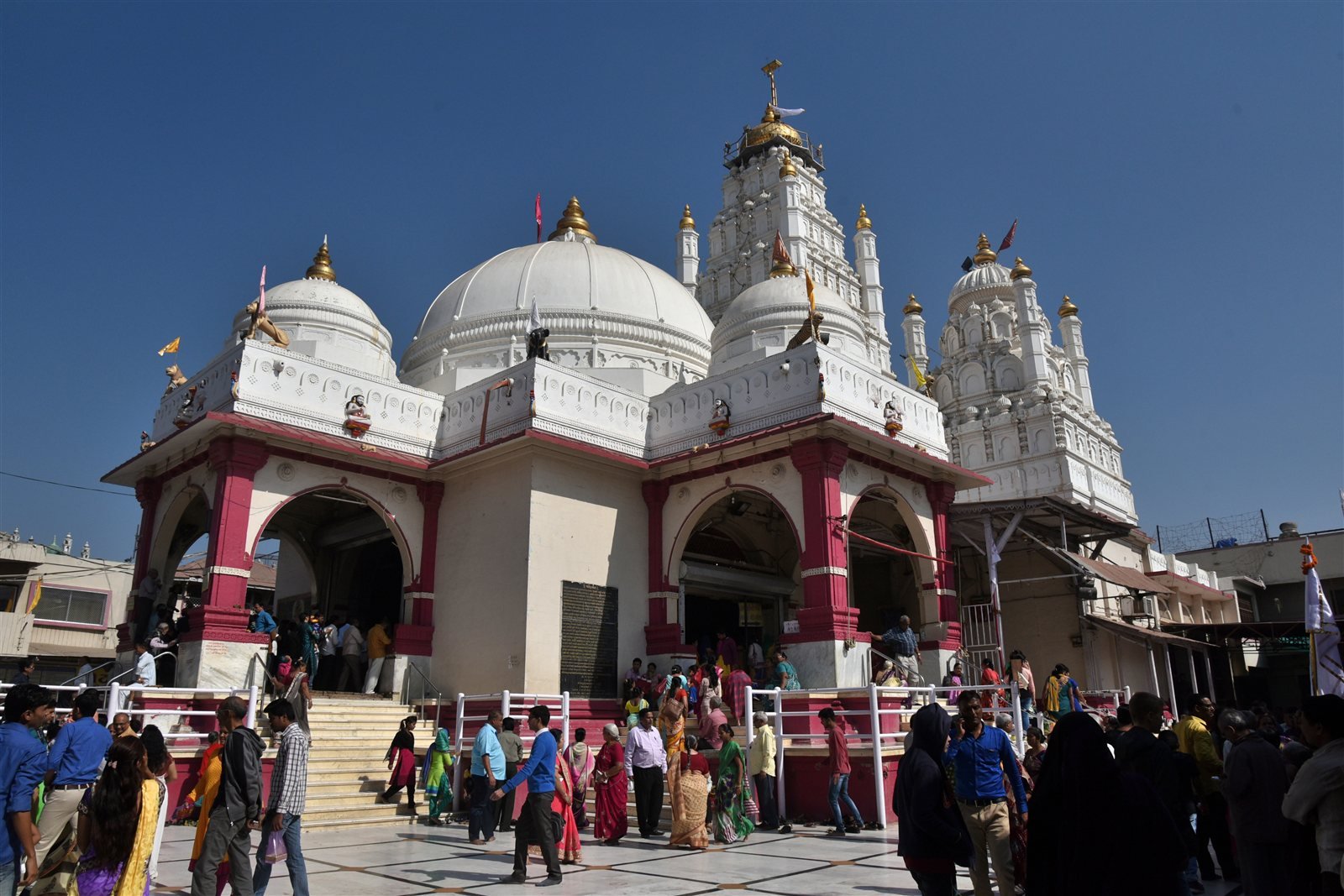
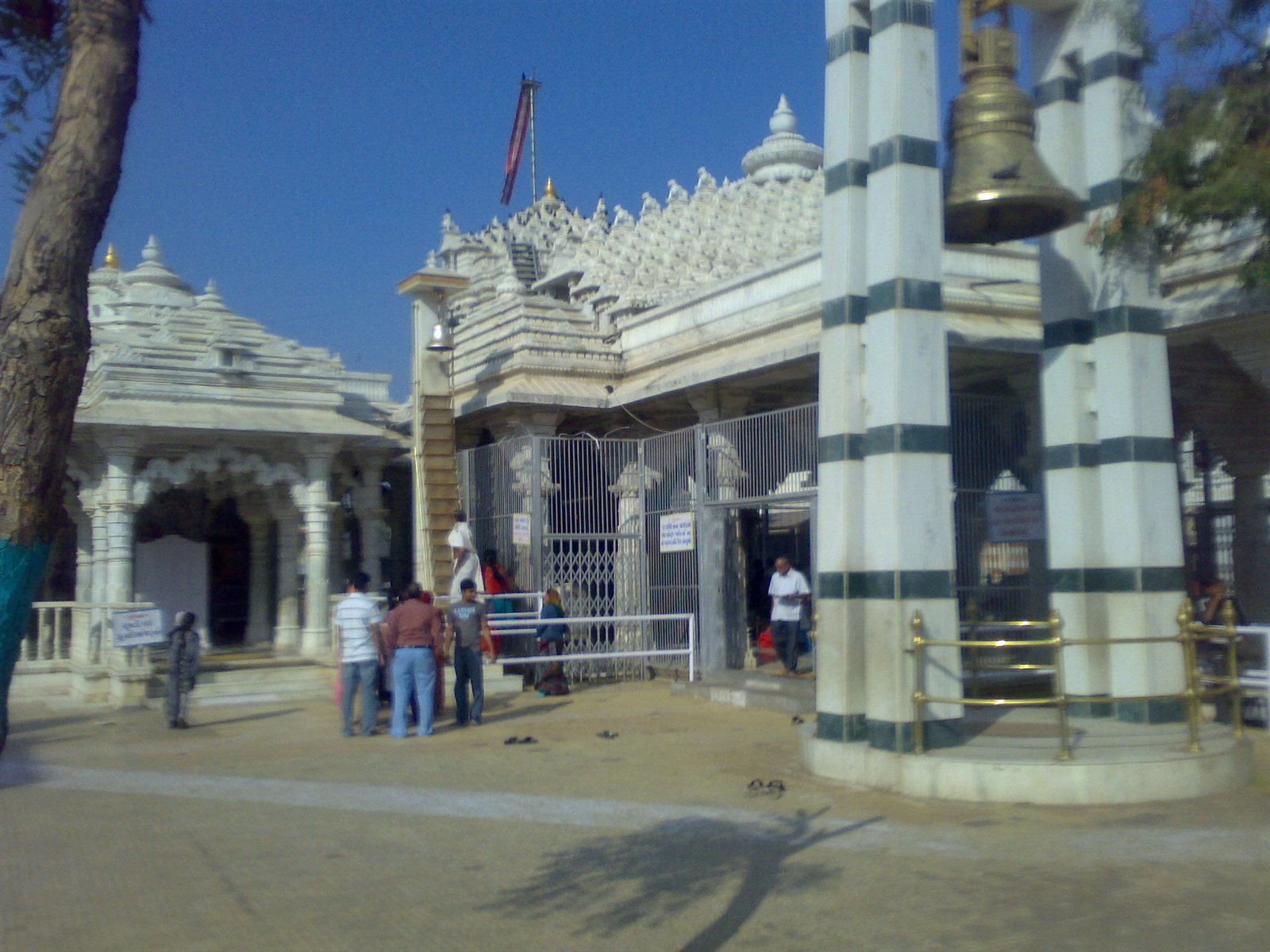
The fair is anchored to the Trinetreshwar Mahadev temple — the three-eyed lord, a form of Shiva — and to a sacred tank beside it. The temple in its present form is relatively recent, but the site is old and the fair's association with it is long-standing, with ritual bathing in the tank a central part of the occasion for many attendees. The religious element is not incidental: for a large proportion of those present, this is a pilgrimage first.
A marriage market for communities that spend most of the year moving with their animals — one place, one week, once a year
There is also a story, and it is the reason the fair carries the reputation it does. Local tradition connects the site to the swayamvar of Draupadi from the Mahabharata — the contest at which she chose Arjuna as her husband — and it is from that association that the fair's function as a marriage gathering is said to derive. Whether the tradition is old or was attached later, it gives the whole occasion a mythological frame that participants and organisers both invoke.
Around the religious core, the fair is a full mela: livestock trading, particularly cattle and horses; stalls selling everything from agricultural equipment to bangles to fried food; competitions; and continuous folk performance. The dancing is a major draw in itself — raas, hudo, rasada and other Saurashtra folk forms performed by groups from the pastoral communities, in full traditional dress, largely for each other rather than for an audience.
Going as an outsider
Be realistic about the conditions. Tarnetar is a fair in fields at the end of the monsoon: it is likely to be muddy, it is crowded, facilities are minimal, there is no shade to speak of, and accommodation in the immediate area is effectively non-existent. Most visitors stay in Rajkot, Surendranagar, Wankaner or Thangadh and drive in, which means an early start and a long day. Gujarat Tourism has historically put on some visitor facilities during the fair; check what is running in the year you go.
And be careful about how you behave. This is a marriage market, which means a large number of the young people present are being looked at in a very specific context, and a foreigner with a long lens photographing young women is an obvious and legitimate problem. Ask before photographing anyone. Do not photograph young women without clear consent from them. Buy things. Engage with the dancing rather than only filming it. Take a local guide if you can — it changes both what you understand and how you are received. Handled well, the reception is warm; handled badly, it is not.
Practicalities and timing
Tarnetar is near Than in Surendranagar district, roughly 200 km from Ahmedabad and about 65 km from Rajkot, with Thangadh and Chotila the nearest towns of any size. Rajkot is the practical base, with an airport, a major railway station and a full range of hotels, about an hour and a half away. A car is necessary; buses run towards Than but not usefully for a day trip.
The dates are the crucial thing and they move. The fair falls in the Hindu month of Bhadrapada, around the fourth to sixth days of the bright fortnight, which in the Gregorian calendar lands in late August or September and shifts year to year. Confirm the dates well ahead — they are published locally and by Gujarat Tourism — and note that this is monsoon season, so expect rain, mud and difficult field conditions. If your dates do not coincide, the temple itself is a quiet and unremarkable stop for the other three hundred and sixty-two days.
If you go
- Confirm this year's dates well ahead — the fair falls in Bhadrapada, usually late August or September, and shifts annually.
- Base yourself in Rajkot or Surendranagar and drive in early; there is effectively no accommodation at Tarnetar.
- Expect mud, crowds and minimal facilities — this is a monsoon fair in fields, not a managed event.
- Ask before photographing anyone, and do not photograph young women without their clear consent. This is a marriage market.
- Take a local guide, buy things, and watch the raas and hudo dancing properly rather than only filming it.
Tarnetar is one of the most remarkable gatherings in India and it asks something of a visitor: turn up in the mud at the end of the monsoon, on dates that move every year, at a fair with no facilities and no interest in you. What you get is tens of thousands of people from Saurashtra's pastoral communities at a three-day mela where young men carry embroidered umbrellas to announce that they are looking for a wife, and the dancing goes on all day. Confirm the dates, take a guide, and put your camera away when asked.