Somewhere between a third and a half of the world's decommissioned merchant ships end their lives on a stretch of tidal mudflat in Bhavnagar district. Alang is the largest shipbreaking yard on earth: a coastline of plots, each holding a vessel in some stage of dismemberment, worked by tens of thousands of migrant labourers with gas torches and winches, feeding a scrap-steel industry that supplies a significant share of India's rolled steel.
It is one of the most extraordinary industrial landscapes anywhere, and it is important to be straightforward about visiting it: you almost certainly cannot go in. Access to the yards is restricted and controlled by the maritime authorities, permission is granted sparingly and mostly to journalists, researchers and industry, and travellers who arrive expecting a tour will be turned away. What is accessible — and genuinely remarkable — is the coast road and the market of salvaged ship fittings along it.
Why here
The answer is the tide. The Gulf of Khambhat has one of the largest tidal ranges in the world, and at Alang the combination of that range, a gently shelving mud bottom and a long straight coastline produces conditions found in very few places: a ship can be run at full speed onto the flats at the highest spring tide, and when the water withdraws it is left high, dry and accessible on the beach. No dry dock, no dredging, no infrastructure — just an extreme tide and a lot of mud.
That geography, combined with cheap labour, proximity to steel-rolling mills and a domestic market hungry for scrap, made Alang the dominant player from the 1980s onwards. The yards are divided into numbered plots leased from the Gujarat Maritime Board, and a vessel bought at auction is beached, stripped of everything saleable, and then cut down section by section, with the steel going to re-rolling mills and everything else — engines, generators, furniture, wiring, crockery, lifeboats, timber, paint, doors — sold on.
The scale is difficult to convey. These are bulk carriers, tankers, container ships and cruise liners, several hundred metres long, and they are taken apart largely by hand with cutting torches. Standing anywhere with a view of the coast you see a row of enormous hulls in different stages of disappearance, and the whole beach given over to the business of unmaking them.

The largest shipbreaking operation in the world, made possible by an unusually extreme tide.
The costs, which are not incidental
Any honest account of Alang has to deal with what it costs. Shipbreaking is among the most dangerous industrial occupations in the world, and Alang has a long and documented record of fatal accidents — explosions in fuel tanks, falls, crushing injuries, fires — alongside chronic exposure to asbestos, heavy metals, PCBs, residual oils and paint. The workforce is overwhelmingly migrant, largely from Uttar Pradesh, Bihar, Jharkhand and Odisha, and historically has had limited protection, uncertain contracts and poor housing.
The tide that makes Alang possible is also why the work happens on an open beach rather than in a contained dock
There has been real change and it is worth acknowledging without overstating. India has ratified the Hong Kong Convention on ship recycling, a substantial number of Alang yards have obtained certification against international standards, there is a dedicated hospital and training facilities, and regulatory oversight has increased considerably since the 1990s. Conditions in the certified yards are reportedly much improved. Campaigning organisations continue to document accidents and to argue that beaching itself — as opposed to dismantling in contained docks — cannot be made adequately safe or environmentally sound.
It also has to be said that the industry provides livelihoods for tens of thousands of people who have very few alternatives, and that recycling ships is genuinely preferable to abandoning them. None of these facts cancels the others. Alang is a place where the costs and benefits of a globalised economy are unusually visible in the same square kilometre, and a visitor who goes without engaging with that has missed the point of going at all.
What you can actually do
Set expectations clearly. Entry to the yards requires permission from the Gujarat Maritime Board and is not granted for tourism; the plots are private industrial sites, the coast is controlled, and photography is restricted. Journalists and researchers apply formally and often wait. Travellers who turn up hoping to talk their way past the gate are wasting a day, and attempting to enter without permission is both unsafe and likely to cause trouble for whoever helps you.
What is open to anyone is the road. The stretch running along the coast towards Alang and Sosiya is lined with dealers selling everything salvaged from the ships, and it is one of the strangest markets in India: ship's furniture, brass fittings, lifebuoys, navigation instruments, crockery bearing shipping-line crests, teak panelling, doors, ropes, machinery, kitchen equipment, ladders, portholes. People come from across Gujarat to buy furniture here. It is browsable, photogenic in a peculiar way, and open to all. Views of the yards from the public road are limited but real.
Practicalities
Alang is roughly 50 km south of Bhavnagar, about an hour and a quarter by road, near Talaja. Bhavnagar is the base — an airport with domestic connections, a railway station, a full range of hotels — and a hired car or taxi for a half-day is the way to do it. There is no reason to stay closer, and no useful accommodation on the coast.
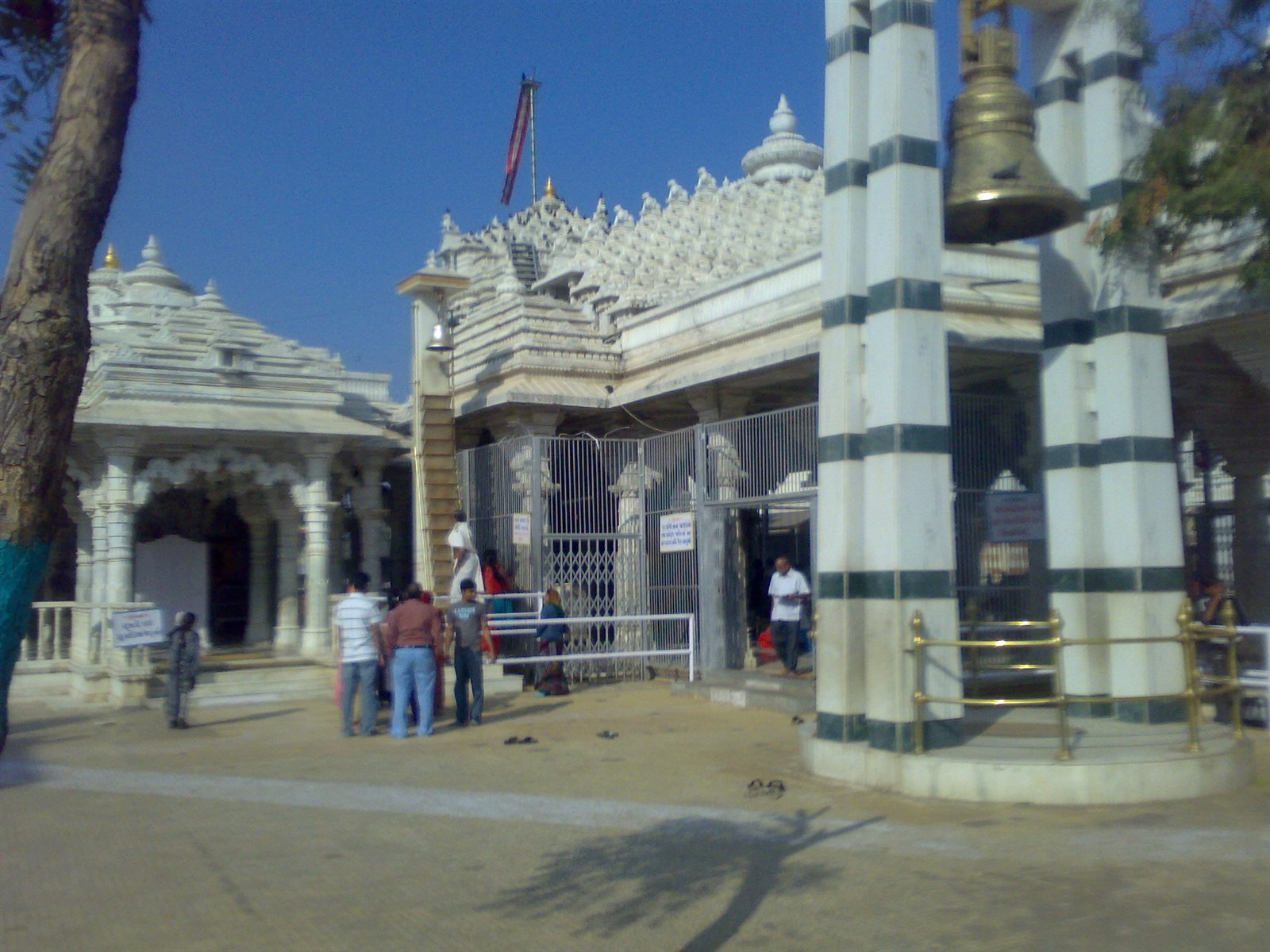
November to February is comfortable; the coast is hot and humid from March. Combine the trip with Gopnath's cliffs and quiet shore, about 25 km further along, or with Talaja, which has ancient rock-cut Buddhist caves and a Jain temple hill and is on the way. Sihor, the old Gohil capital with its bell-metal craft, is inland from Bhavnagar. That makes a full and rather unusual day: Buddhist caves, the world's largest shipbreaking yard, a market selling ocean liners in pieces, and a cliff-top sunset.
If you go
- Understand before travelling that the yards themselves are closed to tourists — permission comes from the maritime authorities and is not granted for sightseeing.
- Go for the salvage market on the coast road instead; it is open to all and genuinely extraordinary.
- Do not attempt to enter a yard without permission: it is unsafe and creates problems for anyone who assists you.
- Read something about the labour and environmental record before you go; the visit is meaningless without it.
- Base in Bhavnagar and combine Alang with Talaja's rock-cut caves and Gopnath's cliffs for a full day.
Alang is the place where the world's ships come to be taken apart by hand on a mudflat, made possible by one of the largest tidal ranges on earth, and it is not a tourist attraction — the yards are closed, and rightly so. What you can do is drive the coast road, browse a market selling the furniture, brass and crockery of dismantled ocean liners, look out at a row of vanishing hulls, and think honestly about the industry that produced all of it. Base in Bhavnagar and give it a half-day.