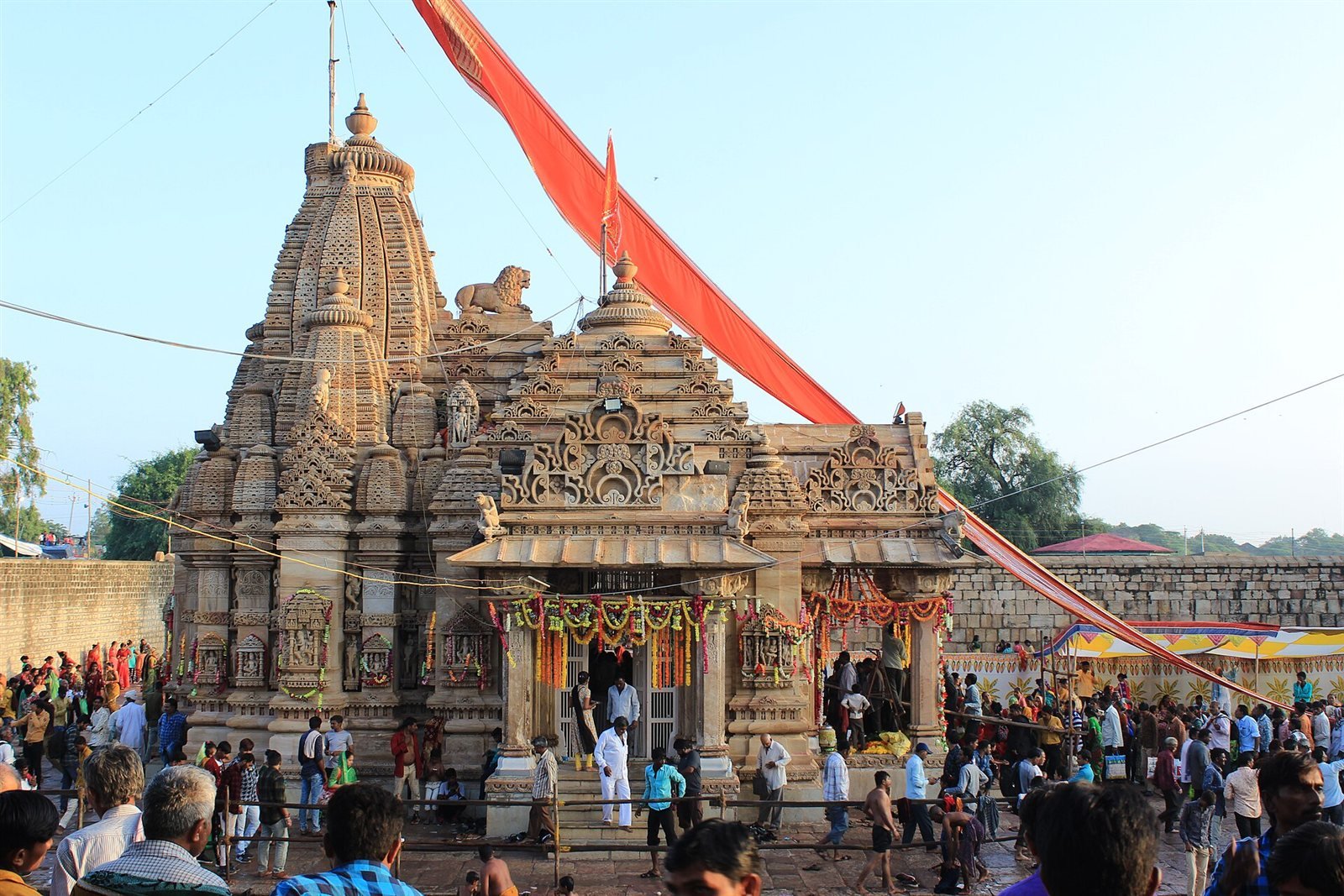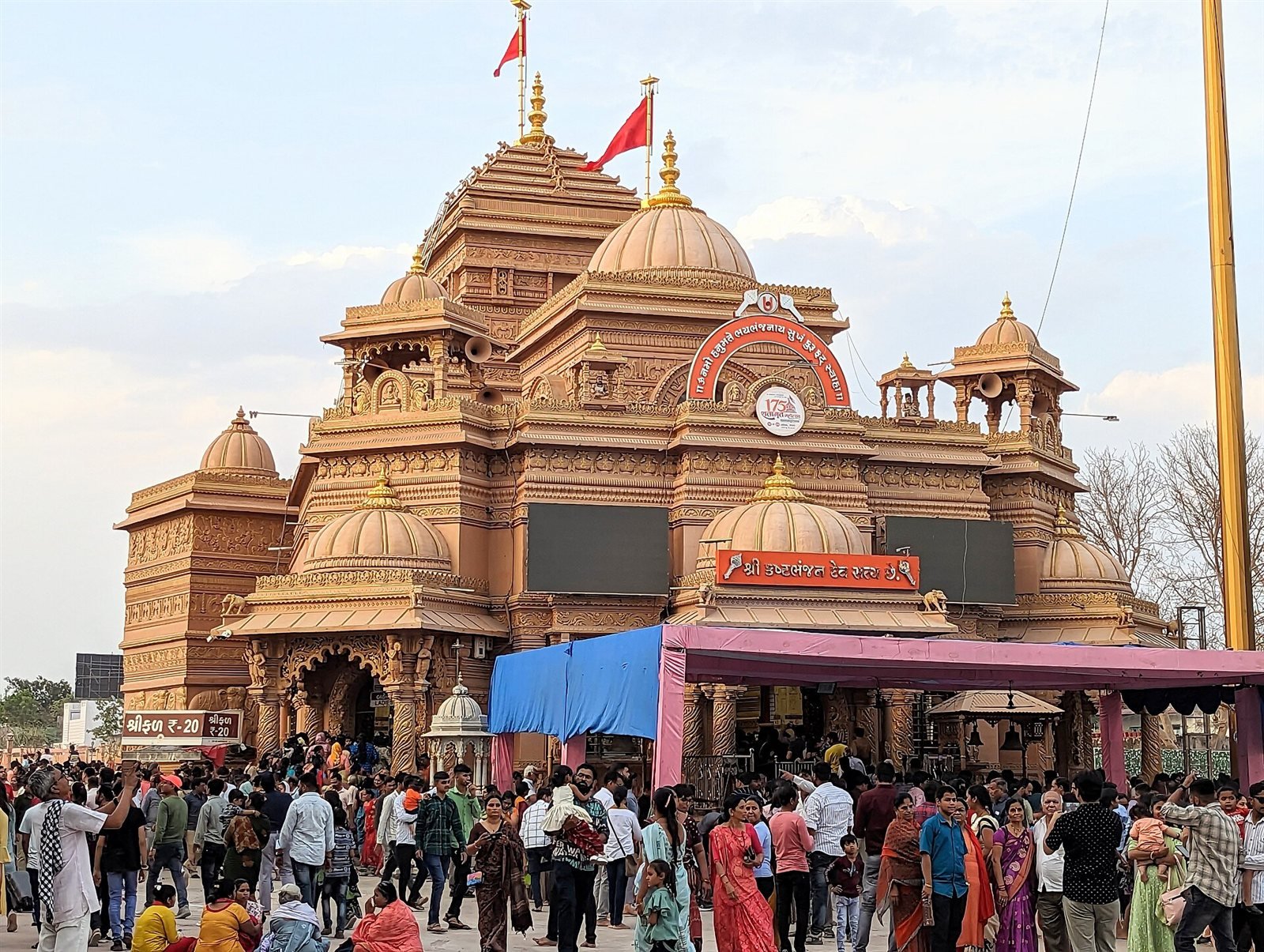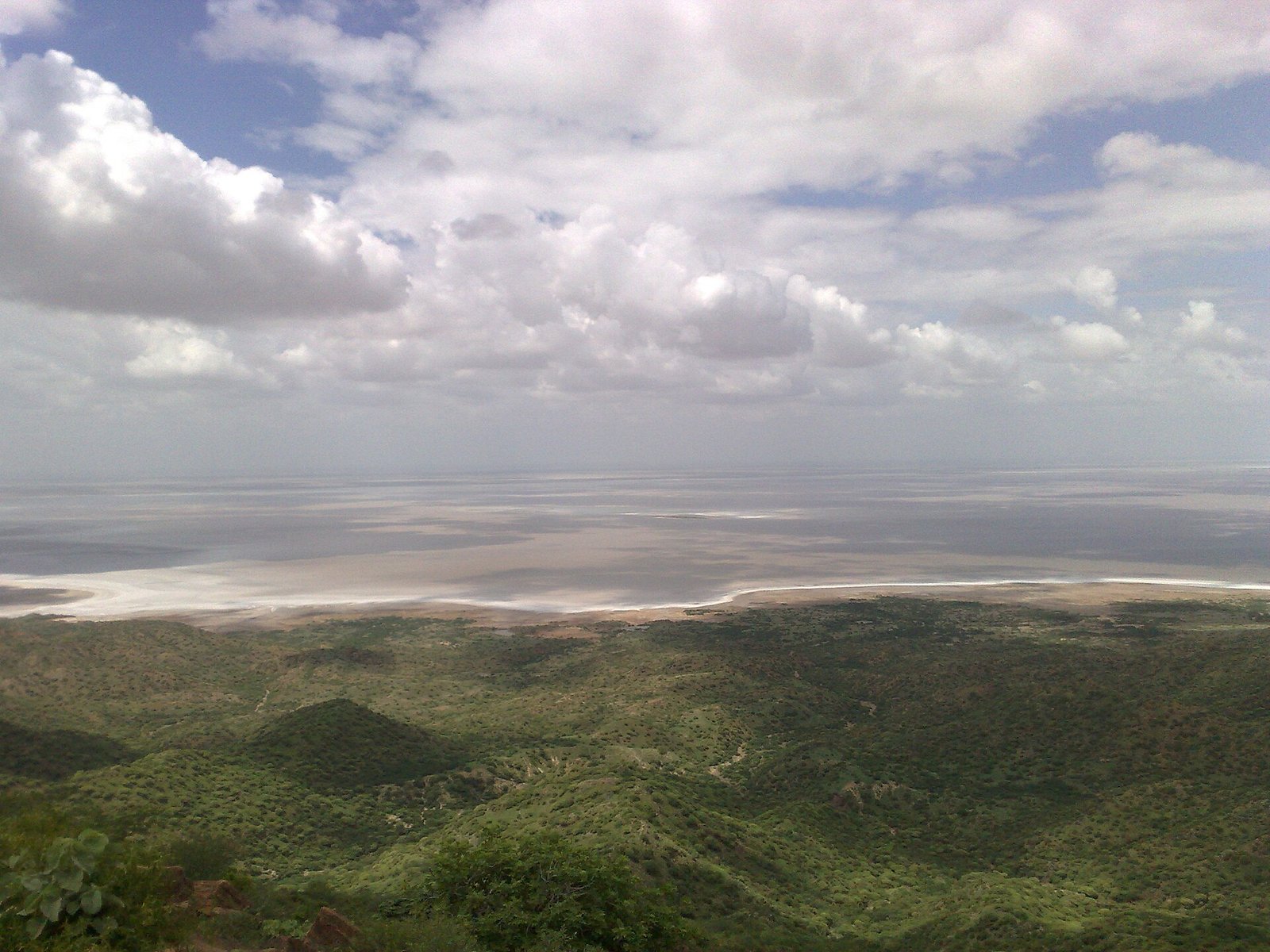
At the foot of Girnar, the great volcanic massif that rises above Junagadh, there is a Shiva temple called Bhavnath Mahadev with a sacred tank beside it. For most of the year it is a quiet, locally important shrine at the start of the ten-thousand-step climb up the mountain. For five days around Mahashivratri, usually in February, it becomes the setting for one of the more extraordinary religious gatherings in western India.
The Bhavnath Mela draws sadhus from across the country — including the Naga akharas, the militant ascetic orders whose members go naked and ash-smeared — along with several hundred thousand pilgrims, traders and onlookers. There are akhara camps, processions, all-night bhajans, wrestling, food distribution on a vast scale, and a ritual bathing at midnight on Mahashivratri that is the fair's climax. It is not organised for tourists and it is entirely open to them.
What the mela actually is
The fair is anchored to Mahashivratri, the great night of Shiva, and to a site that carries a long association with the god and with ascetic practice. Girnar itself is one of the most layered sacred mountains in India — it holds major Jain temple complexes, the Ambaji and Gorakhnath shrines and the Dattatreya peak, along with Ashokan rock edicts and the Uparkot fort at its base — and it has drawn renunciants for a very long time. The Nath sampradaya in particular has deep roots here.
So the mela is not a spectacle laid on for an audience; it is the annual convergence of a living ascetic world. Akharas set up camps, distribute food, hold discourses and receive visitors. Sadhus who spend the rest of the year in caves, forests and remote ashrams come down and are visible in numbers. There is a great deal of smoke, chillum, drumming and singing, and an atmosphere quite unlike any temple festival in Gujarat.
The climax is the midnight procession and bathing on Mahashivratri. The Naga sadhus process to the Mrigi Kund, the sacred tank beside the temple, and bathe — a ritual that is understood to be the moment the fair exists for. Access at that hour is crowded and chaotic, and the akharas manage their own order of precedence; visitors should watch, not participate, and should be very careful about cameras.
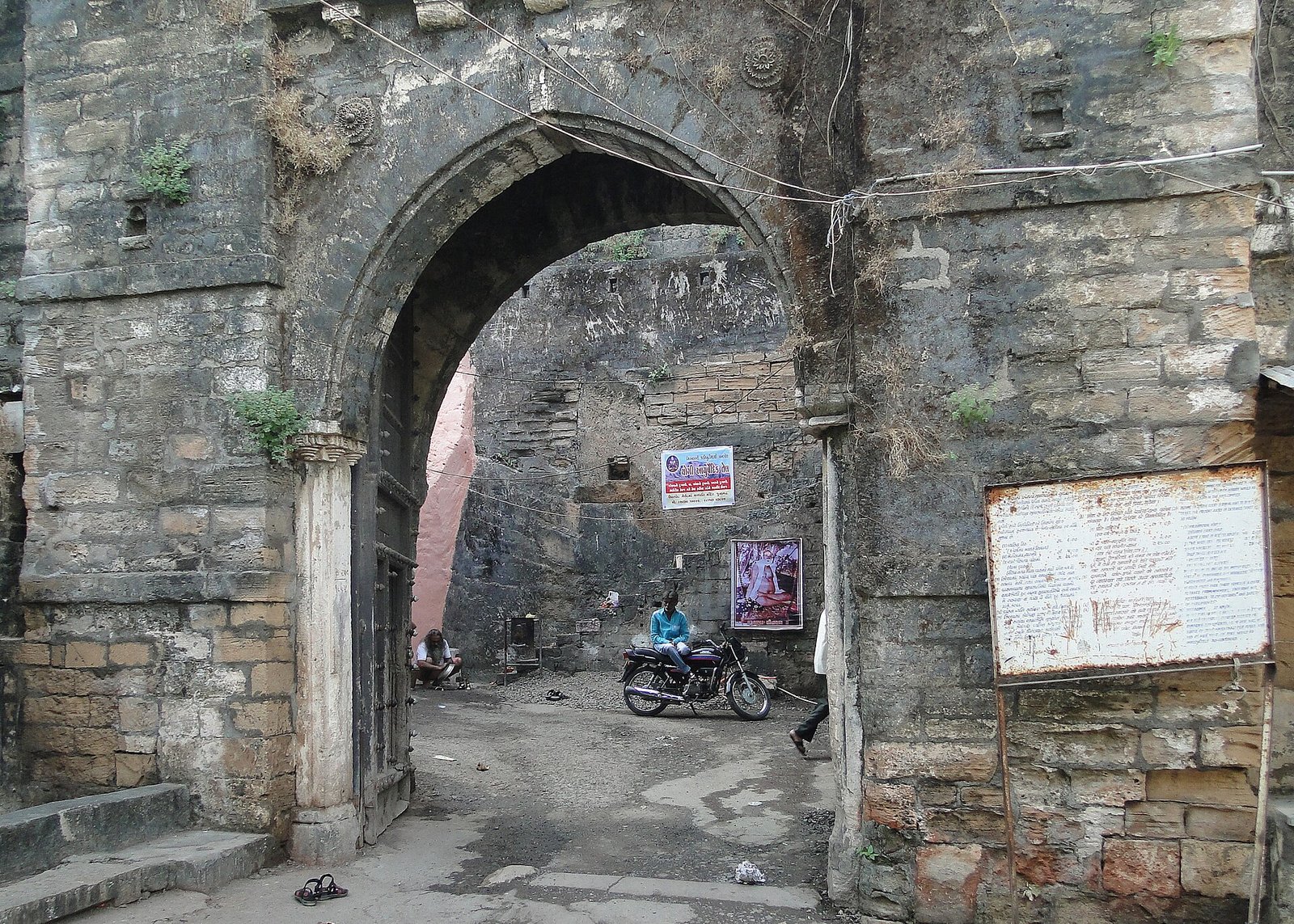
For five days around Mahashivratri, the foot of Girnar fills with akharas, ash and firelight.
Going as an outsider
The mela is open, and Gujaratis attend in enormous numbers as ordinary visitors, so there is nothing intrusive about being there. But it is a religious gathering for renunciant orders with their own conventions, and a few things matter. Do not photograph sadhus without asking, and accept a refusal without argument — this is the single most common friction at ascetic gatherings across India, and paying for photographs, which some visitors do, is a bad habit that has corroded similar events elsewhere.
The akharas come down off the mountain once a year. Watch the midnight bathing; do not put a lens in anyone's face
Accept the hospitality if it is offered — akharas run enormous food distributions and being fed is normal — and behave in camps as you would in someone's home. Dress modestly. Do not touch anyone or anything without invitation. Alcohol is illegal in Gujarat anyway; other substances are visibly present in some camps and are not your business. And be aware that the crowd density around the temple and the kund on the main night is serious, so decide in advance how close you actually need to be.
The practical conditions are basic. Junagadh's accommodation fills completely for the fair, sanitation at the site is stretched, and the whole area around Bhavnath is closed to ordinary traffic. Most visitors stay in Junagadh town and walk or take local transport out. If you want to attend the midnight bathing, plan to be in position early and to be there for several hours.
Girnar itself
Whether or not your dates hit the mela, Girnar is the reason Junagadh exists on any itinerary. The climb is roughly ten thousand steps to the Dattatreya summit, with the great Jain temple complex — including the twelfth-century Neminath temple — at around five thousand, and Ambaji and Gorakhnath shrines beyond. It is a serious ascent, taking most people four to six hours up, and it is done by pilgrims of every age, many barefoot, starting in the dark. A ropeway now covers part of the ascent, which has changed the experience considerably and made the Jain temples accessible to people who could not have climbed to them.
Below, Junagadh has one of the better collections of monuments in Saurashtra: the Uparkot fort with its ancient stepwells and Buddhist-era caves, the Ashokan rock edicts carved in the third century BCE, the extraordinary Mahabat Maqbara mausoleum with its spiralling minarets, and the Durbar Hall museum. The other great Girnar occasion is the Lili Parikrama, the circumambulation of the mountain held around the Kartik full moon in November, when hundreds of thousands walk a thirty-six-kilometre route through the forest over several days.
Practicalities
Junagadh is about 100 km from Rajkot and roughly 330 km from Ahmedabad, with a railway station on the Saurashtra network and good bus connections; Rajkot has the nearest useful airport and Diu, Porbandar and Keshod are alternatives. Bhavnath is at the foot of Girnar on the edge of town, a short auto ride from the centre.
The mela dates follow Mahashivratri, which falls in February or occasionally early March and shifts year to year, so confirm well ahead — the fair usually runs for around five days ending on Mahashivratri night. Book accommodation in Junagadh as early as you can, or stay in Rajkot and accept a two-hour drive. Outside the fair, November to February is the season for the Girnar climb; Gir National Park is about 60 km away, and Somnath around 80 km, which makes Junagadh a natural hinge in a Saurashtra route.
The akharas, and what they are
The word akhara means, roughly, an arena or a wrestling ground, and the ascetic akharas grew out of exactly that association — organised bodies of renunciants, historically armed, arranged into regiments with their own hierarchies, standards and traditions of physical training. The Naga akharas within the Shaiva orders are the most visible: naked or nearly so, ash-smeared, with matted hair, and by long tradition the first to bathe at the great ritual gatherings.
That precedence is not ceremonial trivia. The order in which akharas process and bathe has been contested, sometimes violently, over centuries, and it is still carefully negotiated at every major mela. When you watch a procession move towards the Mrigi Kund at Bhavnath, you are watching an institutional protocol several hundred years old being executed in public. Understanding that turns the occasion from a spectacle into something closer to a state ceremony, and it is a good reason to stand back rather than pressing forward for a photograph.
If you go
- Confirm the Mahashivratri date well ahead — it shifts each year, and the mela runs for about five days up to it.
- Book Junagadh accommodation as early as possible, or plan to stay in Rajkot and drive in.
- Never photograph sadhus without asking, never pay for photographs, and accept refusals without argument.
- Decide in advance how close you need to be for the midnight bathing; the crowd density is serious.
- Whatever your dates, climb Girnar — ten thousand steps, or the ropeway to the Jain temples.
The Bhavnath Mela is the annual moment when the ascetic world that has always attached itself to Girnar becomes visible: akhara camps at the foot of the mountain, ash-smeared Nagas, all-night singing, food distributed to hundreds of thousands, and a midnight procession to a sacred tank. Confirm the Mahashivratri dates, book Junagadh early, keep your camera down unless invited, and climb the mountain while you are there.