Gujarat has an enormous amount of coastline and remarkably little of it has any drama. The shore is mostly flat — long sandy beaches, wide tidal mudflats, salt pans, creeks — and the tidal range is so large that at low water the sea can be half a kilometre away. Then, seventy-five kilometres south of Bhavnagar on the Gulf of Khambhat, the land does something different: it ends in low limestone cliffs, with rocky shelves and pools below them and the sea working directly at the base.
Gopnath is that place, and it is one of the quietest destinations in Saurashtra. There is an old Shiva temple above the shore, associations with the fifteenth-century poet-saint Narsinh Mehta, a former Bhavnagar royal retreat used latterly as simple accommodation, a scatter of guesthouses, and essentially nothing else. No water sports, no stall line, no crowd. People come here to walk on rock and look at the sea.
A coast with an edge
The cliffs are modest in height and entirely unlike the rest of this shoreline. Limestone shelves step down to the water, cut and pitted by the sea, holding pools at low tide, with the Gulf of Khambhat's very large tidal range exposing and covering a substantial area twice a day. Walking along the top in the last hour of light, with the water working below and nobody else about, is the single best thing Gopnath offers.
Low tide opens up the second half of it. The rocky shore holds pools with the usual intertidal life — small fish, crabs, molluscs, anemones — and the exposed shelves are good for a slow scramble if you have footwear with grip and some care about wet rock. This is not a swimming coast: the tidal range, the currents and the rock make that a bad idea, and there is nothing resembling lifeguarding. Treat the sea as something to look at and walk beside.
Birds are the other reward. The Gulf of Khambhat coast is good for waders and seabirds, particularly in winter, and Gopnath's rocky shore and the mudflats nearby hold plovers, sandpipers, gulls, terns, herons and, further out, flamingos and pelicans on the flats. Velavadar's grasslands, with their blackbuck and their vast harrier roost, are inland from here, which makes the combination unusually good for a wildlife-minded couple of days.

A coastline with an edge to it — rare on a shore made mostly of flat sand and mud.
The temple, and the poet
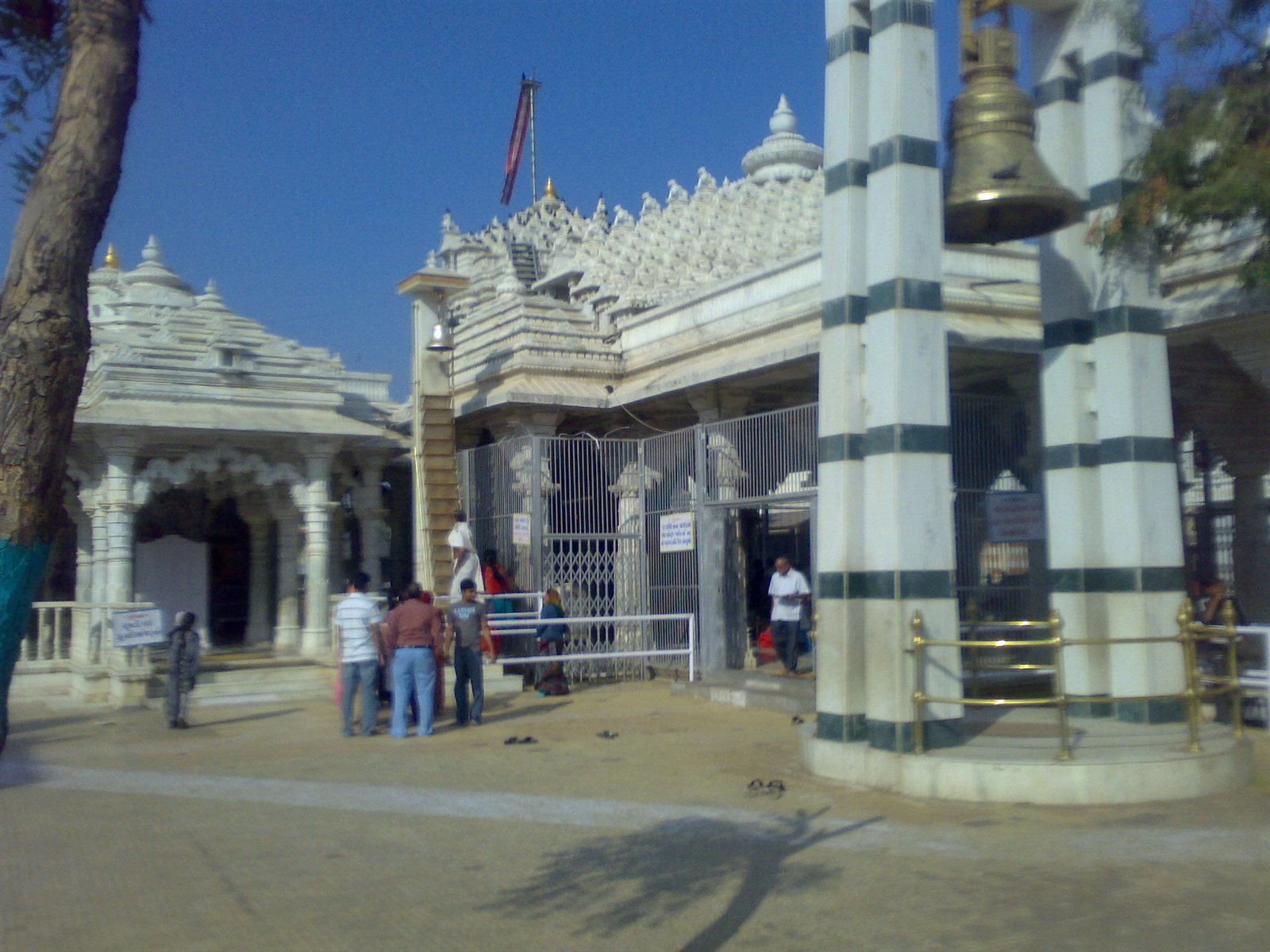
Above the shore stands Gopnath Mahadev, an old and locally important Shiva temple. It is not architecturally spectacular and it is not trying to be — a working shrine in a fine position, busy with local visitors, particularly in Shravan, the monsoon month sacred to Shiva. Behave as at any active temple: shoes off, modest dress, discretion with a camera.
Narsinh Mehta wrote the bhajan Gandhi made famous, and tradition ties him to this shore
The temple's significance for Gujaratis comes largely from its association with Narsinh Mehta, the fifteenth-century poet-saint whose devotional verse is foundational to Gujarati literature and who is traditionally connected with Gopnath. His best-known composition, Vaishnav Jan To Tene Kahiye Je — a definition of the true devotee as one who feels another's suffering — was a favourite of Gandhi's and became one of the most widely sung bhajans in India. Standing at a quiet shrine above the sea knowing that is a reasonable use of ten minutes.
The other structure here is the old Bhavnagar royal retreat, a bungalow above the shore built for the ruling family and latterly operated as simple guest accommodation. It has a superb position and modest facilities, and whether it is currently taking guests varies — anyone planning to stay should confirm rather than assume, because the total number of beds at Gopnath is very small.
Why to stay a night
The case for an overnight is straightforward arithmetic. Gopnath is two hours each way from Bhavnagar on minor roads. A day trip means four hours of driving for a couple of hours at the shore, arriving in the middle of the day when the light is flat and the rock is hot. The two hours actually worth having here are sunset and the hour after dawn, and you can only get both by sleeping there.
That means accepting simple accommodation, limited food — generally whatever your guesthouse provides — and effectively no shops. Bring what you need, including water and any supplies you care about, and confirm both your booking and the food arrangement before you set off. In exchange you get a cliff top to yourself at both ends of the day, which is not something Gujarat's coast offers in many other places.
Getting there and the Saurashtra fit
Gopnath is about 75 km from Bhavnagar, roughly two hours by road via Talaja, and Bhavnagar is the gateway with an airport, a railway station and a full range of hotels. Ahmedabad is around 250 km, four to five hours. There is no useful public transport to Gopnath itself, so a hired car or taxi is required, and the final approach is a minor unlit road that is worth arriving on in daylight.
It fits well into a quiet eastern Saurashtra loop. Palitana's Shatrunjaya hill with its nine hundred Jain temples is within reach, Velavadar's blackbuck grasslands are inland, Talaja has ancient rock-cut Buddhist caves and is directly on the route, and Alang's shipbreaking coast and its extraordinary salvage market are about 25 km back towards Bhavnagar. November to February is the season — the coast is hot and humid from March, and the monsoon brings dramatic seas along with slippery rock and difficult minor roads.
The tide, and what it does to this coast
Everything peculiar about the Gujarat coast comes back to the tide, and Gopnath is a good place to understand it. The Gulf of Khambhat funnels the Arabian Sea into a narrowing wedge, which amplifies the tidal range to among the largest in the world — several metres, twice a day. That is why the shore elsewhere is mostly enormous mudflats, why Alang can beach ocean-going ships on an open coast, and why the water at Gopnath retreats far enough to expose broad rock shelves and pools.
It also means the sea here is not a constant. The shoreline you walk at low water is a different place three hours later, currents run hard on the turn, and the exposed rock is slick and sharp. Check the tide before you plan a walk on the shelves, keep an eye on the water coming back, and do not put yourself anywhere you would need to hurry out of. Handled with a little attention, the tide is the most interesting thing about the place; ignored, it is the only genuinely risky one.
If you go
- Stay a night. The two good hours are sunset and just after dawn, and a day trip gives you neither.
- Book ahead and confirm the place is actually operating — there are very few beds at Gopnath.
- Bring water and supplies; there are effectively no shops and food is whatever your guesthouse arranges.
- Wear grippy footwear for the rock shelves and pools, and do not swim — the tide and currents make it unsafe.
- Combine it with Talaja's rock-cut caves, Alang's salvage market, Velavadar and Palitana for a quiet Saurashtra loop.
Gopnath is the one place on the Gujarat coast where the land ends in something other than sand. Low limestone cliffs above rock pools, an old Shiva temple tied to the poet who wrote Gujarat's most famous bhajan, a faded royal bungalow, waders on the flats, and no one else at all. Book one of its very few beds, bring your own supplies, walk the cliff top at sunset and again at dawn, and stay out of the water.