Best time
October to March
Built
1121, by Kumarapala
Good for
Jain architecture, quiet, short walks
Nearest base
Mehsana / Palanpur
Taranga Hill carries one of the finest single Jain temples in India and, on an ordinary weekday, almost nobody on its steps. The main shrine, dedicated to Ajitnath, the second Tirthankara, was built in 1121 by the Solanki king Kumarapala — by tradition at the urging of the scholar-monk Hemachandracharya — and it is a white marble building of real ambition: a tall curvilinear spire, a carved pillared hall, and a seated image of Ajitnath over two metres high in the sanctum.
The practical appeal, alongside the architecture, is access. Where Palitana demands three and a half thousand steps and Girnar ten thousand, a road runs most of the way up Taranga and the final approach is short. This guide covers timings, what else is on the hill, when it is busy, and how Taranga fits the north Gujarat heritage circuit with Modhera, Patan and Vadnagar.
Why Taranga is worth a detour
For the temple. This is Solanki architecture of the same century and the same quality as Modhera's Sun Temple and Rani ki Vav at Patan — dense horizontal bands of figurative sculpture on the exterior, carved brackets and a corbelled ceiling inside, all in marble now weathered to a warm cream. The sanctum is dim, cool and quiet, and the scale of the Ajitnath image is genuinely imposing. As an active Svetambara place of worship it also has an atmosphere that a purely archaeological monument cannot.
And for the layering on the hill. Alongside the main Svetambara complex there are Digambar Jain temples — both sects hold Taranga sacred — and rock-cut caves associated with the goddesses Taranmata and Dharanmata, generally understood to be Buddhist in origin, which places Taranga alongside Vadnagar and Dev ni Mori in the largely forgotten Buddhist geography of north Gujarat. The granite boulder landscape between the sites is attractive in itself and makes for an easy hour or two on foot.
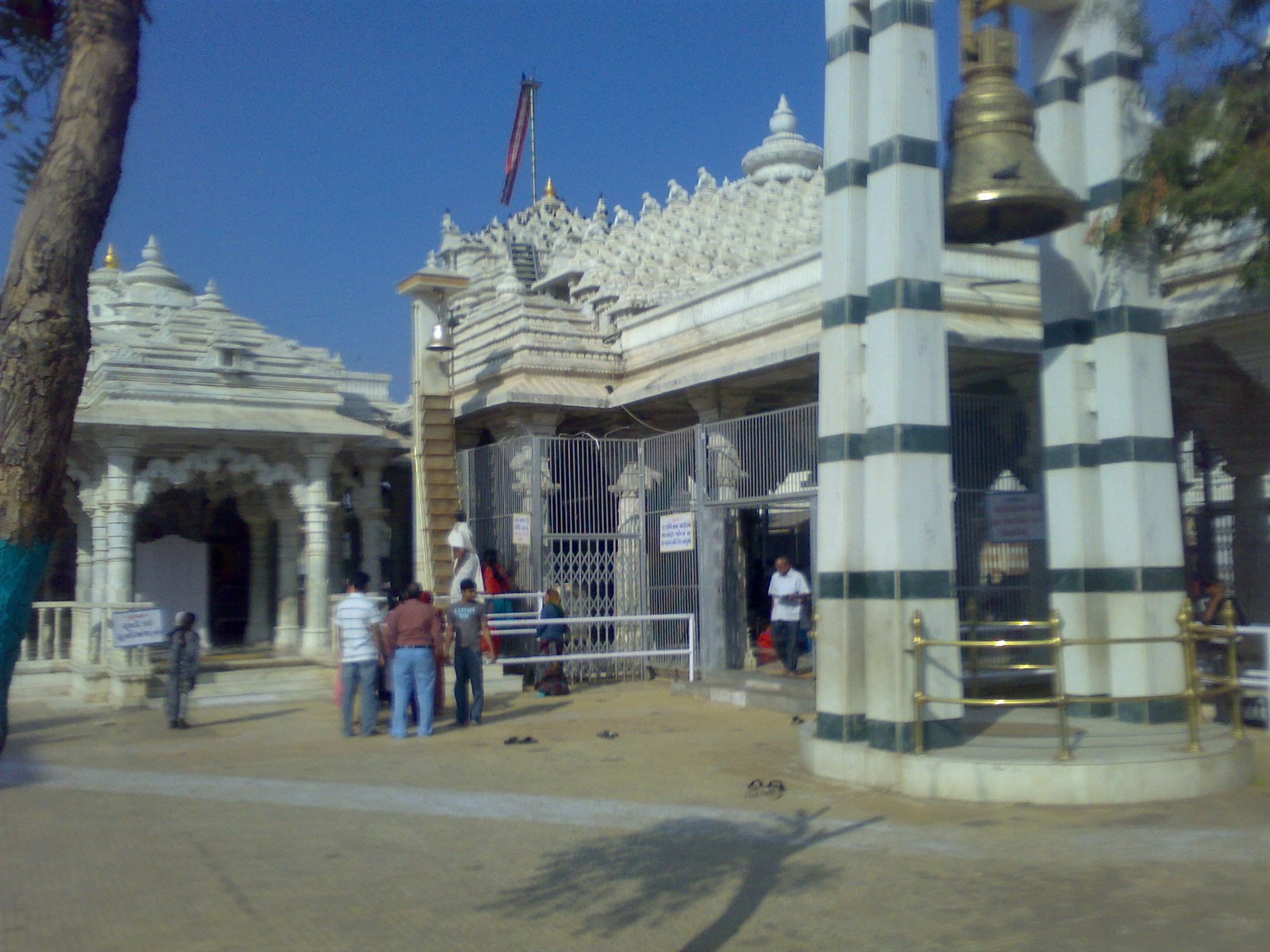
A Solanki-period masterpiece you can reach without climbing three thousand steps.
How to plan the visit
- Check timings before you set outJain temples commonly close for a period in the middle of the day, and hours vary seasonally. Arriving at eleven to find the sanctum shut is the standard mistake here.
- Observe the entry rulesLeather is not permitted — belts, wallets and camera straps included. Shoes come off, dress is modest, and photography inside the sanctum is restricted. Nothing onerous, but arrive prepared.
- Give the main temple proper timeLook at the exterior sculpture bands and the interior bracket and ceiling work, not just the sanctum. Half an hour minimum; an hour is better.
- Walk out to the other shrinesThe Digambar temples and the Taranmata caves are a short walk across the hill, through boulder country. This is where the visit becomes more than a single building.
- Eat at the bhojanshalaThe pilgrim dining hall serves a simple, strictly vegetarian meal for a nominal contribution, and it is comfortably the best food available in the area.
- Pick a weekday outside festivalsFor near-solitude, avoid Mahavir Jayanti, Paryushan and the Kartik and Chaitra full moons, when coach parties and pilgrimage tours arrive together.
How to get there
Taranga Hill is in Mehsana district near Kheralu, about 55 km north of Mehsana town and roughly 130 km from Ahmedabad — two and a half to three hours by road. There is a small station at Taranga Hill on a branch line, but services are sparse and awkward for a day visit.
Buses run from Mehsana, Visnagar and Kheralu, and a road climbs most of the way up the hill, so the final walk is short. A hired car is much the best option, both because bus timings do not suit an early arrival and because Taranga really wants to be one stop among several in a north Gujarat route. From Ambaji to the north it is around 60 km.
Where to stay
On the hill itself, accommodation means the Jain dharamshalas maintained for pilgrims — simple, clean, inexpensive and geared to religious visitors rather than tourists. Staying there is perfectly possible and puts you at the temple for its opening, which is the best time to be there.
For hotels, Mehsana is the practical base, with a functional spread of mid-range and budget options and a central position for the whole north Gujarat circuit. Palanpur is an alternative to the north-west, and Balaram Palace, a heritage hotel about 80 km away towards Ambaji, is the most comfortable option in the wider region. Patan also has some accommodation and works well if you are pairing Taranga with Rani ki Vav.
Best time to visit
October to March. The hill is exposed granite with limited shade, so the cool months are much the most comfortable for walking between the shrines, and winter mornings are crisp and clear with good light on the marble. November to February is the best of it.
April to June is hot and the open hill is hard going by mid-morning. The monsoon turns the boulder landscape briefly and genuinely beautifully green, and if you do not mind humidity and the odd downpour it is an atmospheric time to visit — though Paryushan, the major Jain observance, usually falls in this period and brings crowds. Check the Jain festival calendar against your dates whichever season you choose.
Practical tips
- Confirm opening hours and any midday closure locally before travelling.
- Leave all leather behind, remove shoes, dress modestly and do not photograph inside the sanctum.
- Allow two hours on the hill so you can reach the Digambar shrines and the Taranmata caves on foot.
- Come on a weekday outside Jain festival dates if you want the place quiet.
- Combine Taranga with Vadnagar, Modhera, Patan and Sidhpur over two days based in Mehsana or Patan.
Frequently asked questions
Who built the Taranga Jain temple?
The Ajitnath temple was built in 1121 by Kumarapala, the Solanki king of Gujarat, traditionally at the urging of the scholar-monk Hemachandracharya.
Is there a long climb at Taranga?
No. A road runs most of the way up the hill and the final approach is short — unlike Palitana's 3,500 steps or Girnar's much longer climb.
What else is on Taranga Hill?
Digambar Jain temples, smaller shrines and viewpoints, and the rock-cut Taranmata and Dharanmata caves, which are generally understood to be Buddhist in origin.
How far is Taranga from Ahmedabad?
About 130 km, two and a half to three hours by road via Mehsana and Kheralu.
Are there restrictions at the temple?
Yes — no leather items, shoes off, modest dress, and restricted photography inside the sanctum. Midday closures are common, so check timings.
Taranga is the best-value stop on the north Gujarat circuit: a twelfth-century marble masterpiece by the same building culture that produced Modhera and Rani ki Vav, reached by road rather than by thousands of steps, with Digambar shrines and Buddhist-origin caves scattered across a granite hill above it. Check the timings, leave the leather in the car, allow two hours, and slot it in between Vadnagar and Ambaji.