Gujarat has four UNESCO World Heritage Sites and they could hardly be less alike. One is a ruined sixteenth-century Islamic capital beneath a sacred hill. One is an eleventh-century stepwell that descends seven storeys into the ground and is invisible until you are inside it. One is a Bronze Age city built of dressed stone on an island in a salt desert. And one is not a monument at all but a whole inhabited walled city, still lived in, still working.
They were inscribed across seventeen years, from 2004 to 2021, and they are spread from the far west of Kutch to the eastern edge of Panchmahal, which means seeing all four is a proper itinerary rather than a long weekend. Between them they cover four and a half thousand years. This is what each one actually is, and how to string them together.
Champaner-Pavagadh, and Rani ki Vav
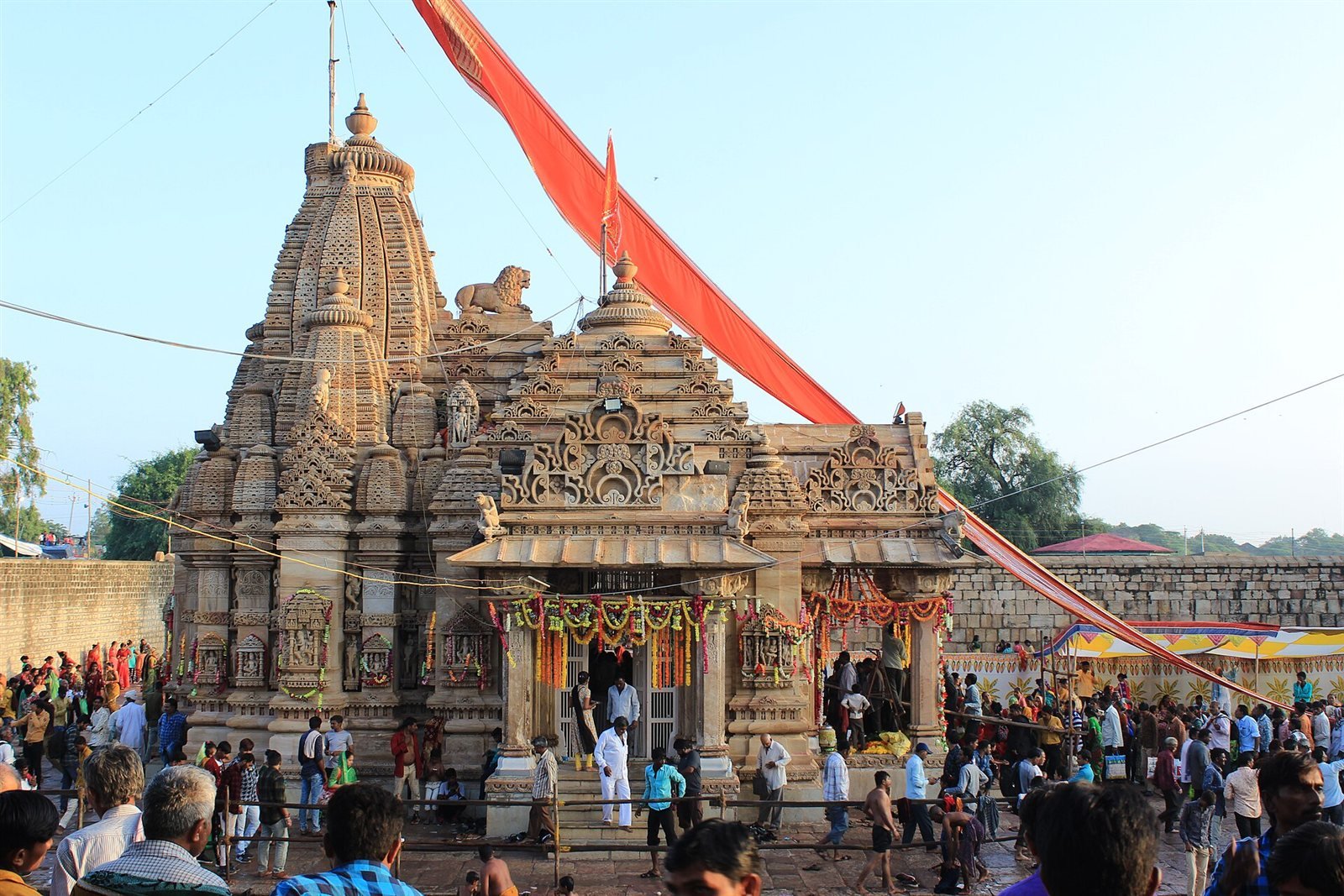
Champaner-Pavagadh Archaeological Park was inscribed in 2004, the first of the four. On the plain lie the remains of a capital established by Mahmud Begada, the Sultan of Gujarat, in the late fifteenth century after he took the hill fortress of Pavagadh: mosques, gateways, palaces, stepwells and granaries spread across a considerable area, in a distinctive Indo-Islamic idiom that fused Gujarati temple carving traditions with Islamic form. The Jama Masjid there is one of the finest mosques in India and gets a fraction of the attention it deserves.
Above it rises Pavagadh, an eight-hundred-metre volcanic plug carrying the Kalika Mata temple, a major Shakti shrine drawing very large numbers of pilgrims by steps and ropeway. The temple stood for around five centuries without its spire; a new shikhara was completed in 2022 and a flag hoisted for the first time in that span. The combination of enormous pilgrimage traffic and a quiet archaeological park on the plain gives this site a curious double character.
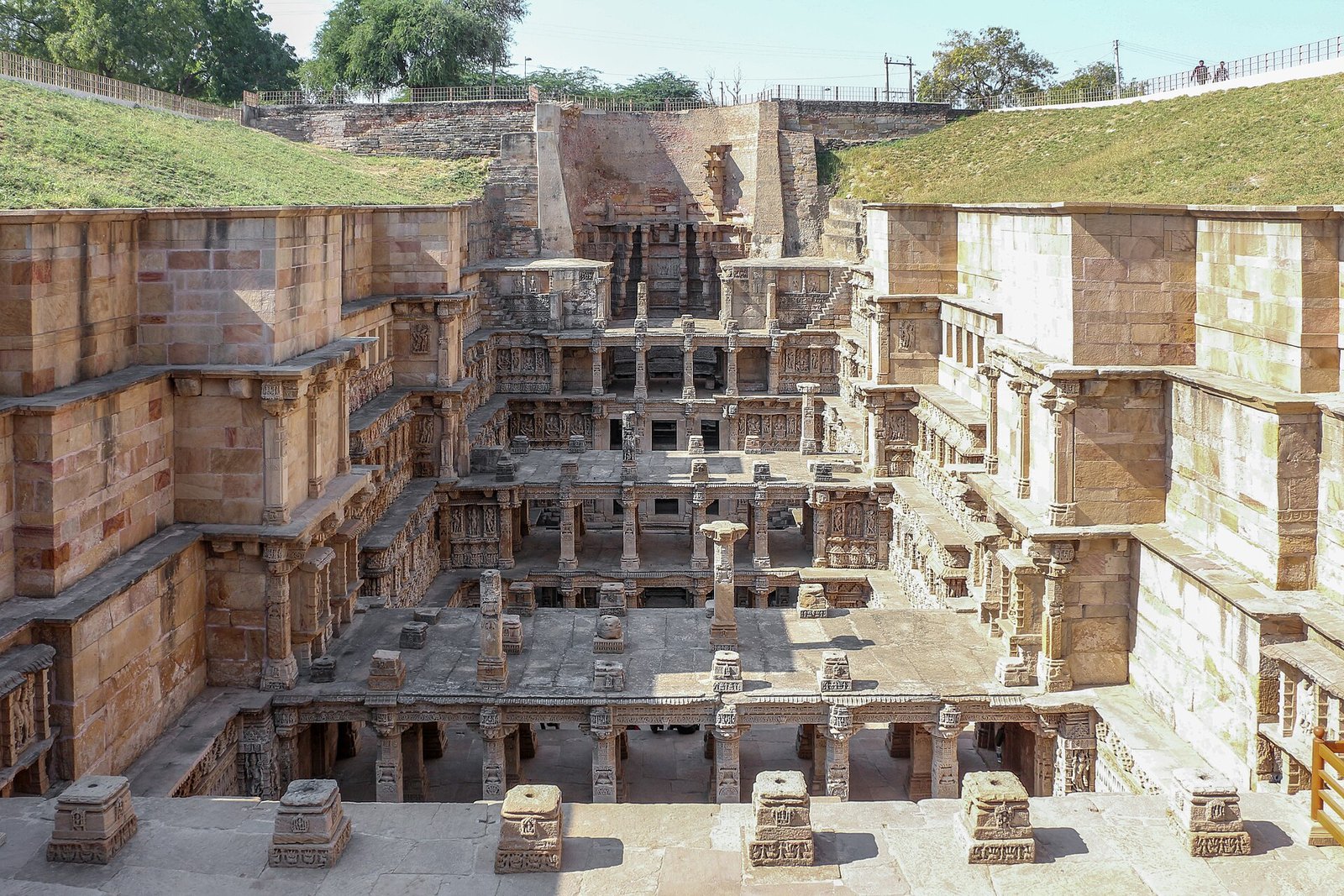
Rani ki Vav at Patan, inscribed in 2014, is the finest stepwell ever built. Commissioned in the eleventh century by Queen Udayamati of the Chaulukya dynasty in memory of King Bhimdev I, it runs about 65 metres long and steps down through seven levels of pavilions to a well shaft, carrying over five hundred principal sculptures — Vishnu's ten avatars, Shiva, Brahma, Ganesha, Surya, and registers of apsaras and nagakanyas engaged in the small business of everyday life. It was buried by the silt of the shifting Saraswati for centuries, which destroyed the upper pavilions and preserved everything below.
Four sites, seventeen years of inscriptions, and one of them is an entire living city.
A living city, and a Bronze Age one
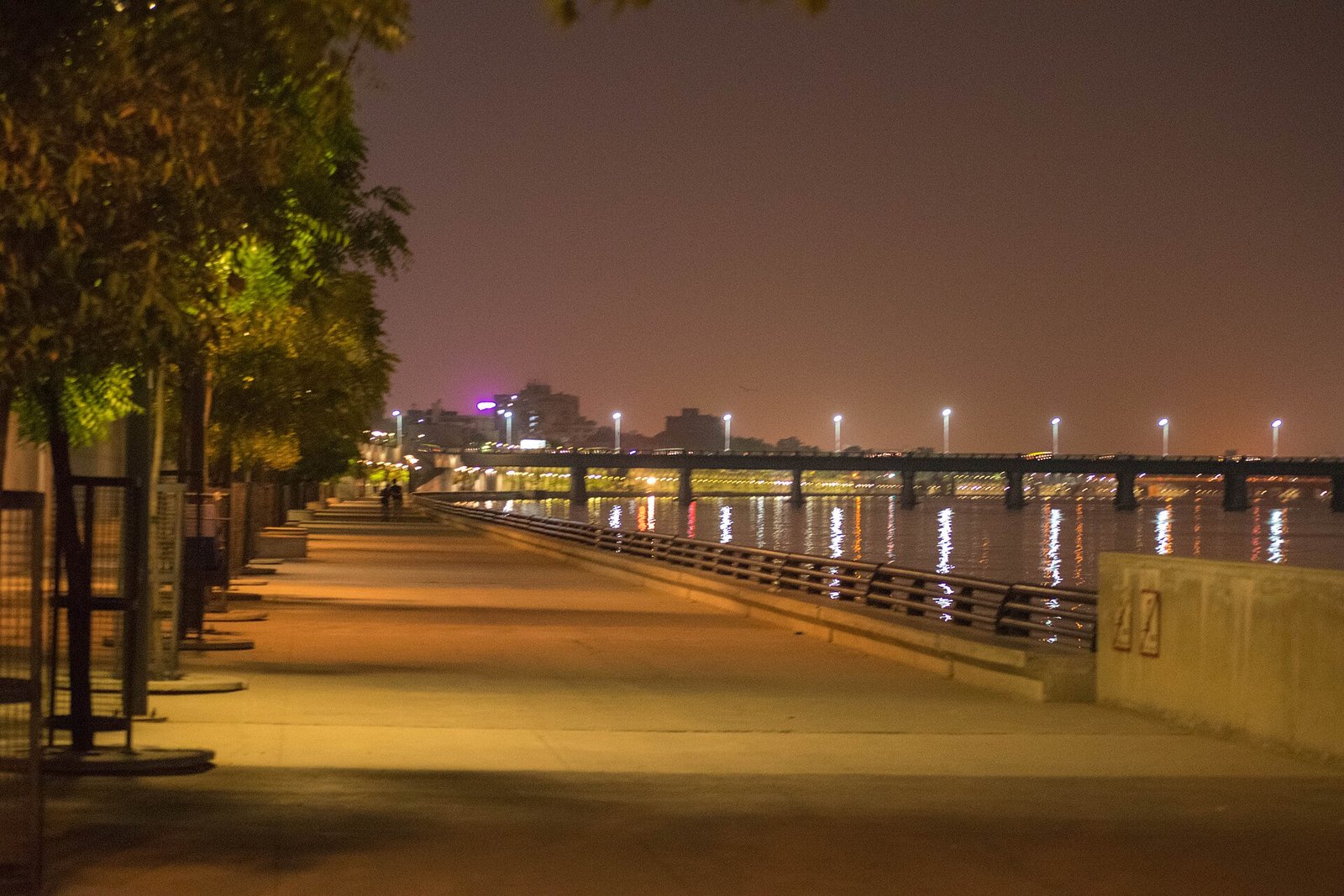
The Historic City of Ahmedabad was inscribed in 2017 as India's first World Heritage City, and it is the most unusual of the four because the thing being protected is a functioning urban fabric rather than a set of monuments. The citation covers the walled city founded by Ahmed Shah in 1411: its pols — gated residential clusters organised by community, with shared courtyards, carved timber havelis, communal bird feeders and concealed doors between houses — along with the Bhadra Fort, the Jama Masjid, Sidi Saiyyed's stone jali, and the Hindu, Jain and Islamic religious buildings intermixed throughout.
Three of the four are monuments. The fourth is six hundred years of city that people still live in
Dholavira, inscribed in 2021, is the most recent and the most remote. It is one of the five great cities of the Indus Valley Civilisation, sitting on Khadir Bet, an island of rock in the Great Rann of Kutch, and it breaks the Harappan pattern by being built in dressed local stone rather than standardised brick. It was laid out in three parts — citadel, middle town and lower town — with a long level ceremonial ground between them, and it contains sixteen rock-cut reservoirs, some ten metres deep, that occupy roughly a tenth of the walled area.
It also produced the largest Indus inscription ever found: ten characters, each around thirty-seven centimetres tall, inlaid in gypsum on a wooden board that fell face-down and left its impression in the ground, apparently mounted above the north gate. Nobody can read it. The Indus script has never been deciphered, and there is no bilingual key. A sign meant to be legible at a distance, entirely mute to us, is among the more haunting objects in Indian archaeology.
Doing all four
Allow six to eight days, with Ahmedabad as the hub. From there, Patan and Rani ki Vav are about 125 km north — pair them with the Sun Temple at Modhera, 35 km away, which is not inscribed but belongs in any Solanki-architecture day. Champaner-Pavagadh is roughly 150 km south-east via Vadodara. Dholavira is the long leg at around 360 km west, with Bhuj, 250 km from the site, as the practical Kutch base; flying or taking the train to Bhuj removes an entire driving day.
Two decisions matter more than any others. Arrive at Rani ki Vav and Dholavira when they open — both are transformed by early light and both are near-empty at that hour, and by midday the first is a high-contrast photographic problem and the second is a shadeless field of hot stone. And sleep at Dholavira village rather than day-tripping from Bhuj, which costs you twelve hours in a car and puts you on the ruins at the worst possible time.
Season, tickets and the tentative list
October to March across the board, and December to February for the western sites in particular. Dholavira sits in a salt desert and is genuinely punishing from March onwards, when Kutch temperatures are among the highest in India; the monsoon floods the Rann and can close the Khavda causeway that provides the most spectacular approach. Champaner involves a hill; Rani ki Vav requires crossing open ground; Ahmedabad's old city is walked. Winter makes all four comfortable.
Three of the four — Champaner-Pavagadh, Rani ki Vav and Dholavira — are Archaeological Survey of India monuments with separate Indian and foreign entry rates and, commonly, a weekly closure day, so check before travelling. Ahmedabad's old city is free to walk, and the official morning heritage walk is the way to read it. It is also worth knowing that India maintains a tentative list of candidate sites, and several Gujarat entries sit on it — so the number four may not stay four indefinitely.
If you go
- Arrive at Rani ki Vav and Dholavira at opening time; both are transformed by early light and empty at that hour.
- Sleep in Dholavira village rather than day-tripping from Bhuj — a return trip costs twelve hours of driving.
- Book the official Ahmedabad heritage walk; the pols are close to unreadable without a guide.
- Pair Rani ki Vav with the Sun Temple at Modhera, 35 km away — same dynasty, same century, not inscribed.
- Allow six to eight days with Ahmedabad as the hub, and consider flying or training to Bhuj to shorten the Kutch leg.
Gujarat's four World Heritage Sites give you a sultanate capital under a pilgrimage hill, the finest stepwell ever cut and preserved by being buried, a walled city of gated residential pols that six hundred thousand people still live in, and a Bronze Age stone metropolis on an island in a salt desert with an unreadable sign above its gate. Six to eight days, Ahmedabad as the hub, opening time at Patan and Dholavira, and a night on Khadir Bet.