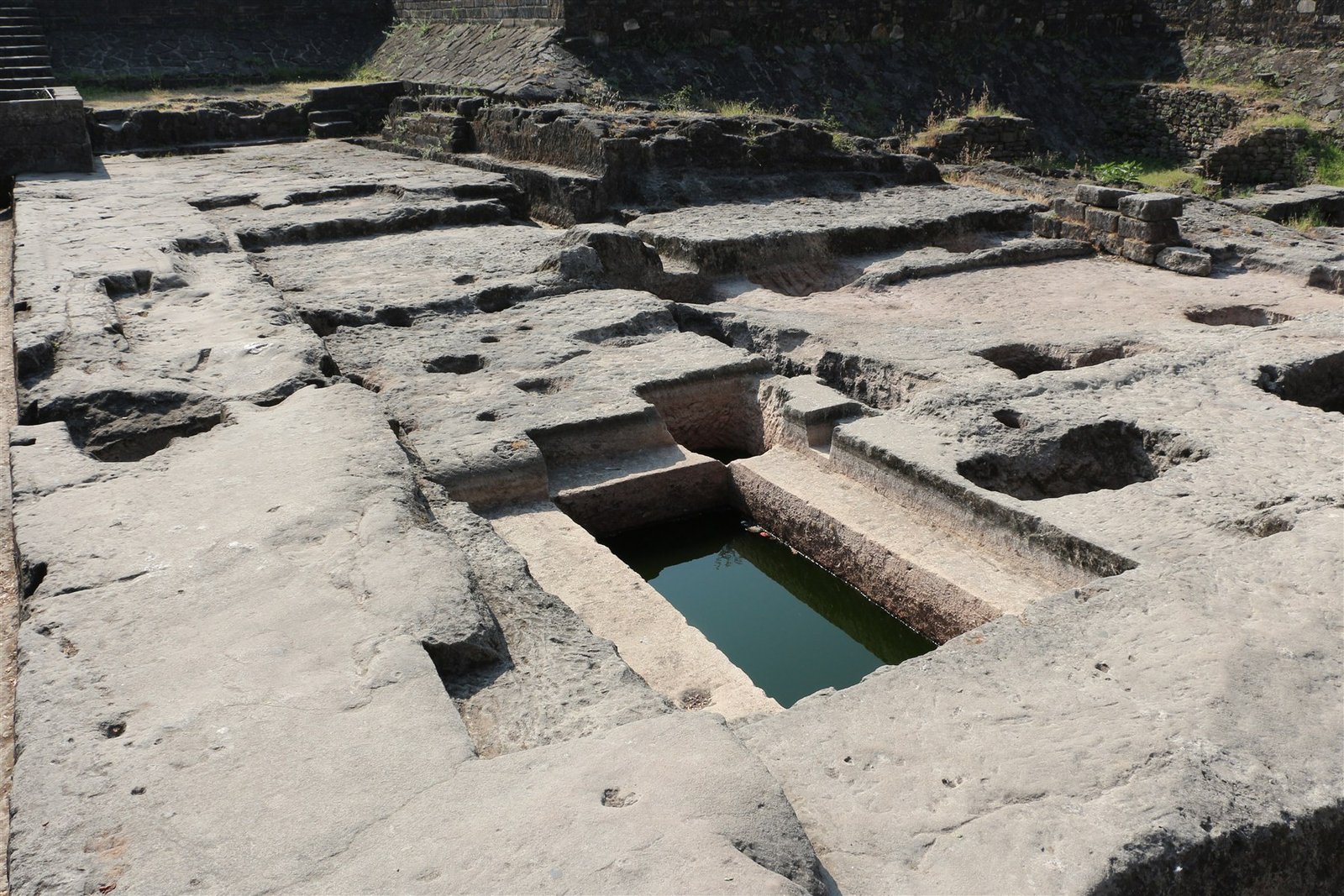
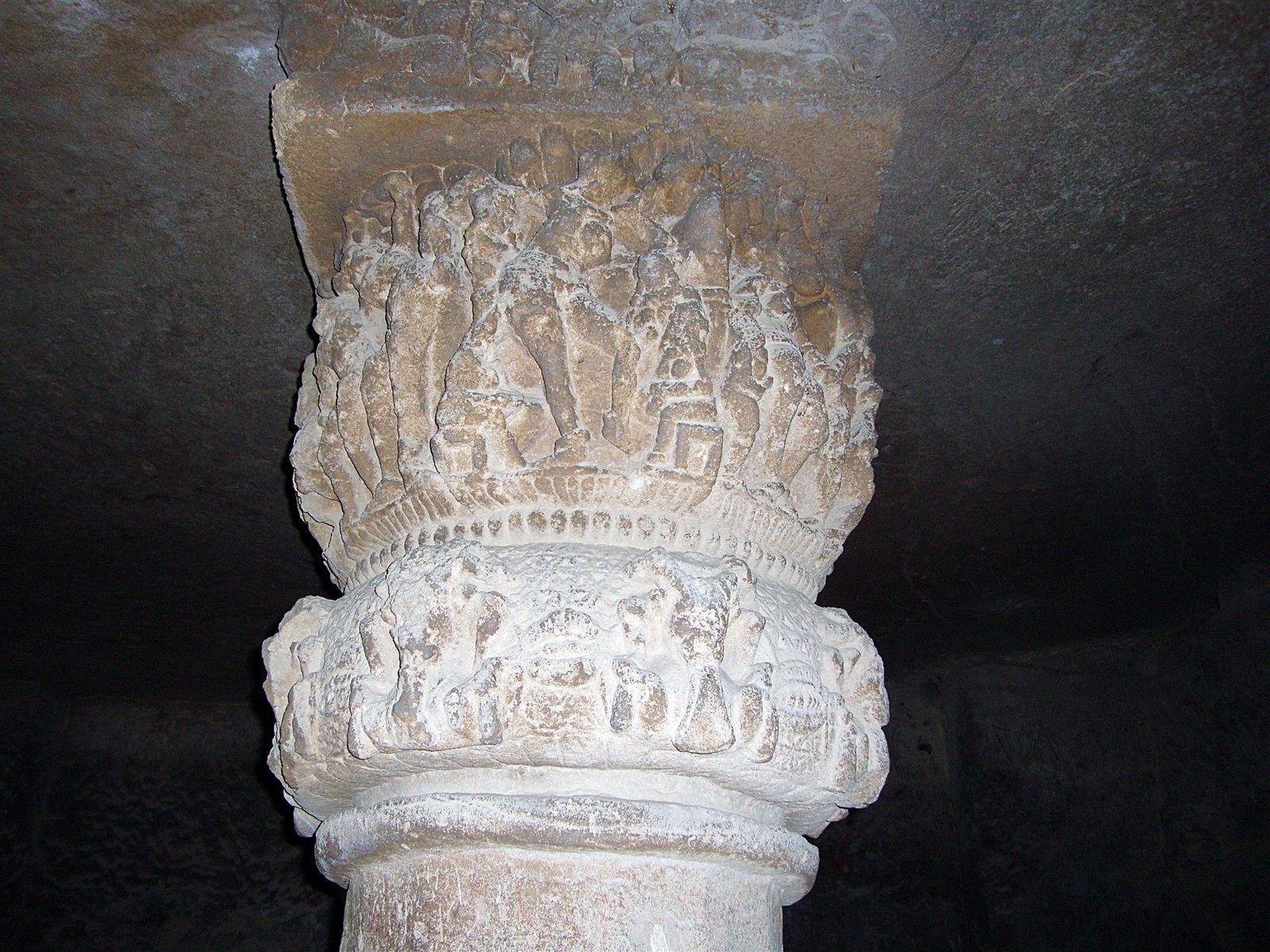
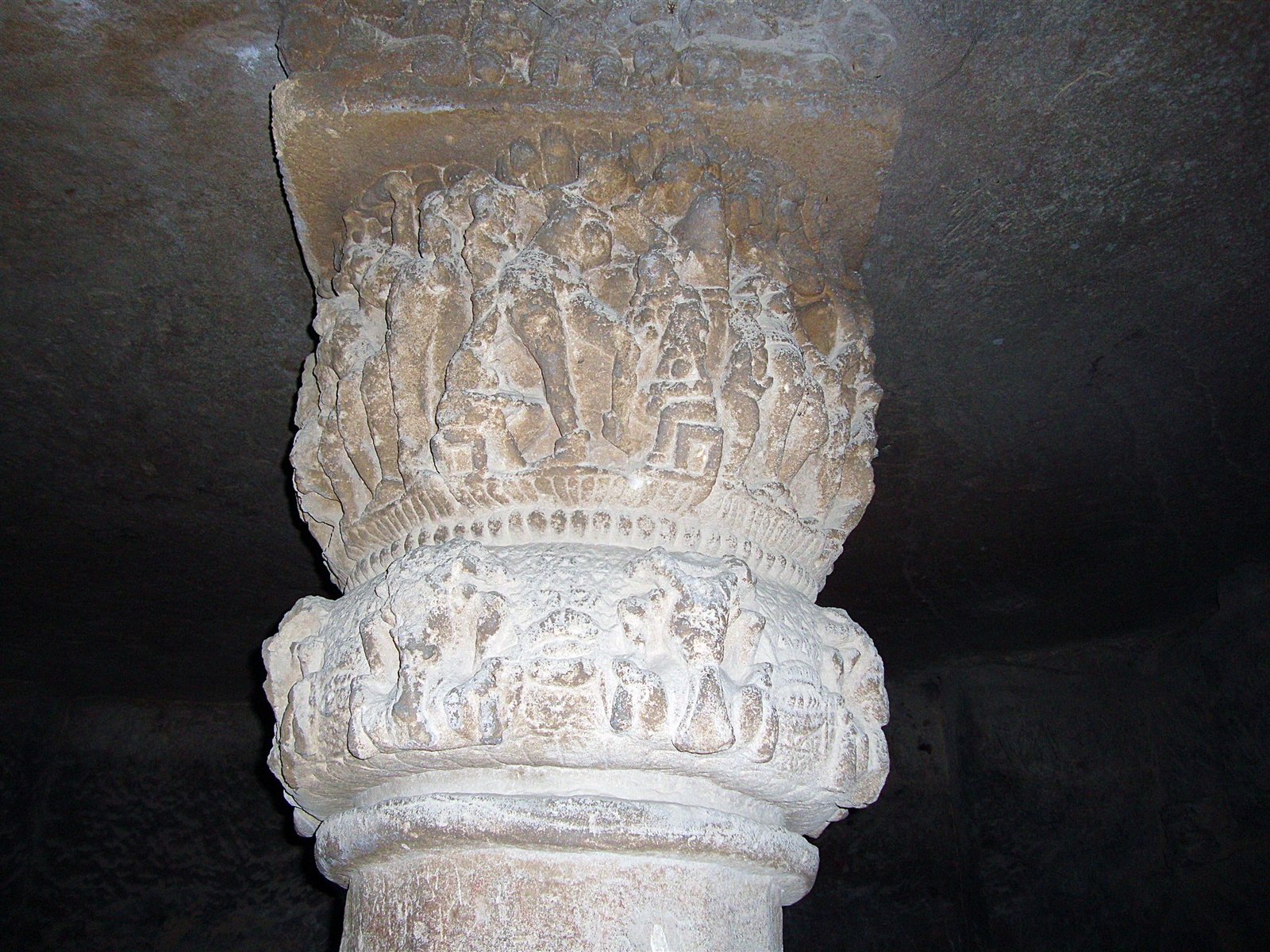
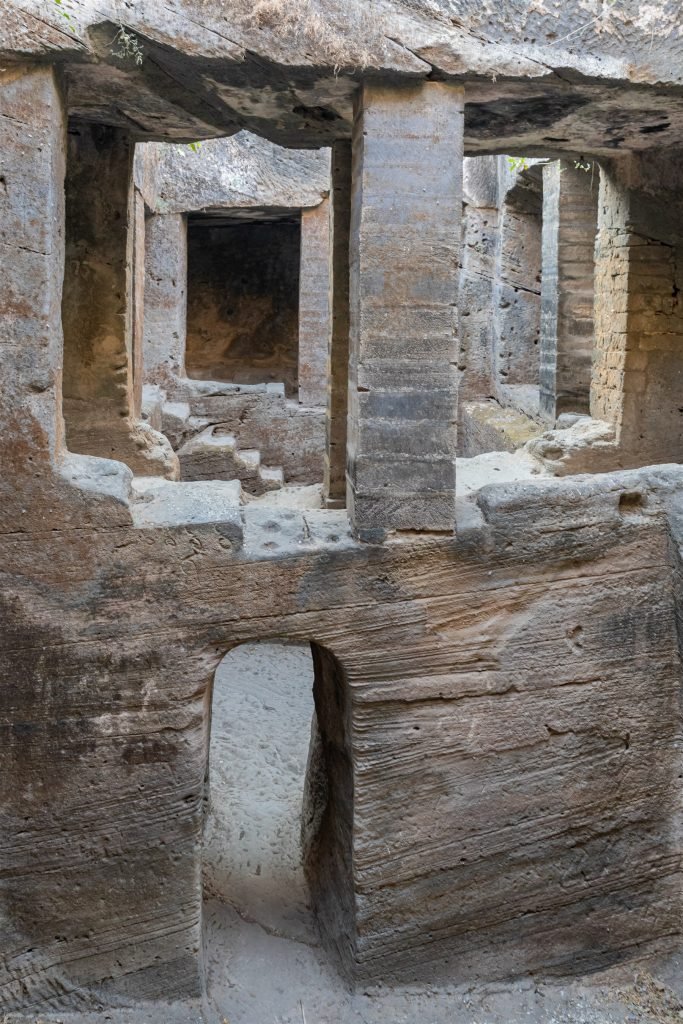
Among the most atmospheric corners of Uparkot Fort are its ancient Buddhist caves — a complex of chambers cut down into the living rock on as many as three underground storeys, dating to roughly the 2nd–4th centuries CE. Carved when Junagadh was an important Buddhist centre on India’s trade and pilgrimage routes, the caves served as monastic dwellings and meditation cells for monks.
Despite their great age they retain real elegance: ornately carved pillars and capitals, decorated doorways, water cisterns and cool, pillared halls that drop away from the daylight into shadow. Echoes of Greco-Scythian, Satavahana and other influences mingle in their design, hinting at the city’s cosmopolitan past. Quiet, dim and beautiful, the caves are a serene counterpoint to the fort’s mighty walls above.
A rock-cut cistern in the caves.
Carved pillars of the cave halls.
Buddhist monks carved these caves into Uparkot's rock in the early centuries CE, when Junagadh — with Ashoka's edicts on its outskirts — was a significant Buddhist centre.
The chambers served as dwellings and meditation cells for the monastic community, cut in descending storeys with cisterns for water.
The carving mingles Greco-Scythian and Satavahana influences — evidence of the trade routes that ran through ancient Junagadh.
They survive as the most serene corner of the great fort — cool, dim and eighteen centuries old.
The chambers descend in cut storeys through the living rock.
The carved capitals are unusually elegant for cave architecture.
Monks lived and meditated here when Junagadh was a Buddhist centre.
The rock-cut depths stay cool through the fiercest summer.
The mixed influences record Junagadh's ancient connections.
They belong to the great Uparkot fort, on the same visit.
THE PILLARSOrnate cave columns.
THE CISTERNAncient cave waterworks.
Find the caves within Uparkot's walls, near the stepwells.
Explore the rock-cut levels, storey below storey.
Study the carved capitals, the caves' finest detail.
Note the ancient cisterns — cave waterworks that still hold rain.
Sit in the cool, dim meditation halls a moment.
See the Adi Kadi Vav and Navghan Kuvo stepwells nearby.
Pillared chambers in the rock.
The Uparkot Buddhist caves are rock-cut architecture — chambers, halls, cells and cisterns excavated downward into the living rock over as many as three storeys, rather than built up from stone. Their carved pillars, with decorated capitals and brackets, and the worked doorways and water channels, show real artistry despite the austerity of monastic life. The layered, subterranean plan kept the interiors cool and contemplative, suited to meditation, while the carving reflects the cosmopolitan influences that flowed through ancient Junagadh.
More places to visit across the district are gathered in our Junagadh travel guide.
Three rock-cut storeys
Carved pillars & capitals
Cisterns & water channels
2nd–4th century origins
November to February is ideal for the fort and its monuments.
The monsoon greens Uparkot; worn steps get slippery.
Summer is hot above, but the cave depths stay cool.
⏰ See them with the stepwells on one Uparkot visit; a small torch helps in the dim lower storeys.
Keshod Airport (~40 km) is nearest.
Junagadh station is a short ride away.
Inside Uparkot, central Junagadh.
PILLAR & SHADOW
The carved pillars and capitals.
The pillared chambers below.
Daylight falling into the depths.
Never touch the ancient carving.
SACREDA holy bathing tank at the foot of Girnar
CAVESBuddhist rock-cut monastic caves
WILDLIFEIndia’s third-oldest zoo, home to Asiatic lions
HERITAGEBazaars, gateways & the Nawabi quarter
LEGACYWhere Gujarat’s poet-saint sang his bhajans
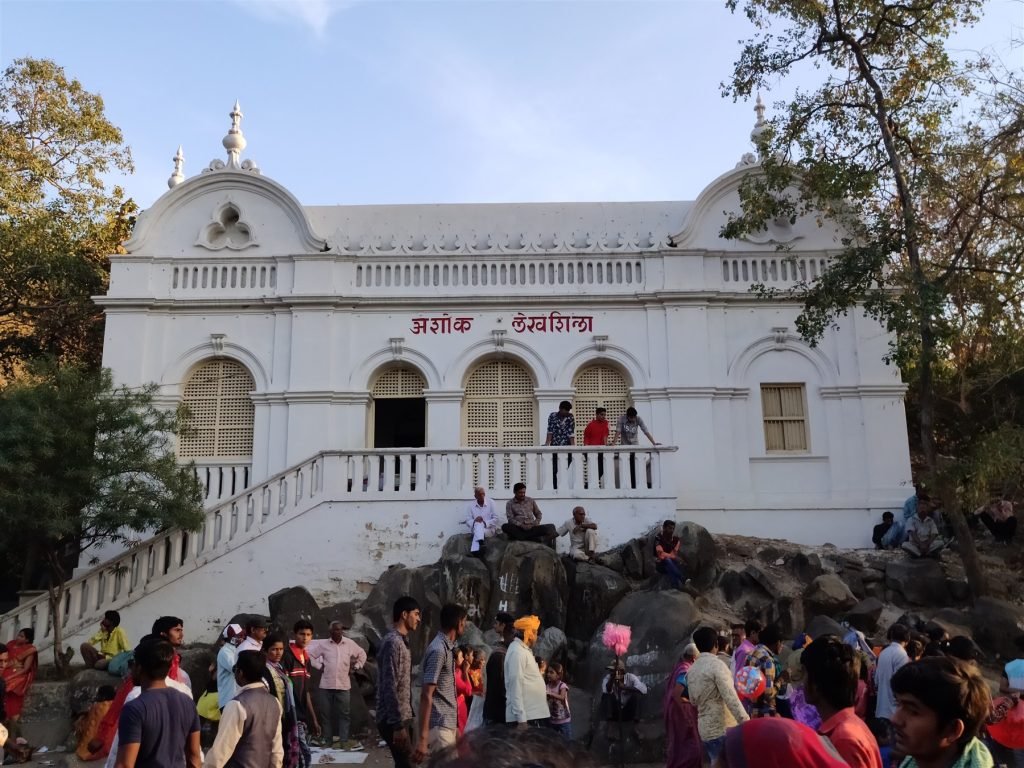
ANCIENTEmperor Ashoka’s edicts carved ~250 BCE
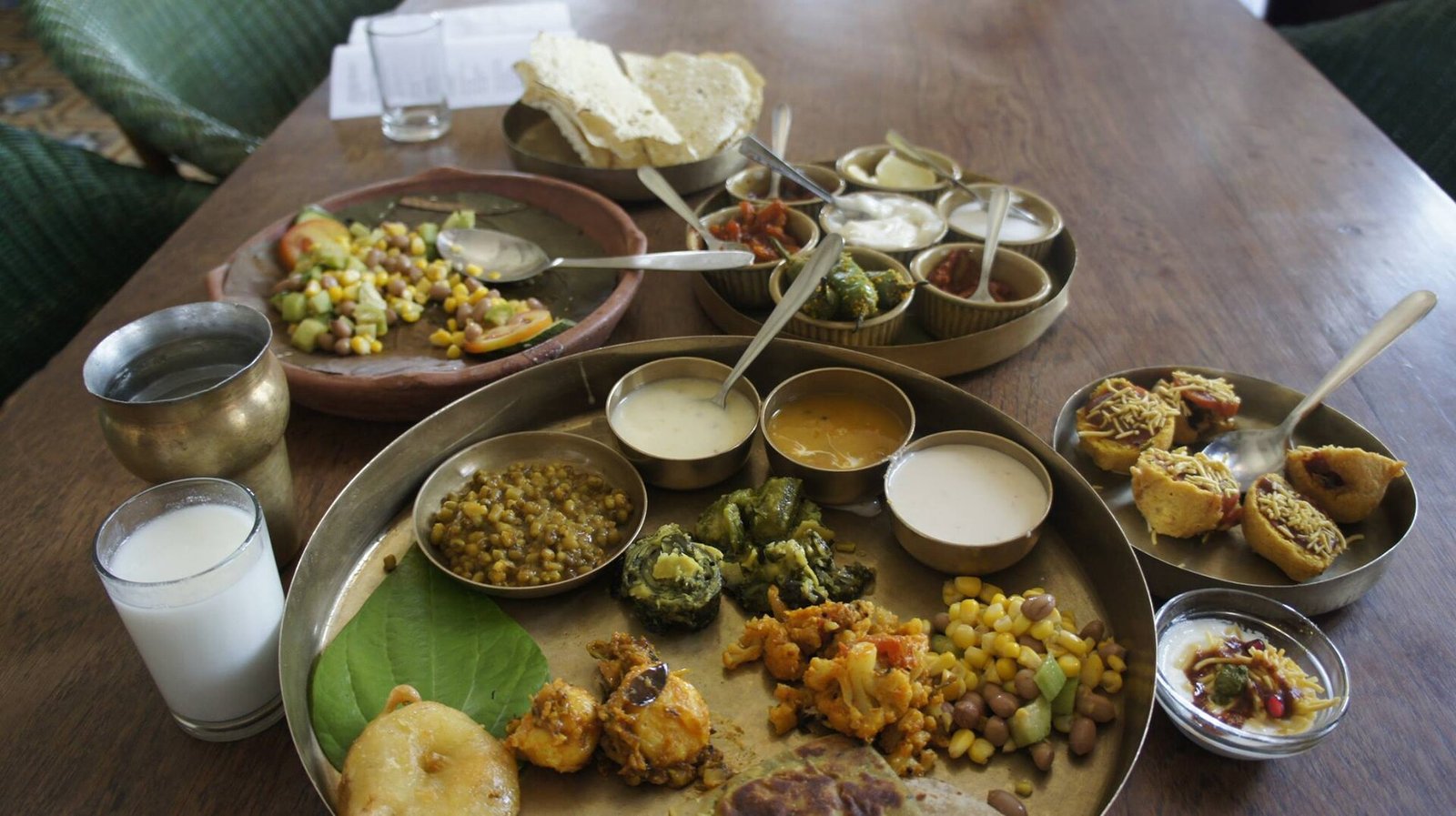
THALIRotla, kadhi, shaak and ghee-rich fare.

SNACKSSaurashtra's beloved fried snacks.
STREET FOODBustling old-city bazaar bites.
Junagadh's Girnar-grown Kesar mango is famed (summer).
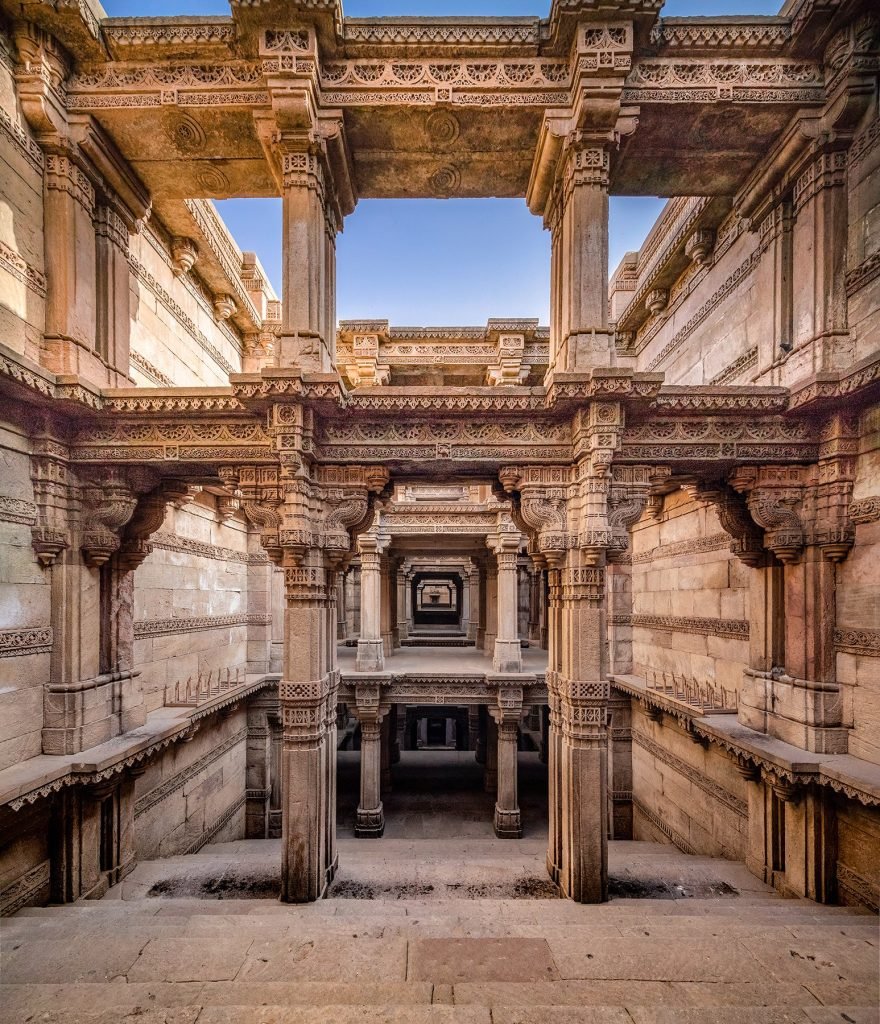
Rock-cut monastic caves on three descending storeys within Uparkot Fort, carved between roughly the second and fourth centuries CE.
Buddhist monks, in the centuries when Junagadh — with the Ashokan edicts nearby — was a significant Buddhist centre.
Carved pillars with unusually elegant capitals, decorated doorways, rainwater cisterns cut into the rock, and cool pillared halls where the community once sat in meditation.
Roughly 1,800 years old — among the oldest built spaces in Gujarat that can simply be walked into.
Within Uparkot Fort in Junagadh, close to the fort's two great stepwells — Adi Kadi Vav and Navghan Kuvo — with which they share a visit naturally.
They are covered by the Uparkot Fort ticket.
Yes, with care — the floors are worn; bring a small torch for the lower levels.
The Navghan Kuvo and Adi Kadi Vav stepwells.
STEPWELLCarved stepwells scattered across the district
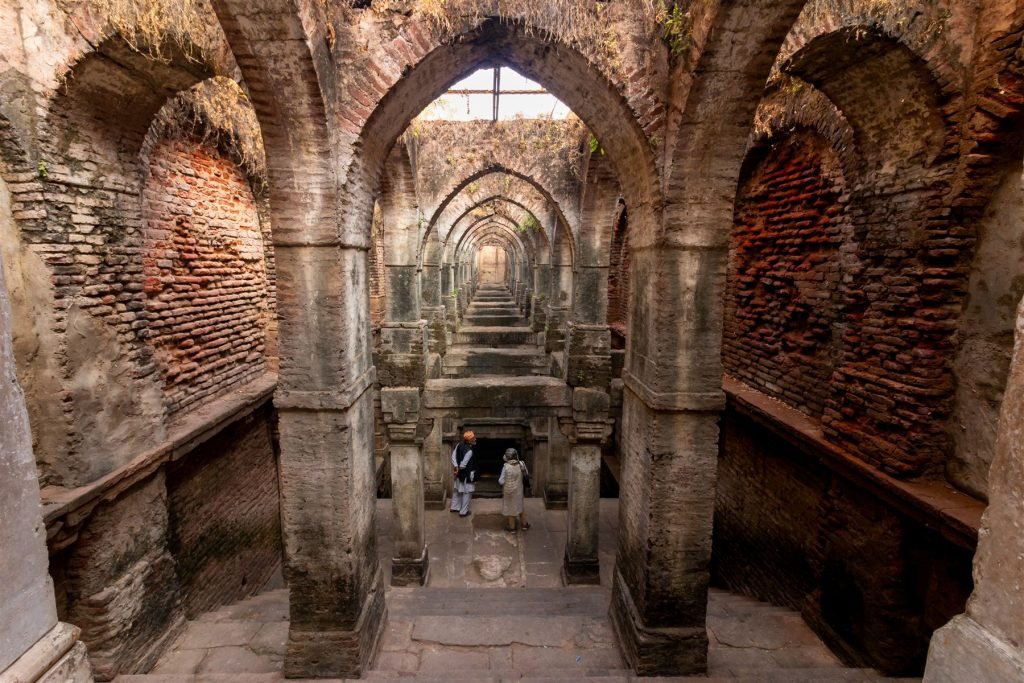
A Gothic spiral in stone — the Borsad vav, a seven-storey medieval stepwell in the heart…
A unique geodesic, aluminium-clad Shiva temple
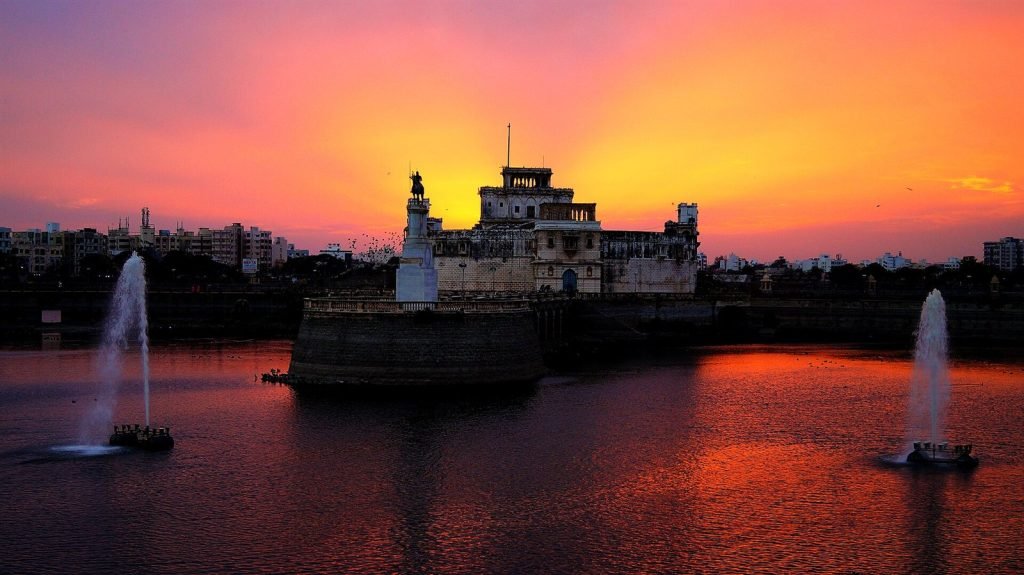
Palm-fringed crescent bay on Diu island.
◐ Morning · birdlife
ISLANDCoral reefs & mangroves in the Gulf
WHERE TO STAY
Compare live prices across the big booking sites and reserve in a few taps. Booking happens securely on the partner's site — we may earn a small commission at no extra cost to you.
Book directly on our partner sites — tap a provider to see live Gujarat hotels & prices:
SHOP THE REGION
Hand-picked crafts and trip gear, available on Amazon.
Published 24 June 2026 · Updated 24 August 2026
We’re an independent group of writers and travellers documenting every corner of Gujarat — one place, plate and festival at a time.
Search Gujarat Explorer
Find places, food, festivals and travel guides across Gujarat
Press Enter to search — or Esc to close
Plan Your Trip
Gujarat Explorer is an independent travel guide. We’re happy to help you shape an itinerary and point you to the right places, stays and experiences across Gujarat.
Book a Cab