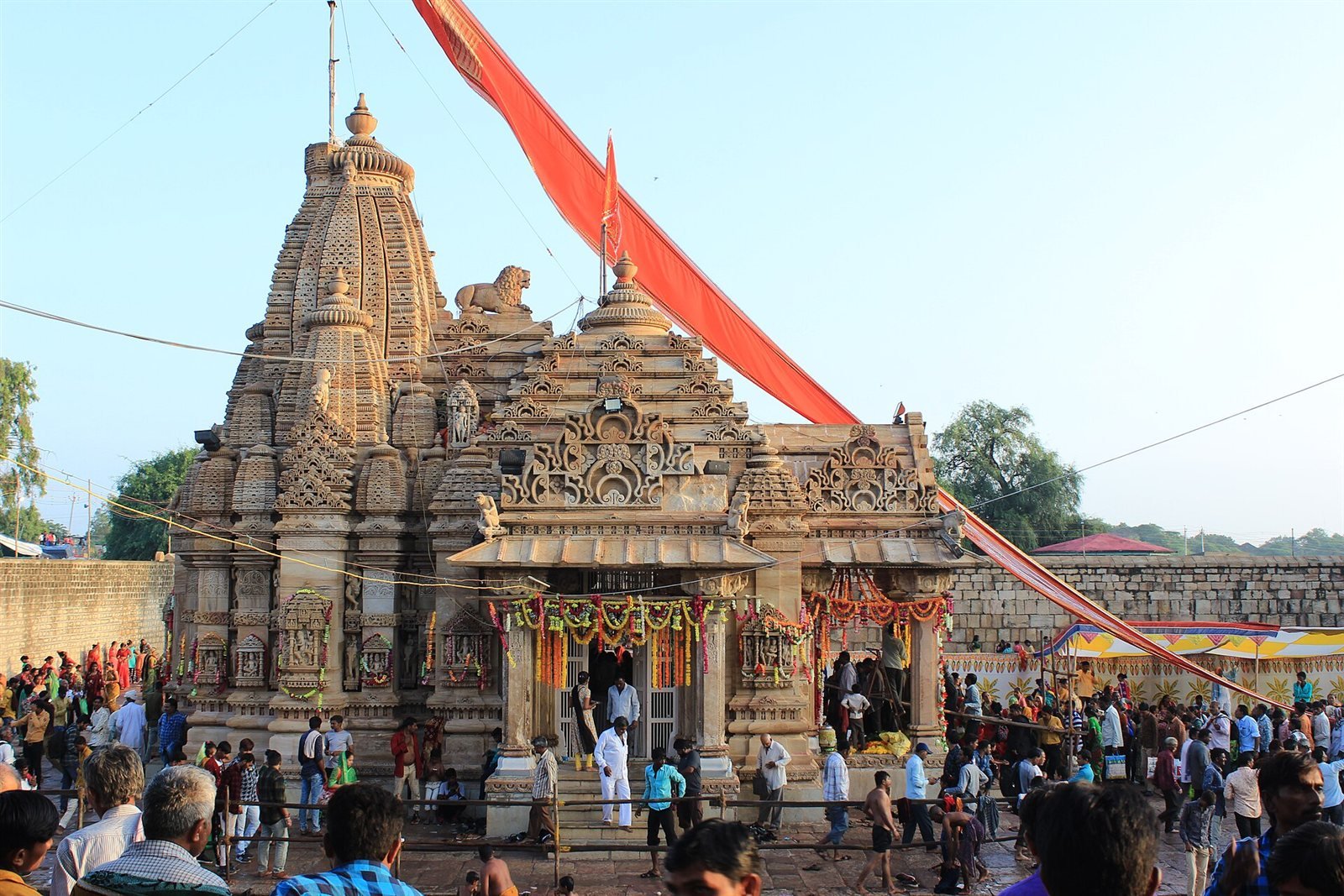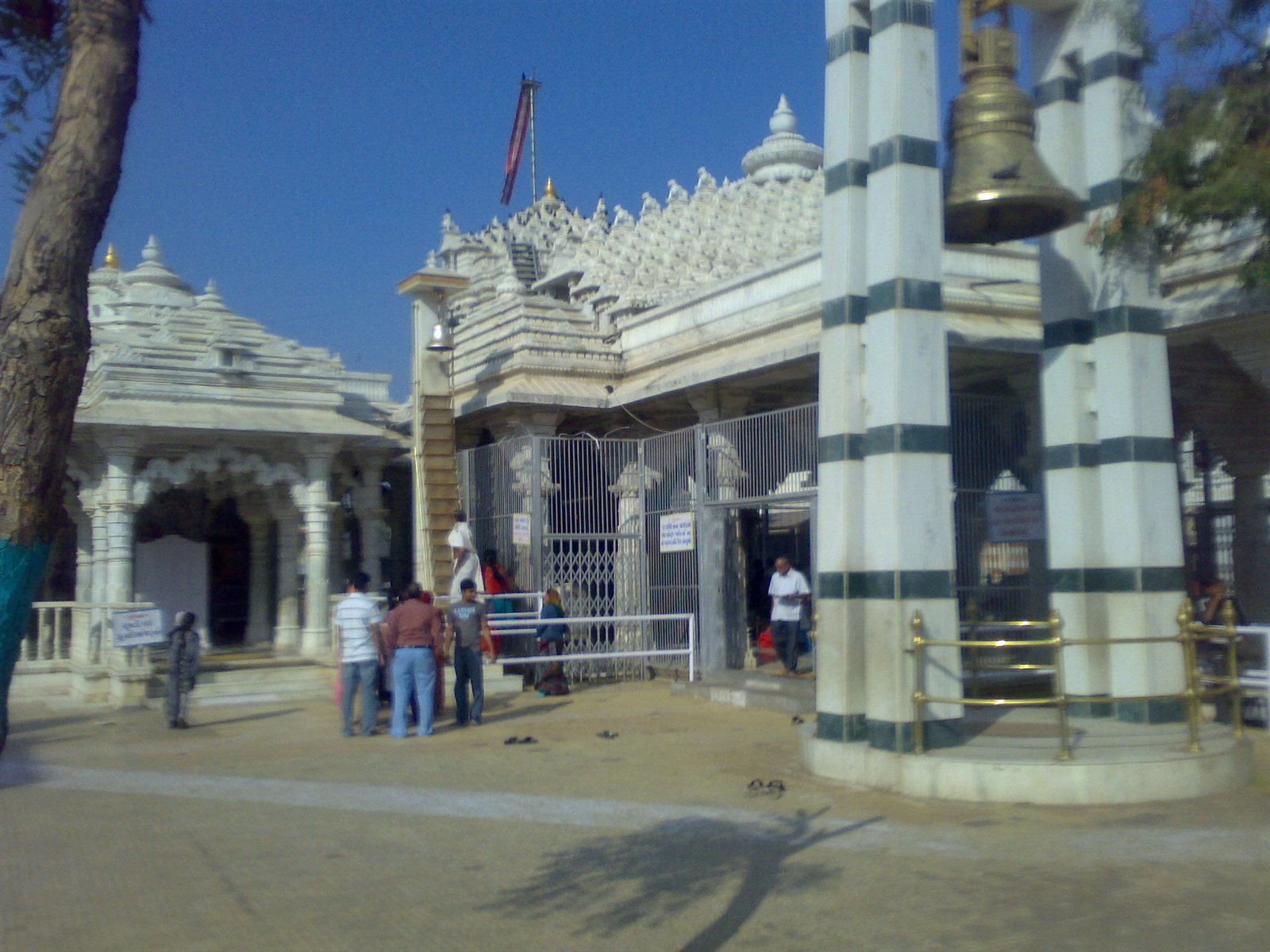
In a narrow lane in the old quarter of a small port town on the Saurashtra coast, there is a three-storey house of the kind that a middle-ranking official of a princely state would have lived in during the nineteenth century — dark, cramped, built around a tiny courtyard, with steep wooden stairs. On the ground floor a swastika marked on the floor indicates the room where, on 2 October 1869, Mohandas Karamchand Gandhi was born.
Porbandar built a memorial around it. Kirti Mandir, completed in the 1950s, encloses and preserves the original house within a larger commemorative structure with a tall spire, a prayer hall, a library and exhibition space. The combination is unexpectedly effective: you walk through the grand memorial and then into a small dark ordinary house, and the contrast does more work than any amount of interpretation could.
The house, and the family
The Gandhis were not poor and they were not grand. Karamchand Gandhi, Mohandas's father, was the diwan — effectively chief minister — of the small princely state of Porbandar, and later held similar posts at Rajkot and Vankaner. The family were Modh Bania by caste, merchant stock with a tradition of administrative service, and the house reflects exactly that position: substantial by the standards of the lane, unremarkable by any other measure.
What you see inside is a warren of small rooms on several floors around a central shaft, with wooden beams, narrow stairs and very little light. The birth room is marked and kept plain. There is minimal furniture. Visitors are often quiet in a way that they are not in most Indian memorials, and the reason is simply that the building is so obviously the real thing rather than a reconstruction.
Kirti Mandir around it is worth its own attention. Built with private funding and completed in the early 1950s, it has a tall multi-storeyed shikhara, a prayer hall, a library holding material on Gandhi and the independence movement, and photographic exhibitions covering his life. The building's height is said to correspond to the years of his life. It is well maintained, entry is nominal, and an hour covers both the memorial and the house.
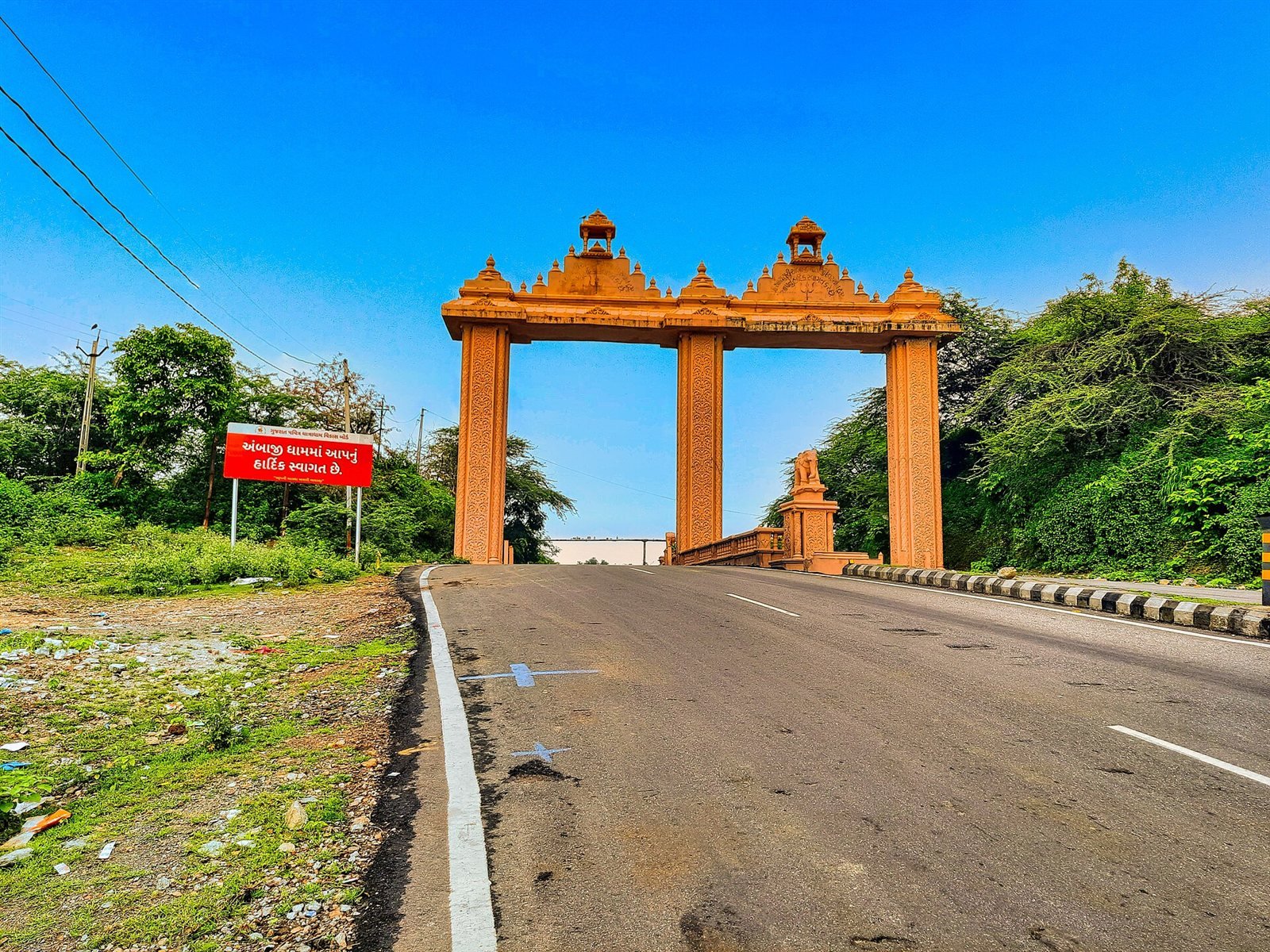
The house is small, dark and ordinary. That is the entire point of visiting it.
Sudama, and the town before Gandhi
Porbandar's older identity has nothing to do with Gandhi. Tradition identifies the town with Sudamapuri, the home of Sudama — the poor Brahmin friend of Krishna whose story, in which he visits the wealthy Krishna at Dwarka bringing only a handful of beaten rice and is rewarded beyond measure, is one of the most widely told episodes in Vaishnava devotional literature. Porbandar has what is generally described as the only temple in India dedicated to Sudama.
The birthplace of Gandhi, and — by tradition — the home town of Sudama, Krishna's poor friend from the Mahabharata stories
The Sudama Mandir is a nineteenth-century structure with a maze pattern in its courtyard that pilgrims walk, and it draws a steady flow of visitors, particularly newly married couples, for reasons tied to the Sudama story. Nearby, the Bharat Mandir is a hall with relief sculptures and a large floor map of India, built as a nationalist memorial in the twentieth century, and it forms part of the same commemorative complex as Kirti Mandir.
The town was also a working port, and one with a long history of maritime trade with Africa and the Gulf — a connection that runs through the Gujarati mercantile diaspora in East Africa and, incidentally, through Gandhi's own passage to South Africa. Huzoor Palace, the Rana of Porbandar's seaside residence, and the older Darbargadh in the town centre are the architectural residue of the princely period. The Chowpatty beachfront is the town's evening promenade.
The coast, the birds and Barda
Porbandar has two wildlife assets that visitors almost never hear about. The first is inside the town: Porbandar Bird Sanctuary, a small wetland within the municipal area, which in winter holds flamingos, pelicans, ducks and waders — an unusual thing to find in the middle of a city, and worth an early hour. The larger Mokarsagar wetland complex nearby is significant for waterbirds.
The second is Barda Wildlife Sanctuary, a hilly forested tract inland from Porbandar towards Ranavav, with leopard, hyena, chinkara and a decent bird list, and — for anyone interested in ruins — the remains of Ghumli, an old capital with the Navlakha temple, a substantial twelfth-century Solanki-period structure standing largely forgotten in the hills. Access to Barda goes through the forest department and infrastructure is minimal, which is exactly why almost nobody goes.
East along the coast, Madhavpur Ghed has a good beach and hosts an annual fair around Ram Navami commemorating the marriage of Krishna and Rukmini, which in recent years has been developed into a larger cultural festival with participation from the north-eastern states, on the basis of the tradition that Rukmini came from that region.
Practicalities
Porbandar has an airport with limited domestic connections and a railway station on the Saurashtra network, and it is roughly 180 km from Rajkot, 130 km from Junagadh and about 400 km from Ahmedabad. Buses run along the coast to Dwarka, about 100 km north, and to Junagadh and Rajkot inland. Within the town, autos cover everything and the main sights are close together.
October to March is the season, with November to February the most comfortable and the best for the wetland birds. Accommodation is a modest range of town hotels plus some beachfront options; it is adequate rather than appealing, and Dwarka or Junagadh have more choice. Half a day covers Kirti Mandir, Sudama Mandir and Bharat Mandir; a full day adds the beach, the bird sanctuary and Huzoor Palace; two days lets you reach Barda and Ghumli or take the coast road to Madhavpur.
The port, and where its ships went
Porbandar was a working port long before it was a birthplace, and its trade ran west. Gujarati merchant communities had been sailing to the Gulf, the Red Sea and above all the East African coast for centuries, and the ports of Saurashtra and Kutch were the Indian end of a network connecting Zanzibar, Mombasa, Aden and Muscat to the markets of western India. Dhows built up the coast at Mandvi carried much of it.
That network is the unremarked background to a good deal of modern Indian history. It is why substantial Gujarati communities established themselves in East Africa through the nineteenth and twentieth centuries; it is why a young lawyer from Porbandar with no particular prospects was offered a year of work in Natal in 1893; and it is therefore, indirectly, why the man born in the house inside Kirti Mandir spent twenty-one formative years in South Africa. Standing on the seafront with that in mind makes the town considerably more interesting than a single commemorative building.
If you go
- Do Kirti Mandir and the original house together; the contrast between memorial and dwelling is the point.
- Add Sudama Mandir and Bharat Mandir — all three are within a short walk of each other.
- Go to the Porbandar Bird Sanctuary early; a winter wetland inside a city is a genuine oddity.
- For a second day, arrange Barda Wildlife Sanctuary through the forest department and find the Ghumli ruins.
- Come November to February, and treat Porbandar as a stop between Dwarka and Junagadh on the coast route.
Porbandar gives you a small dark ordinary house inside a large commemorative building, and lets the difference speak. Around it is a port town that was Sudamapuri before it was Gandhi's birthplace, with the only Sudama temple in India, a princely seafront palace, flamingos in a wetland inside the municipal limits, and — an hour inland — a forgotten twelfth-century temple in a hill forest almost nobody visits. Give it a day and a half between Dwarka and Junagadh.