Home › Panchmahal Festivals › Pithora Art
TRIBAL · RITUAL ART · RATHWAPithora is sacred wall painting — rows of colourful horses and figures brushed onto house walls by the Rathwa and Bhil tribes as vows fulfilled and thanks given.
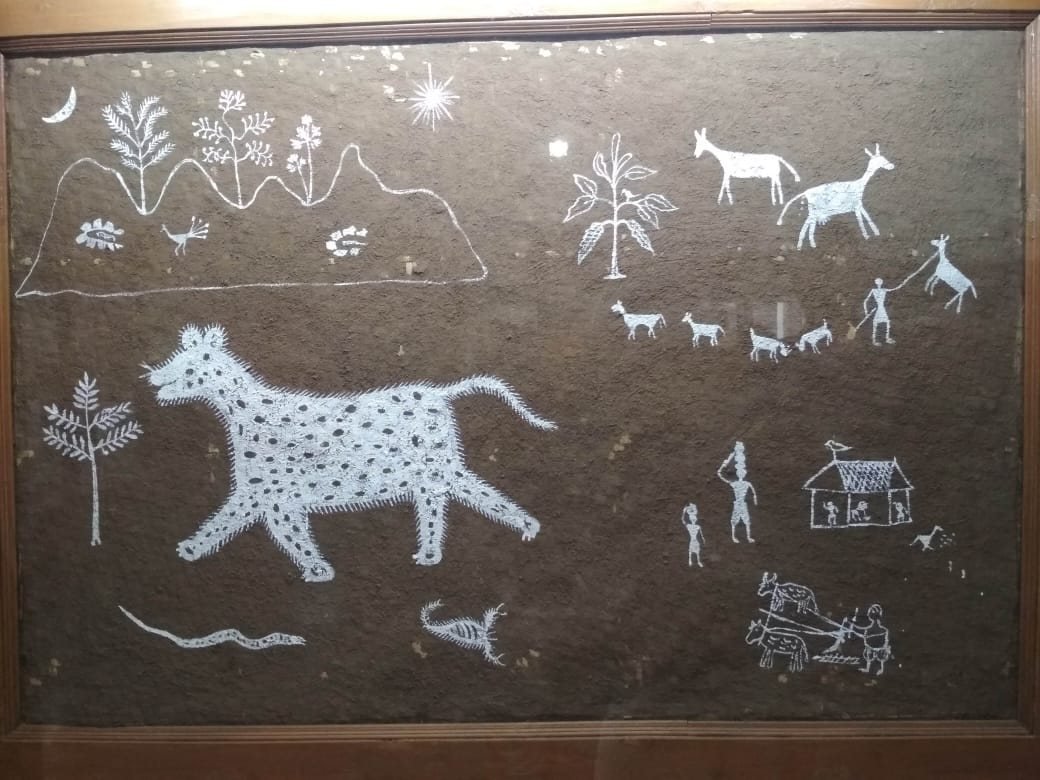
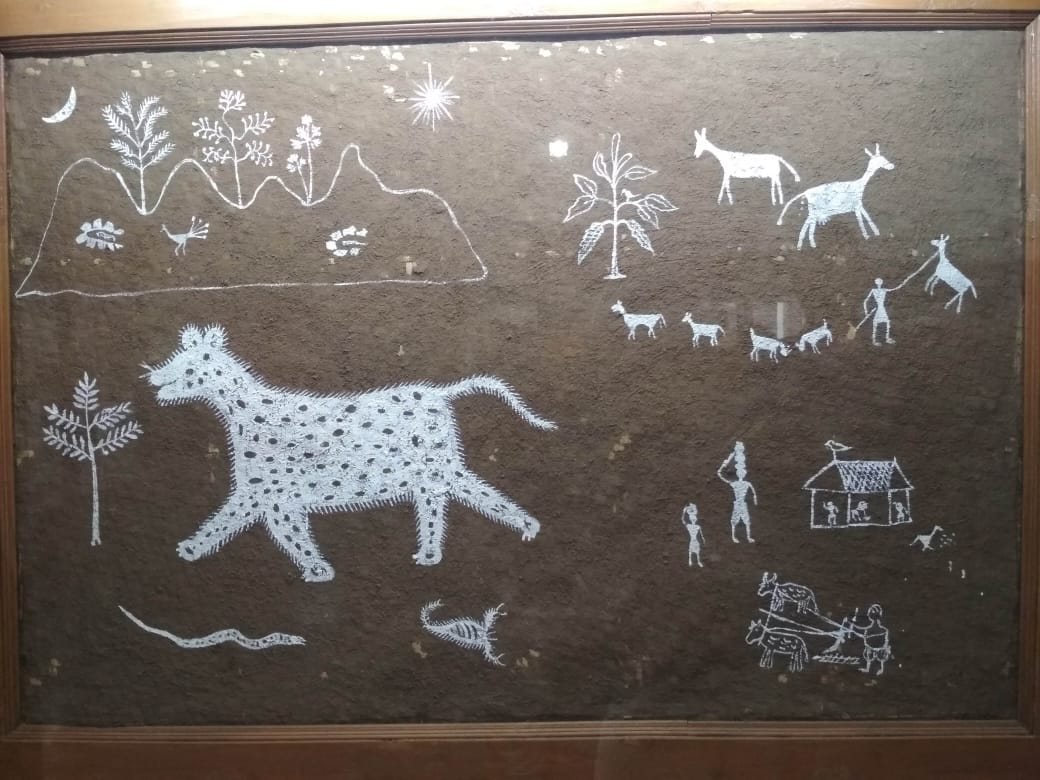
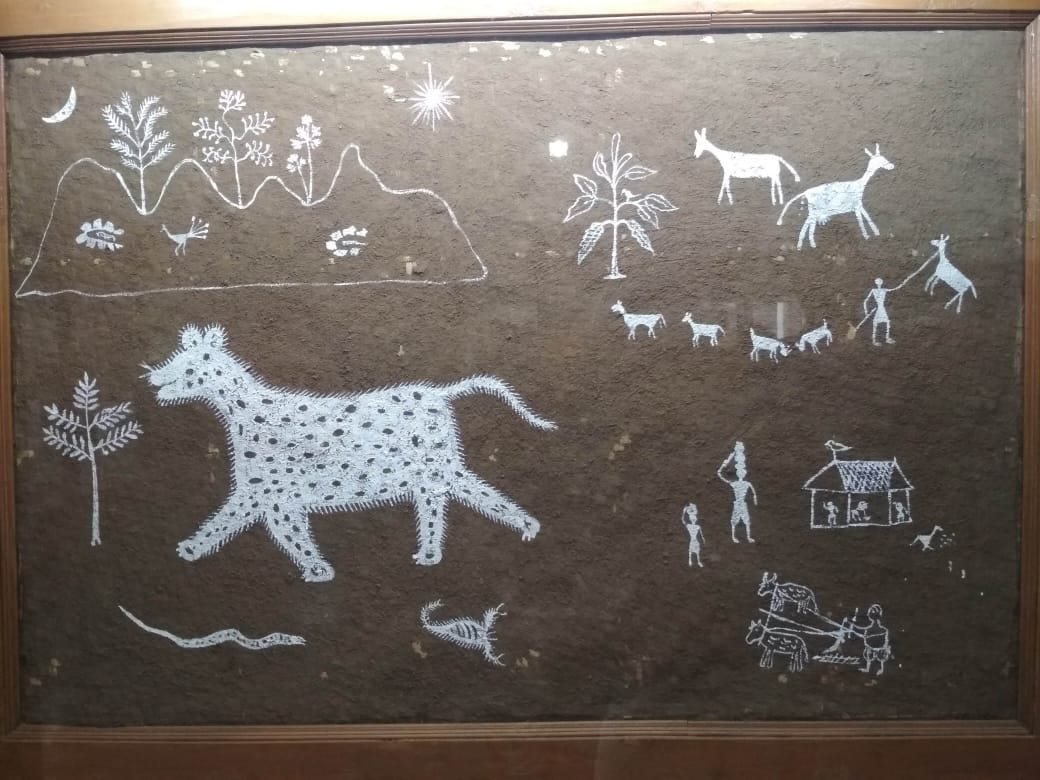
Pithora is the ritual wall art of the Rathwa and Bhil tribes of the Panchmahal and Chhota Udaipur region. Far more than decoration, a Pithora is a sacred act: when a family’s wish is granted or a vow made, they commission a ritual painter to cover an inner wall with rows of brightly coloured horses, riders and figures from tribal myth. The painting is done to strict custom, accompanied by song and offerings, and becomes a permanent thanksgiving within the home.
A Pithora is a promise kept: a family vows the painting to Baba Pithora in exchange for health, harvest or a son, and when the wish is granted the Lakharas are called. The painting is made in a night-long ritual — the wall prepared, the horses of the gods drawn in their ranks, songs and offerings around the work — and the finished field of riders, suns, animals and daily life stays on the wall as the vow’s permanent witness. Nothing about it is produced for sale; seeing one means being welcomed into a home that keeps it.
Visitors reach the tradition respectfully through Chhota Udaipur — local guides and the Kawant-area villages — or through the Adivasi Academy at Tejgadh, which documents the art with the community. Ask before photographing any painting; some families decline, and the refusal is part of the art’s meaning.
A wish is made.
The vow comes due.
A ritual master.
Horses in colour.
The great motif.
Bold and bright.
Figures and lore.
A living vow.
A ritual master.
Where it lives.
THE ARTPainted vows.
THE MOTIFRows of colour.
Travel into Rathwa country around Chhota Udaipur.
See a Pithora on a home's wall, where the art belongs.
Read the rows of horses and riders that fill the field.
Learn why each was made — a vow fulfilled, painted in public.
Meet the Lakhara tradition — the ritual painters who alone may make it.
Respect it as sacred art, not decoration.
Pithora sits at the heart of Rathwa spiritual life, binding art, faith and community. The horses that fill the wall are offerings to the deity Pithora Baba, and the making of the painting is a village event as much as a family one. Because each work is tied to a specific vow, no two walls are alike — together they form one of India’s most vivid living traditions of tribal ritual art.
Planning more of the area? Our Panchmahal guide covers the whole district.
Best to travel.
Paintings made.
Lush villages.
⏰ Pithora walls can be seen year-round; new paintings are made on ritual occasions, so ask locally when one is planned.
Vadodara (~60 km).
Vadodara / Godhra.
Halol / Bodeli.
SEP–OCT
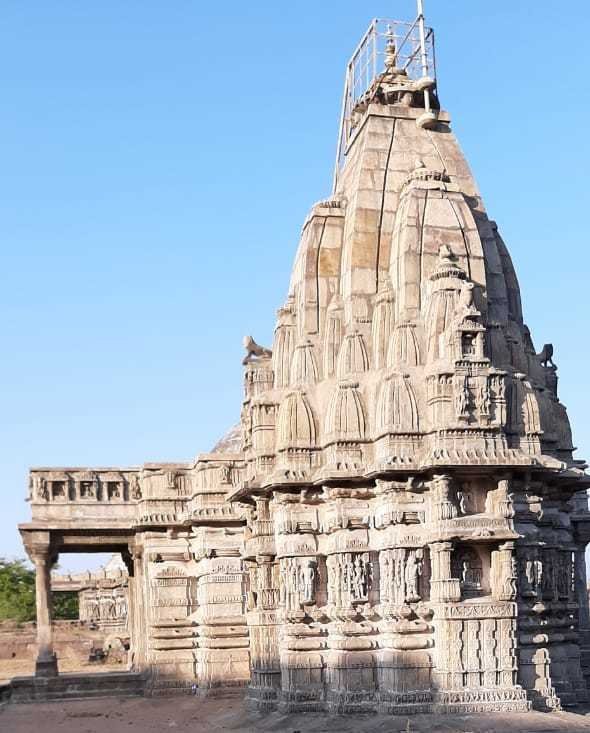
Navratri Garba
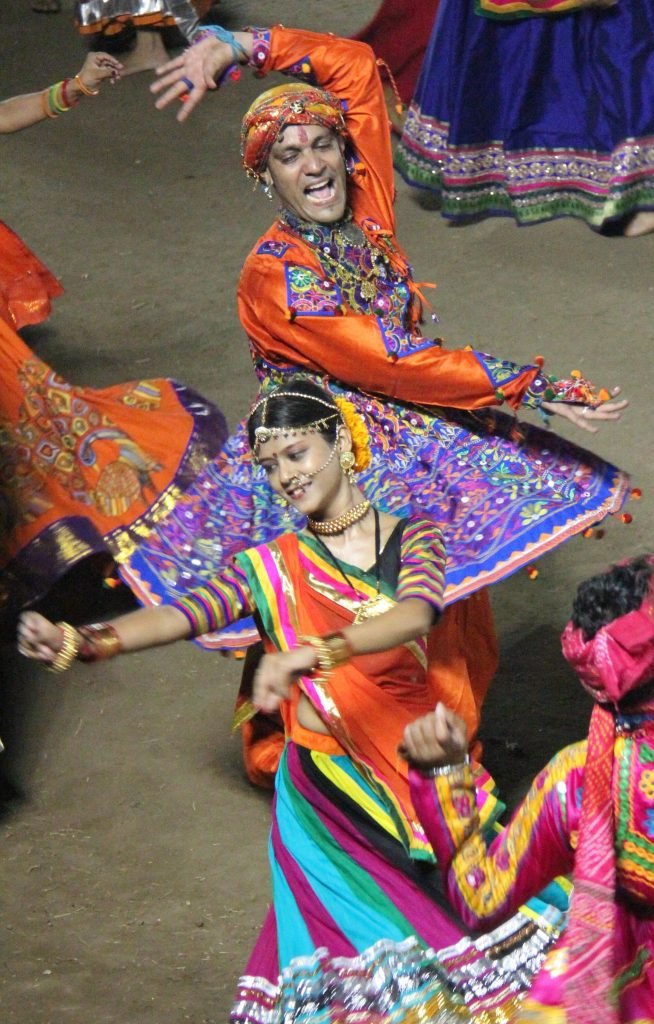
For nine autumn nights, Panchmahal spins to garba and dandiya-raas — circle dances that fill village grounds and town squares with drums, colour and devotion to the Mother Goddess. Explore →
NAVRATRI
Kalika Yatra
Lakhs climb Pavagadh to the Mother Goddess. Explore →
HERITAGE
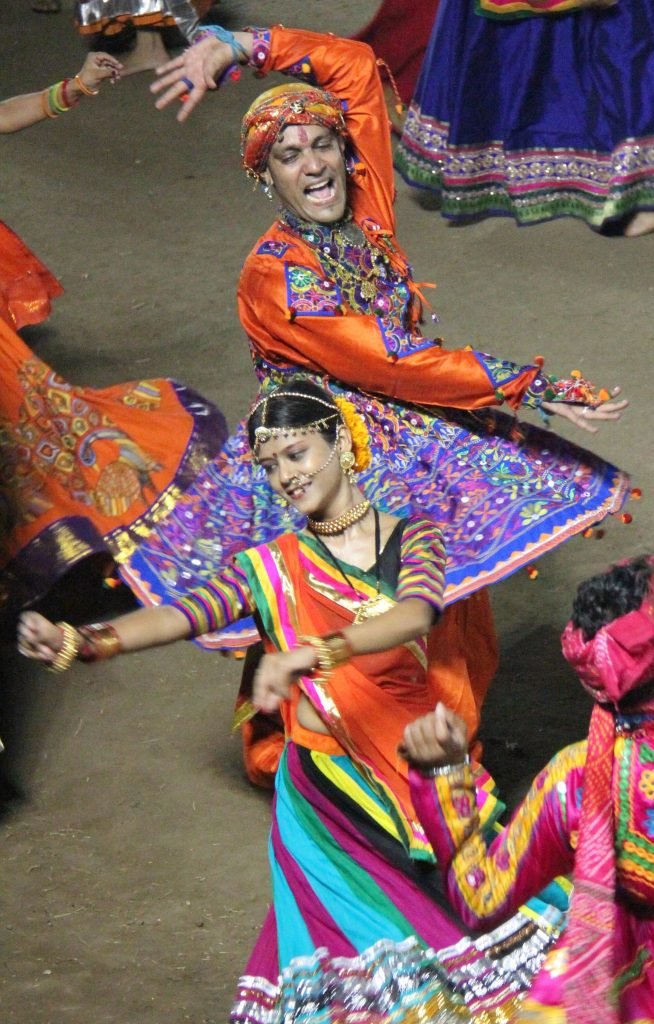
Champaner Days
At the foot of Pavagadh lies Champaner — a UNESCO World Heritage Site of grand mosques, fort walls and stepwells, the 15th-century capital where Hindu and Islamic craft meet in stone. Explore →
PILGRIM
Chaitra Fair
On Chaitri Purnima, Pavagadh-Champaner fills with a great pilgrim fair — a spring gathering to the goddess Kalika Mata in the month of Chaitra, drawing devotees from across Gujarat. Explore →
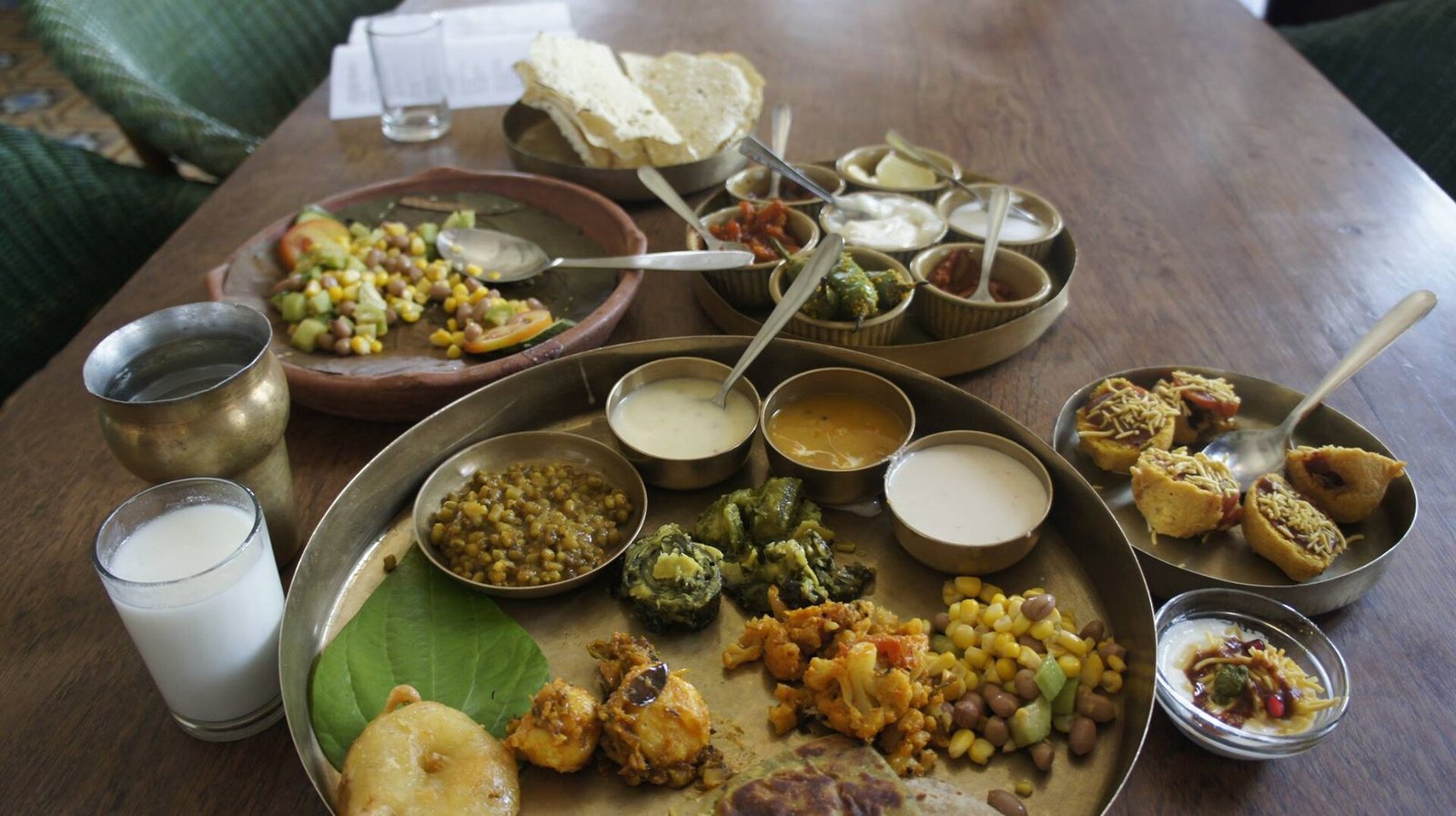
TRIBALVillage flavours.
ROTLOA local staple.
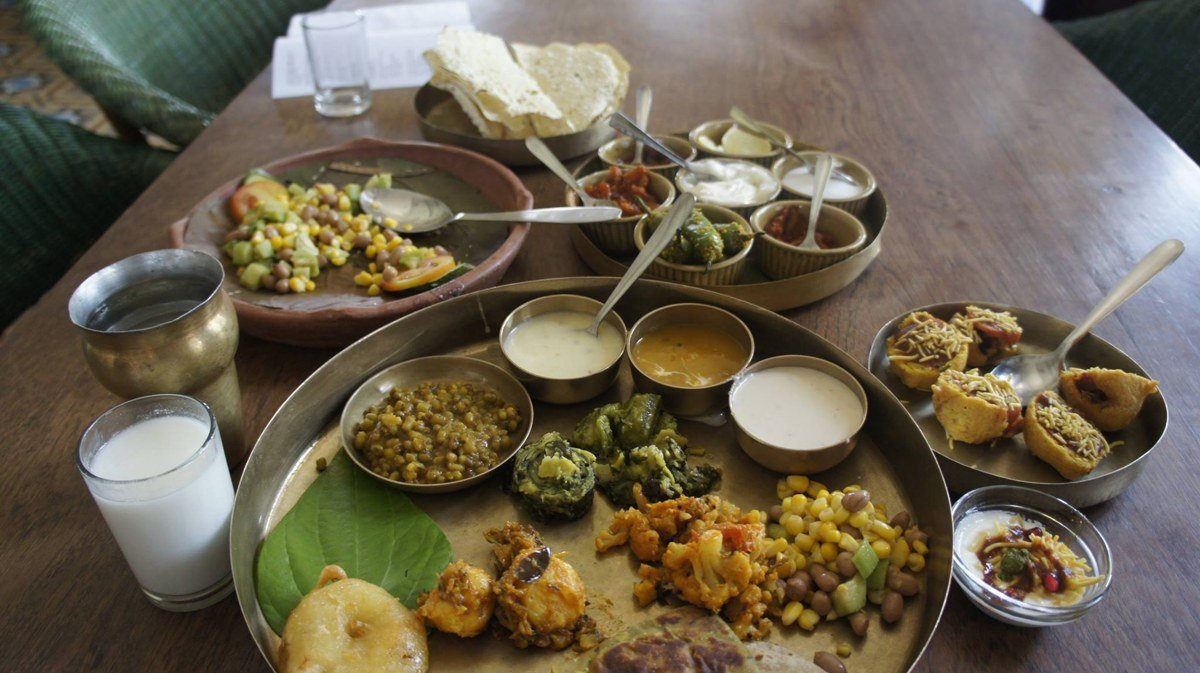
THALIA hearty spread.
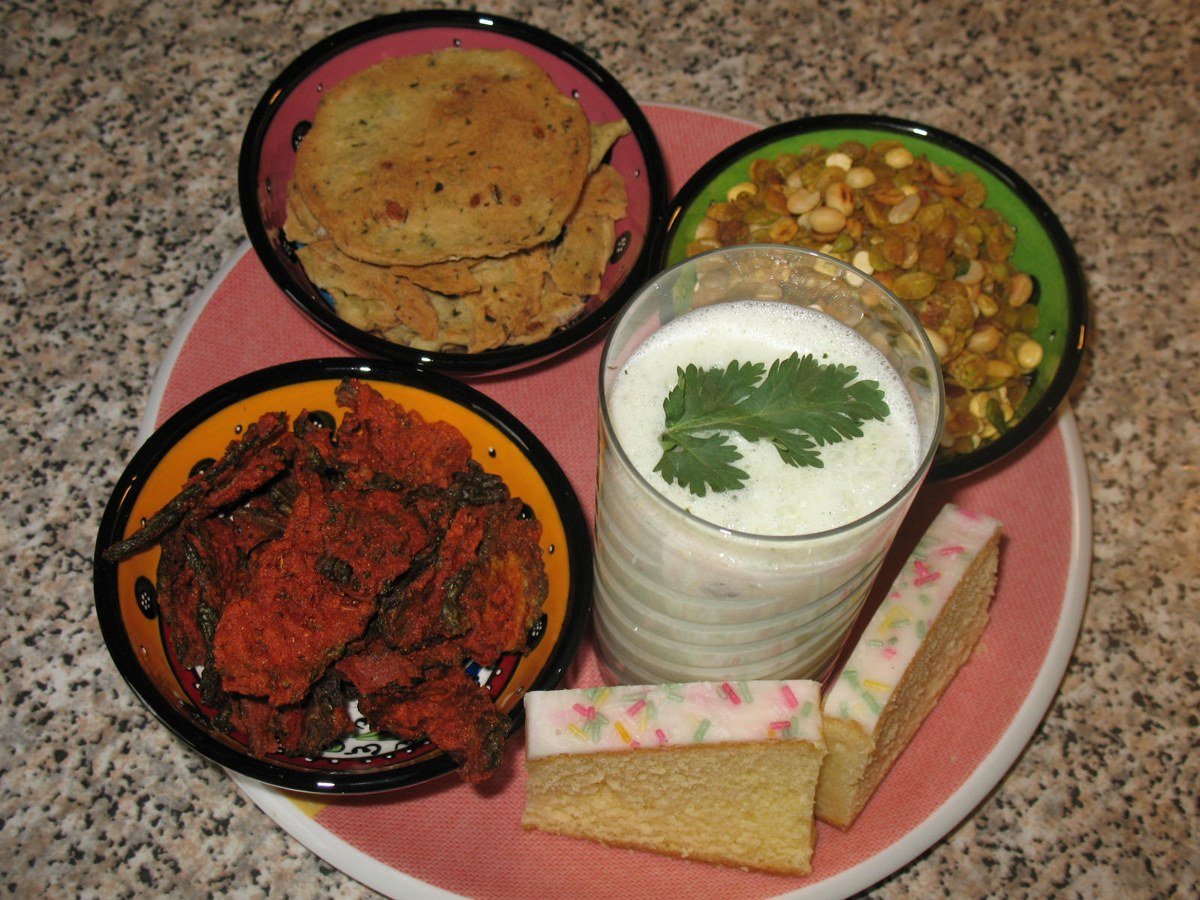
CHAASSpiced buttermilk.
Sacred ritual wall paintings of the Rathwa and Bhil tribes, made as vows and thanksgiving on house walls.
Rows of brightly coloured horses, riders and figures from tribal myth, centred on the deity Pithora Baba.
A ritual painter, or lakhara, working to strict custom with song and offerings.
To fulfil a vow or give thanks when a family’s wish has been granted.
In Rathwa and Bhil villages of the Panchmahal and Chhota Udaipur region.
Respectfully, as a guest — Pithora is sacred art within people’s homes; ask before viewing or photographing.

Seaside temple in the old port town
HISTORICThe city’s 1411 triple gateway & bazaar
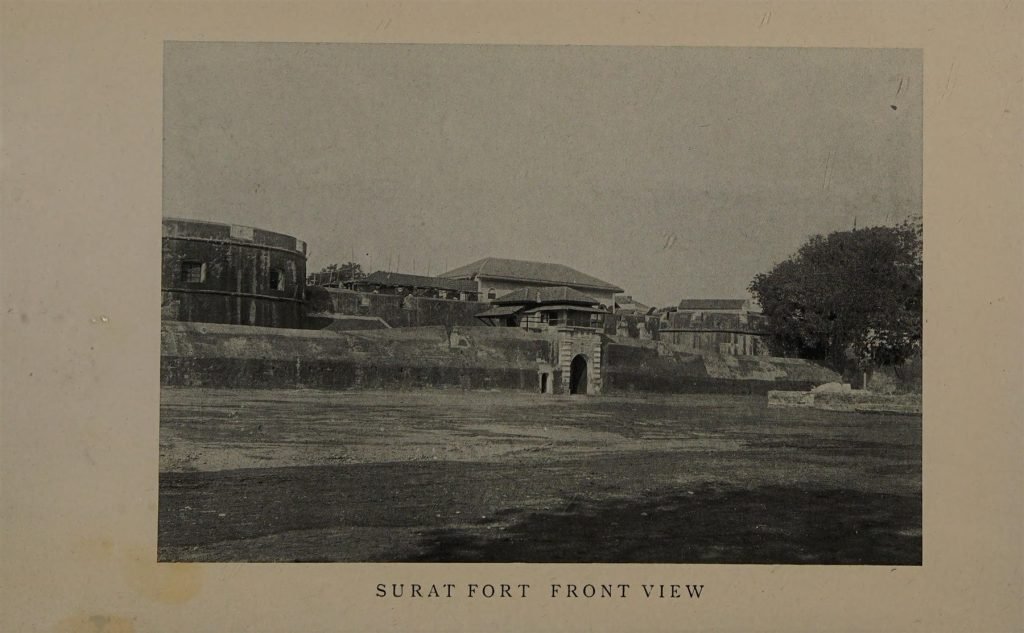
HERITAGEA 16th-century riverside fort by the Tapi
6Quiet forest roads far from the tourist gates
TOWNThe district’s bustling headquarters
A serene Krishna temple & cultural centre
WHERE TO STAY
Compare live prices across the big booking sites and reserve in a few taps. Booking happens securely on the partner's site — we may earn a small commission at no extra cost to you.
Book directly on our partner sites — tap a provider to see live Gujarat hotels & prices:
SHOP THE REGION
Hand-picked crafts and trip gear, available on Amazon.
Published 24 June 2026 · Updated 3 July 2026
We’re an independent group of writers and travellers documenting every corner of Gujarat — one place, plate and festival at a time.
Search Gujarat Explorer
Find places, food, festivals and travel guides across Gujarat
Press Enter to search — or Esc to close
Plan Your Trip
Gujarat Explorer is an independent travel guide. We’re happy to help you shape an itinerary and point you to the right places, stays and experiences across Gujarat.
Book a Cab