Gujarat Explorer

Rani ki Vav

Home Patan Rani ki Vav

UNESCO · STEPWELL · 11th C

Rani ki Vav

An inverted temple of water — Rani ki Vav at Patan, an 11th-century stepwell of breathtaking sculpture, a UNESCO World Heritage Site and the masterpiece of the Solanki age.

AT A GLANCE Quick Facts
📍 LOCATION Patan
🪜 TYPE Stepwell (vav)
🗓️ BUILT c. 1063 CE
👑 PATRON Queen Udayamati
🏆 STATUS UNESCO (2014)
🪜 DEPTH Seven levels
🎟️ ENTRY Ticket (ASI)
☀️ BEST TIME Oct – Mar
ABOUT THE PLACE

The queen's stepwell

At Patan, the ancient capital of Gujarat, lies one of the most extraordinary monuments in all of India — Rani ki Vav, the ‘Queen’s Stepwell.’ Built in the 11th century (around 1063) by Queen Udayamati in memory of her husband, the Solanki king Bhima I, it is the grandest and most lavishly decorated stepwell ever made.

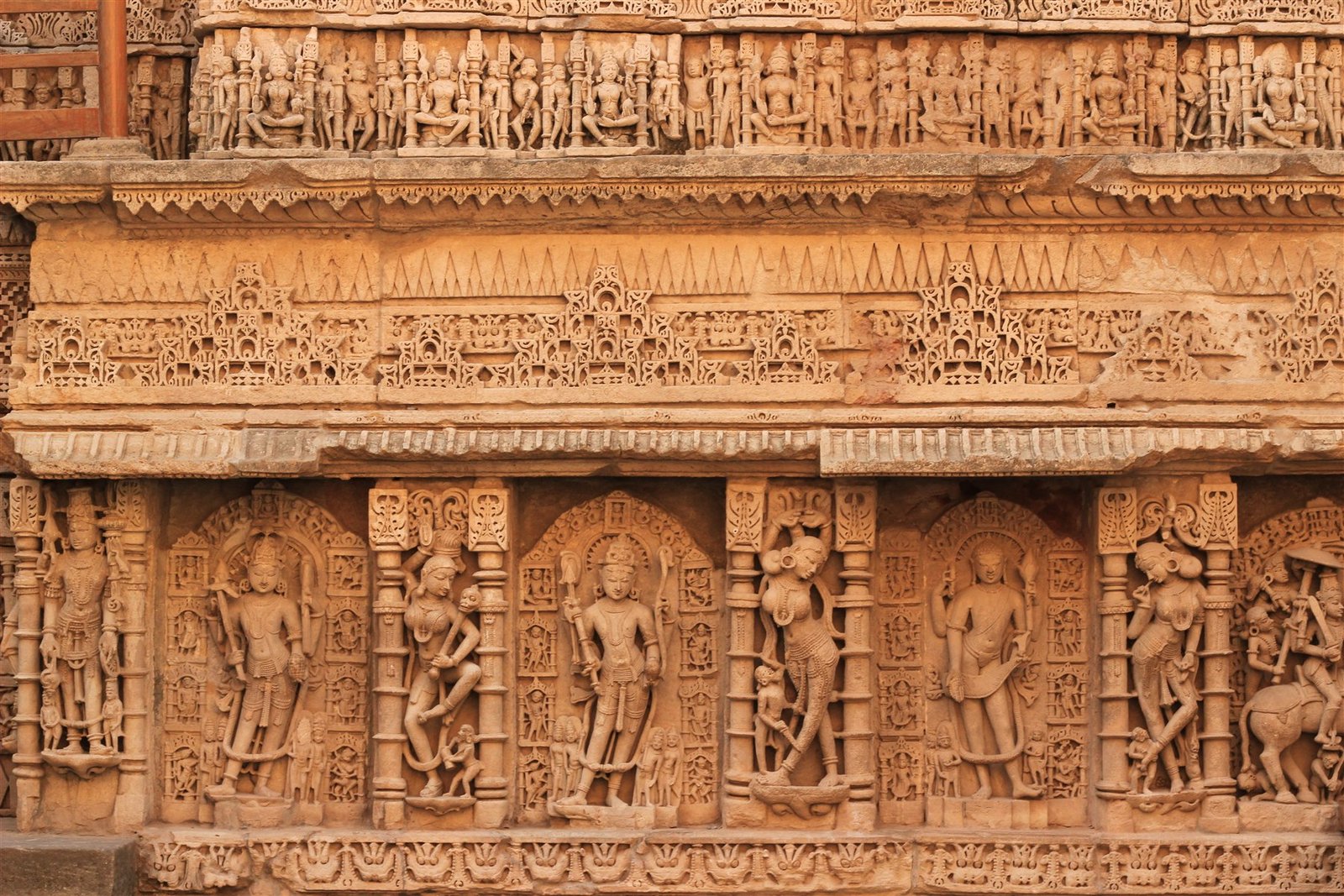
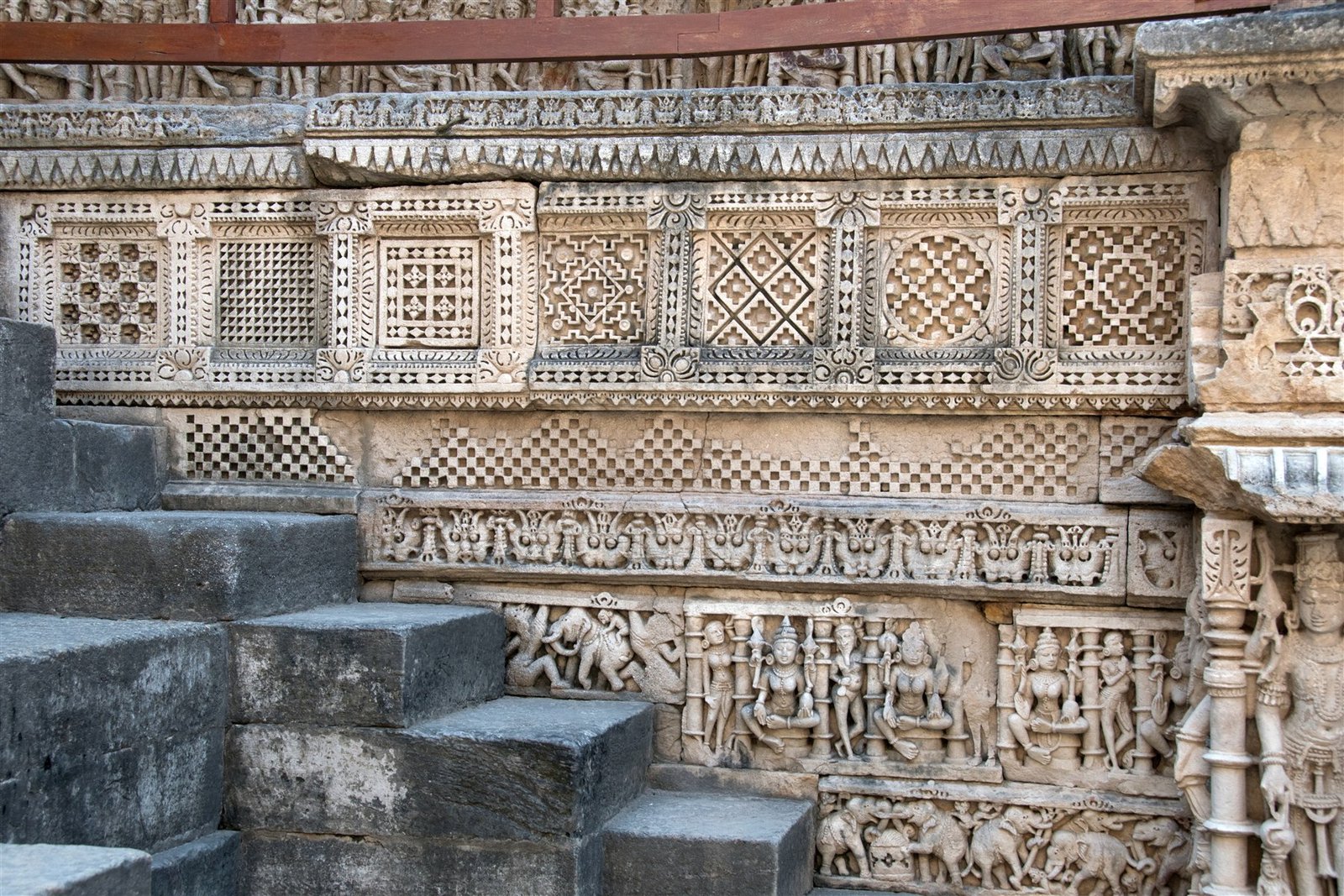
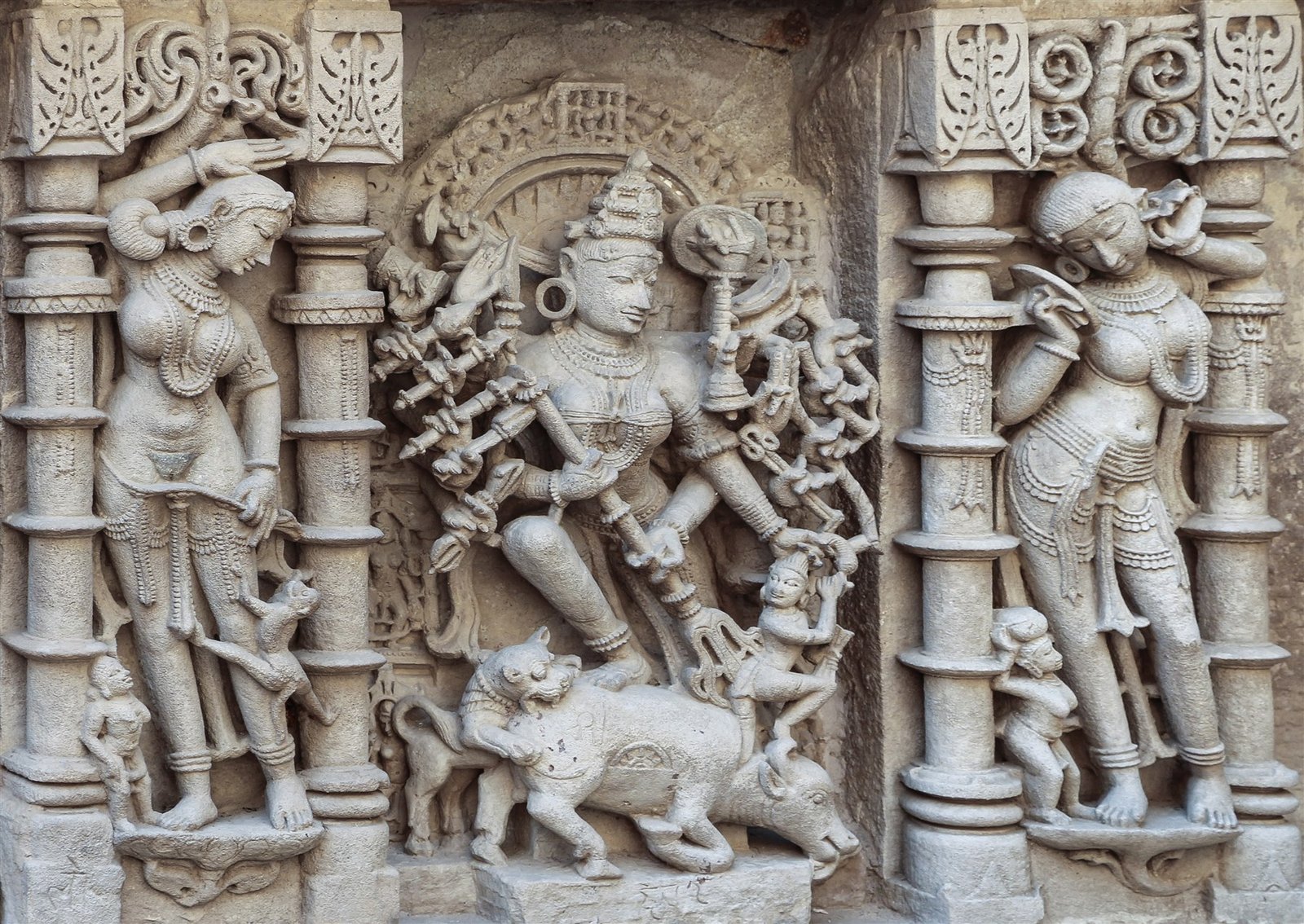
Conceived as an inverted temple, the vav descends seven storeys into the earth in a series of pillared pavilions and terraces, its walls lined with more than five hundred major sculptures and over a thousand smaller ones. The carvings — Vishnu in his many avatars, Devi, apsaras and an entire pantheon — are among the finest examples of Maru-Gurjara art.

Long buried in silt by the shifting Saraswati river and excavated in the 20th century, Rani ki Vav was inscribed as a UNESCO World Heritage Site in 2014 and even features on the Indian 100-rupee note. It is, quite simply, a wonder. (Maintained by the ASI; entry by ticket.)

Carved walls of Rani ki Vav.

HISTORY

Udayamati's stepwell, buried by the Saraswati

The tiered sculptured stepwell.

c. 1063

Queen Udayamati commissions the stepwell in memory of her husband Bhima I, the Solanki king, at what was then the capital of Gujarat.

Maru-Gurjara

Master carvers fill seven descending storeys with more than five hundred major sculptures, turning a working water source into an inverted temple.

Silted

The Saraswati river shifts course and floods the site, burying the vav in silt — an accident of geology that preserved the carving from weather and iconoclasm alike.

UNESCO 2014

The Archaeological Survey of India clears the silt in the twentieth century, revealing the sculpture almost intact; UNESCO inscribes the site as World Heritage in 2014.

WHY VISIT

Reasons to make the time

🏆

UNESCO site

Inscribed by UNESCO in 2014 as an outstanding example of the stepwell form and of Maru-Gurjara craftsmanship.

🪜

Inverted temple

Seven storeys step down into the ground, so the whole monument is invisible until you reach the edge and look in.

🗿

500+ sculptures

Vishnu's avatars, Devi in many forms, apsaras, nagakanyas and serpent guardians make up one of the fullest sculptural programmes in western India.

🕉️

Vishnu avatars

The carving holds its detail at close range — jewellery, drapery folds and facial expression survive on figures nine centuries old.

🎨

Maru-Gurjara art

Widely regarded as the finest stepwell ever built, and the benchmark against which Gujarat's other vavs are measured.

💵

On the rupee note

The stepwell appears on the Indian 100-rupee note, which makes it one of the most reproduced images of Gujarat's heritage.

HIGHLIGHTS

What to look for inside

Stepped tiersTHE STRUCTURE

Stepped tiers

Seven levels of pillared pavilions descend in a straight line from the entrance to the well shaft, each one narrower and darker than the last.
SculpturesTHE ART

Sculptures

Over five hundred major figures and around a thousand minor ones cover the walls, pillars and brackets.

The deep wellDEPTH

The deep well

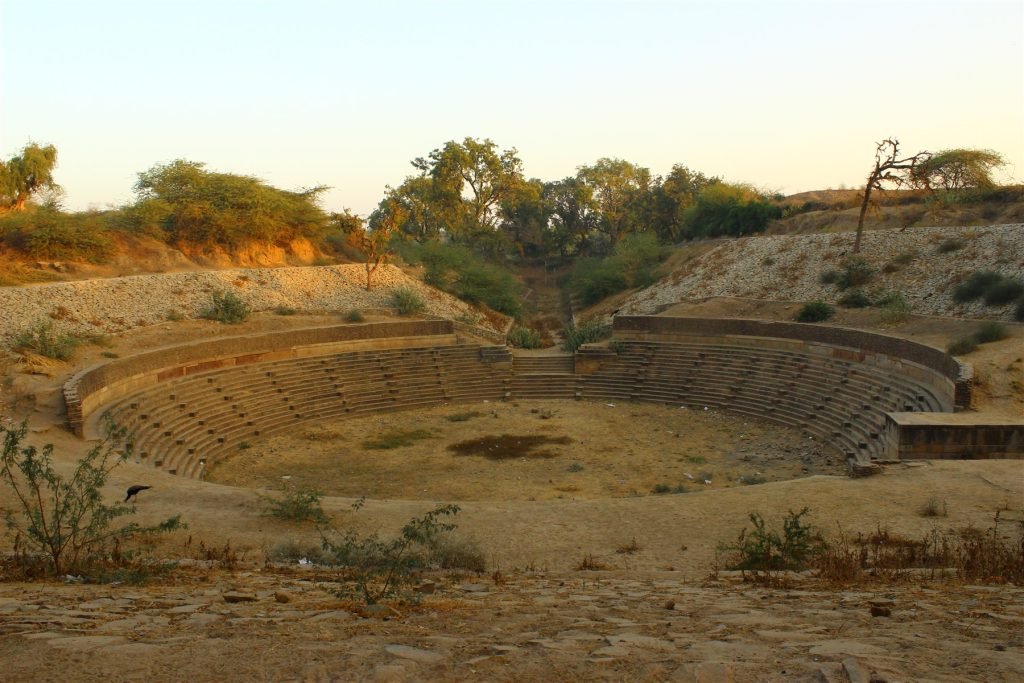
A circular shaft at the western end drops to the water table — the functional heart of what is otherwise a temple in reverse.

Vishnu's avatarsDEITY

Vishnu's avatars

The ten avatars are carved in sequence along the walls, including a rare and much-photographed reclining Vishnu on the sheshanaga.

The apsarasGRACE

The apsaras

Celestial dancers appear at every level in sixteen classical poses, several applying make-up or adjusting an anklet.

Maru-Gurjara craftSTYLE

Maru-Gurjara craft

The Maru-Gurjara style — sharp relief, deep undercutting, dense ornament — reaches its high point here.
THINGS TO DO

How to spend an hour or two

01

Descend the levels

Step down into the stepwell, level by level, through its pillared pavilions and terraces.

02

Study Vishnu's avatars

Trace the many forms of Vishnu carved across the walls in exquisite detail.

03

Find the apsaras

Search out the celestial dancers — the apsaras — among the hundreds of figures.

04

Admire the detail

Take in the supreme Maru-Gurjara carving that covers every pillar and panel.

05

See the deep well

Look down to the deep circular well at the lowest level of the vav.

06

Learn its rediscovery

Read how the silted, buried stepwell was excavated and joined the UNESCO list.

Tiers of carved pavilions.

ARCHITECTURE & SETTING

Seven storeys of sculpture

Rani ki Vav is an inverted-temple stepwell: a long, descending corridor of seven levels stepping down through pillared pavilions to a deep circular well, every wall and pillar dense with sculpture.

More than five hundred major carvings — Vishnu’s avatars, Devi, apsaras, nagakanyas and decorative bands — make it the supreme example of the Maru-Gurjara stepwell, blending hydraulic function with the grandeur of a temple. (An ASI monument and UNESCO World Heritage Site.)

The plan is deliberate and unusual. Most stepwells are working infrastructure with decoration added; Rani ki Vav inverts the relationship, arranging its seven levels along a single east-west axis like the approach to a temple sanctum, with the well shaft standing in for the garbhagriha. The deeper you go, the denser the carving becomes and the cooler and darker the air — an experience the builders clearly designed for, in a region where the summer is the defining fact of life.

The sculpture is organised rather than scattered. The principal walls carry the Dashavatara, the ten incarnations of Vishnu, in sequence; between and around them are Devi in her various forms, apsaras in the sixteen classical poses of the shringara, nagakanyas, and registers of geometric and floral banding that tie the whole composition together. The much-photographed Sheshashayi Vishnu — reclining on the coils of the serpent Shesha — sits at the lowest reachable level, which means the most important image is also the one you have to work hardest to see.

Its burial is the reason so much survives. When the Saraswati shifted and silt filled the vav, the sculpture was sealed away from monsoon weathering and from the periods of iconoclasm that damaged comparable monuments elsewhere. What the ASI uncovered in the twentieth century was therefore not a ruin but a substantially intact eleventh-century interior — which is why the site cleared UNESCO’s bar for authenticity so comfortably in 2014.

Seven descending levels

500+ major sculptures

Vishnu avatars & apsaras

Deep circular well

BEST TIME TO VISIT

When to go

WINTERNov – Feb★★★★★

Cool and clear from November to February, and the only season in which the open, unshaded descent is genuinely comfortable.

MONSOONJul – Sep★★★★☆

Rain deepens the stone colour and the surrounding fields turn green, though the steps can be slippery.

SUMMERMar – May★★☆☆☆

April to June is severe on an unshaded site; arrive at opening or skip the middle of the day.

⏰ Visit in the cool morning, before crowds and heat; allow time to descend the levels and study the sculpture.

PLANNING ESSENTIALS

Timings & entry

🕗TIMINGSASI daytime
  • Open daily, daytime hours
  • Mornings are coolest and quietest
  • Maintained by the ASI
  • Allow 1–2 hours
🎟️ENTRYTicket (ASI)
  • A modest ASI entry ticket
  • Wear sun protection
  • Mind your step on the levels
  • Don't touch the carvings
HOW TO REACH

Getting there

✈️

By Air

Ahmedabad airport (~125 km).

🚆

By Rail

Patan station.

🚗

By Road

~35 km from Mehsana.

NEARBY DISTANCES
Sahastralinga Talav — nearby · Patan centre — nearby · Modhera — 35 km · Ahmedabad — 125 km
PHOTOGRAPHY GUIDE

At Rani ki Vav

STONE & SCULPTURE

A UNESCO stepwell wonder

🪜

What to shoot

Shoot the full descending axis from the entrance parapet; a wide lens catches all seven levels receding towards the well.

🗿

Detail

The sculpture panels reward a longer lens and patience — side light in the early morning picks out the undercutting.

🌅

Best light

Soft morning light.

📐

Composition

Symmetry and depth.

TRAVEL TIPS

Know before you go

1Visit in the cool morning.
2Allow time to descend.
3Study Vishnu's avatars.
4Don't touch the carvings.
5Wear sun protection.
6Combine with Sahastralinga.
NEARBY FOOD

Where to eat near Rani ki Vav

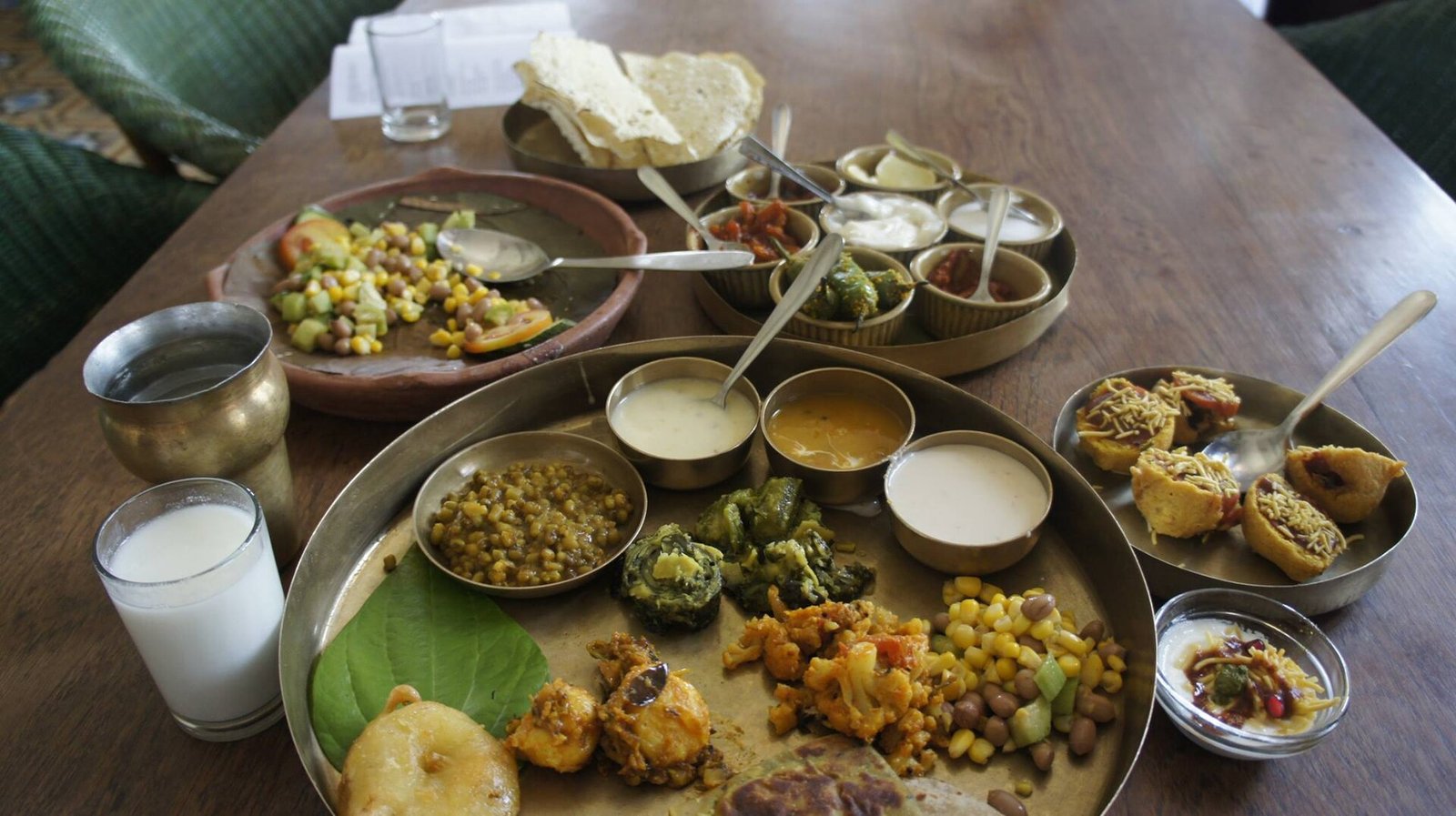
Gujarati ThaliTHALI

Gujarati Thali

Sweet-savoury full meals.
Dhokla & fafdaFARSAN

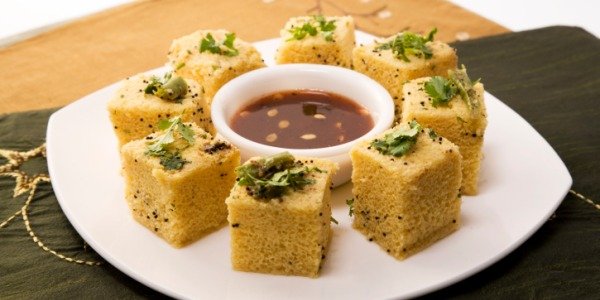
Dhokla & fafda

Steamed and fried snacks.

Chaat & snacksSTREET

Chaat & snacks

Simple market-town fare.

🍽️GOOD TO KNOW

Pure-veg town

Classic North Gujarat veg; Mehsana's milk sweets near.
FREQUENTLY ASKED

Rani ki Vav FAQ

What is Rani ki Vav?

An 11th-century stepwell at Patan, a UNESCO World Heritage Site and Solanki masterpiece.

Who built it?

Queen Udayamati, in memory of King Bhima I, around 1063.

Why is it special?

It is an 'inverted temple' stepwell with 500+ sculptures of Maru-Gurjara art.

Is it on the rupee note?

Yes — it features on the Indian 100-rupee note.

Is there an entry fee?

Yes, a modest ASI ticket.

How deep is it?

It descends through seven levels to a deep well.

How far is Mehsana?

About 35 km.

When should I visit?

October to March, in the cool morning.

WHERE TO STAY

Find your stay in Gujarat

Compare live prices across the big booking sites and reserve in a few taps. Booking happens securely on the partner's site — we may earn a small commission at no extra cost to you.

📍 DestinationAnywhere in Gujarat 📅 Check-inAdd date 📅 Check-outAdd date 👥 Guests2 adults Search Hotels

Book directly on our partner sites — tap a provider to see live Gujarat hotels & prices:

Affiliate links: prices and availability are shown by our partners. You pay the same price; we may earn a commission that helps keep Gujarat Explorer free.

SHOP THE REGION

Bring home Gujarat — & travel essentials

Hand-picked crafts and trip gear, available on Amazon.

🧵
Patola Silk Scarf
View on Amazon
🪡
Kutch Embroidery
View on Amazon
🎒
Travel Backpack 40L
View on Amazon
🔔
Brass Handicraft
View on Amazon
As an Amazon Associate, Gujarat Explorer earns from qualifying purchases. Product prices and availability are accurate as of the date/time shown on Amazon and are subject to change.
🚕
Book a cab anywhere in Gujarat
Airport transfers, day trips & intercity rides — reserve a comfortable cab, or just ask us on WhatsApp.
Enquiries are passed to independent, licensed local operators. Gujarat Explorer is a facilitator, not the transport provider.
WhatsApp Enquiry

Published 24 June 2026 · Updated 24 August 2026

GE
The Gujarat Explorer Team

We’re an independent group of writers and travellers documenting every corner of Gujarat — one place, plate and festival at a time.